A Beginner's Guide to Romanian Embroidery: Patterns, Meanings and Stitches
Discover the rich tradition of Romanian embroidery, from regional motifs and their hidden meanings to the basic stitches you need to start your own project.
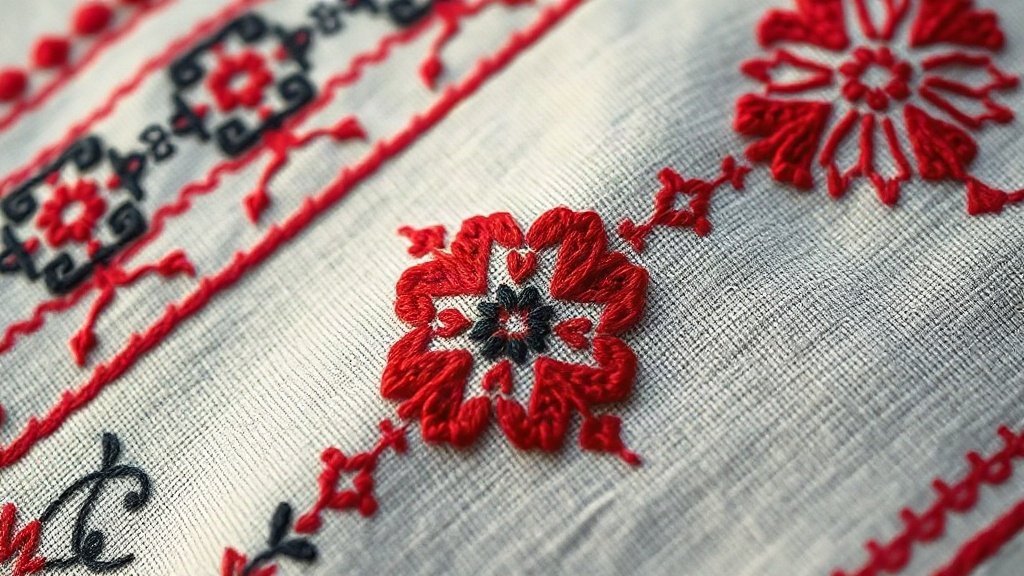
Illustration: AI-generated image
Romanian embroidery is far more than decoration. It is a living archive of the country’s rural past, a language of symbols passed down through generations, and a practical skill you can learn at home. Whether you have Romanian roots or simply admire folk art, this guide will help you understand the tradition and start your first project.
A Rich Regional Tradition
Romanian embroidery varies dramatically from region to region. In Maramureș, you’ll find dense geometric patterns in black and red, often adorning traditional blouses called ii. Bucovina is known for its intricate beadwork and floral motifs in vivid colours. The south, including Oltenia and Muntenia, favours bold, stylised flowers and leaves in bright reds, blues and yellows. Each area has its own stitch vocabulary and colour palette, but all share a common thread: embroidery was traditionally done on homemade linen or hemp fabric, using wool or cotton threads dyed with natural materials.
Common motifs carry deep meanings. The tree of life symbolises continuity and fertility. The sun or star represents light and protection. The snake or wavy line stands for water and eternity. Geometric shapes like diamonds and crosses are not just decorative; they are believed to ward off evil and bring good luck. Understanding these symbols adds another layer of appreciation to the craft.
Essential Materials and Tools
To begin, you don’t need many supplies. A simple kit includes:
- Fabric: Evenweave linen or cotton with a visible weave is ideal, as it makes counting stitches easier. Aida cloth is a beginner-friendly alternative.
- Embroidery floss: Traditional colours are red, black, blue, green and gold. Modern stranded cotton works well; you can split it to adjust thickness.
- Needles: Tapestry needles with blunt tips are best for counted-thread work; sharp embroidery needles suit surface stitches.
- Embroidery hoop: Keeps fabric taut and makes stitching comfortable.
- Scissors, a pencil or water-soluble pen, and a pattern: For transferring designs onto the fabric.
Basic Stitches for Beginners
Most Romanian embroidery relies on a few timeless stitches. Here are three to master first:
- Cross stitch: Worked as a series of X-shaped stitches, perfect for geometric borders and motifs. It’s the backbone of counted-thread embroidery.
- Holbein stitch (double running stitch): Also called punct românesc in some areas, this stitch creates a reversible outline that looks identical on both sides. It’s ideal for bands and linear patterns.
- Stem stitch: A versatile outline stitch used for curves and floral stems. It produces a rope-like line and is easy to learn.
Practice these on a scrap piece of fabric before starting a project. Once you’re comfortable, you can combine them to create authentic Romanian designs.
Getting Started: A Simple Project
A small bookmark or table runner border is a perfect first project. Choose a simple geometric pattern with repeating motifs, such as a line of diamonds or a cross-stitch border. Here’s how:
- Select and transfer the pattern: Copy the design onto graph paper, then transfer it to your fabric using a water-soluble pen or by counting threads from the centre.
- Secure the fabric in a hoop: Make sure it’s drum-tight but not stretched out of shape.
- Start stitching: Begin in the centre of the design and work outward. For cross stitch, complete all bottom legs first, then top legs. For Holbein stitch, work a running stitch in one direction, then return in the opposite direction to fill the gaps.
- Finish and press: Remove the hoop, gently wash the piece if needed, and press from the back with a cool iron.
With practice, you can move on to larger projects like pillowcases, blouse cuffs or wall hangings.
Where to Find Inspiration
Romania’s ethnographic museums and open-air village museums (such as those in Bucharest, Sibiu and Cluj-Napoca) hold extensive collections of embroidered textiles. Many books and online resources also document regional patterns and stitch guides. Observing authentic pieces will sharpen your eye for colour and composition. You can also join local craft groups or attend folk fairs to see artisans at work.
Embroidery is a meditative and rewarding hobby. By learning these stitches and motifs, you’re not just creating something beautiful—you’re keeping a centuries-old tradition alive.