Trovants of Costești: A Guide to Romania's Living Stones
Discover Romania's unique trovants — mysterious boulders that appear to grow and move. Here's how to see them for yourself in Vâlcea County.
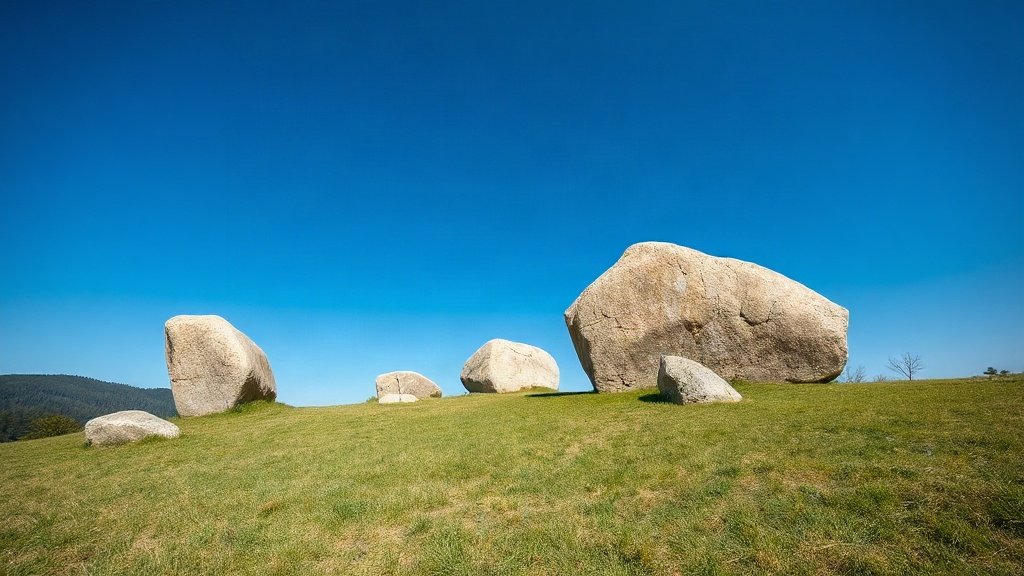
Illustration: AI-generated image
Tucked away in the rolling hills of Vâlcea County, near the village of Costești, lies one of Romania's most curious natural phenomena: the trovants. These strange, bulbous boulders—often called "living stones"—have puzzled locals and scientists alike for generations. With their ability to appear to grow, move, and even "reproduce", trovants are a must-see for travellers with an interest in geology, mystery, or simply the unusual.
What Are Trovants?
Trovants are spherical or ellipsoidal sandstone concretions that formed millions of years ago. They consist of a hard stone core surrounded by a porous, cemented sand shell. The name comes from the Romanian word "trovant", meaning cemented sand. Their most famous trait: after heavy rain, the outer layer absorbs water, causing the rock to expand slightly and form bulges that eventually break off to create new, smaller stones. This process has earned them the nickname "living" or "growing" rocks, though the growth is extremely slow—barely a few centimetres over centuries.
Where to See the Trovants
The main site is a protected natural reserve located just off the road between Râmnicu Vâlcea and Târgu Jiu, near the village of Costești. The area is dotted with dozens of trovants, ranging from small pebbles to boulders over two metres in diameter. Some are perfectly spherical, while others have irregular, lumpy shapes. Visitors can wander freely among the rocks, touch them, and marvel at their texture. There is no fixed trail, but the site is easy to explore on foot.
Planning Your Visit
The trovants can be visited year-round, but spring and autumn offer the most comfortable weather. The site is open-air and free to enter, though you won't find many facilities, so bring water and sturdy shoes. The nearest towns are Horezu, about 15 km away, and Râmnicu Vâlcea, about 40 km away, both offering accommodation and dining. The site is best reached by car, as public transport is limited; from Bucharest, it's roughly a three-hour drive via the A1 and DN67.
While in the area, consider combining your visit with a trip to the Horezu Monastery, a UNESCO World Heritage site famous for its Brâncovenesc architecture and pottery, or the scenic Transalpina road if you're travelling in summer.