Transalpina: A Guide to Driving Romania's Highest Mountain Road
Cross the Parâng Mountains on the Transalpina, a spectacular high-altitude road that offers sweeping views, alpine meadows and a true sense of adventure.
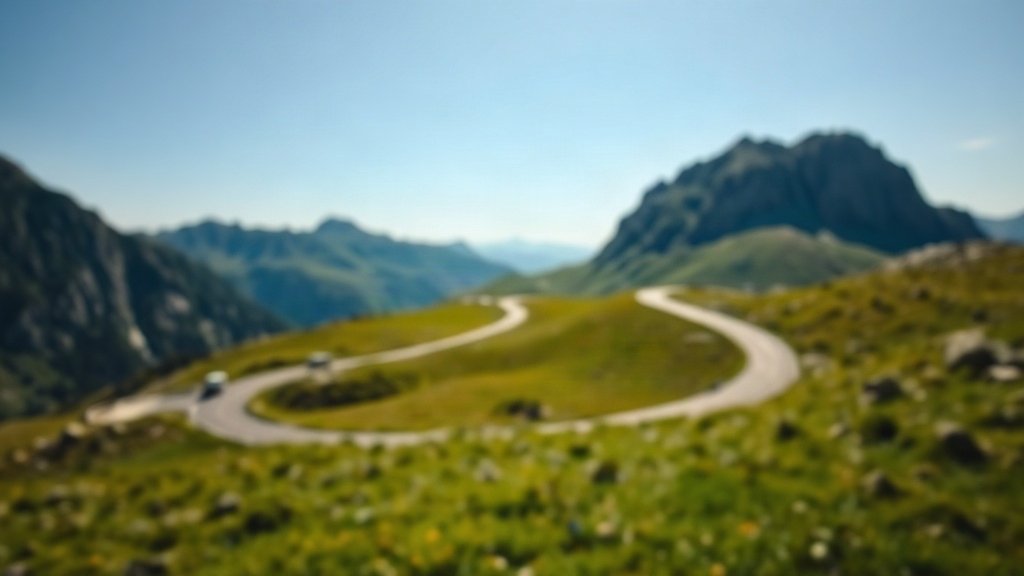
Illustration: AI-generated image
The Transalpina is one of Romania’s most breathtaking drives, a ribbon of asphalt that climbs high into the Parâng Mountains and links the historic regions of Oltenia and Transylvania. Often overshadowed by the more famous Transfăgărășan, the Transalpina holds its own with a wilder, more remote character and the distinction of being the country’s highest paved road. For travellers who love mountain scenery without the crowds, it is an unforgettable journey.
The road is officially designated DN67C and stretches for roughly 148 kilometres between the town of Novaci in the south and Sebeș in the north. Its highest point is the Urdele Pass, which sits at an elevation of 2,145 metres above sea level. That makes it higher than any other national road in Romania, and the views from the top stretch across a sea of peaks that seem to roll on forever.
The Route at a Glance
Driving the full length of the Transalpina usually takes between three and five hours, depending on stops and weather. The southern approach from Novaci climbs steadily through forested valleys before emerging into open alpine terrain. Around the resort area of Rânca, the landscape flattens into high pastures dotted with shepherd huts and grazing sheep. This is a good place to pause, breathe the cool mountain air and simply take in the silence.
From Rânca, the road continues to rise, crossing the Urdele Pass and then descending towards Obârșia Lotrului. The northern section leads through the Lotru Valley, passing dense spruce forests and occasional waterfalls before reaching the town of Sebeș. Because the road is narrow and winding, it demands patience, but the rewards are constant: every turn reveals a new panorama of ridges, valleys and rocky outcrops.
What to See Along the Way
The Transalpina is less about specific sights and more about the journey itself. Still, there are a few highlights worth noting. The alpine meadows around Rânca are filled with wildflowers in early summer, and the traditional sheepfolds offer a glimpse of a rural way of life that has changed little in centuries. Near the Urdele Pass, the road reaches a point where you can look down on both sides of the mountain range, with the peaks of the Parâng and Șureanu mountains stretching to the horizon.
Further north, the Lotru Valley is known for its clean mountain streams and thick forests. If you have time, a short walk from the road will lead you to cool, shady spots beside the river. The area around Obârșia Lotrului is also a starting point for hiking trails into the surrounding wilderness, though this is a destination best explored over several days rather than on a quick drive.
Driving Tips and Practical Advice
The Transalpina is a mountain road, and that means it should be treated with respect. The surface is paved for most of its length, but sections can be rough, and potholes are not uncommon. A normal car is fine in good weather, but drivers should be comfortable with steep gradients and sharp hairpin bends. There are few guardrails in places, so it is essential to keep your speed low and your eyes on the road.
Fuel stations are scarce between Novaci and Sebeș, so it is wise to fill up before you set off. There are small shops and places to eat in the towns at either end, but along the road itself, services are limited. Bring water, snacks and warm clothing, even in summer, because temperatures at the top can be significantly cooler than in the valleys below.
The road is usually open from late spring to late autumn. Snow can fall as early as October and linger until May, and the pass is closed during winter. Even in summer, weather changes quickly: a sunny morning can turn to mist and rain within an hour. Check conditions before you go and avoid driving at night, when the lack of lighting and sheer drops become far more dangerous.
Best Time to Travel
June to September is the ideal window for driving the Transalpina. In early summer, the meadows are lush and green, while September often brings clear skies and a golden light that makes the landscape glow. July and August are the busiest months, but even then, traffic is light compared with more popular routes. If you can travel on a weekday, you will often have the road almost to yourself.
Above all, remember that the Transalpina is not a road to be rushed. It is a drive to be savoured, with plenty of stops for photographs, a deep breath of mountain air and a quiet moment to appreciate one of Romania’s greatest natural treasures.