The Romanian Athenaeum: A Symbol of Bucharest's Cultural Soul
A neoclassical gem in the heart of the capital, the Romanian Athenaeum has been the stage for the country's most important musical moments for over a century.
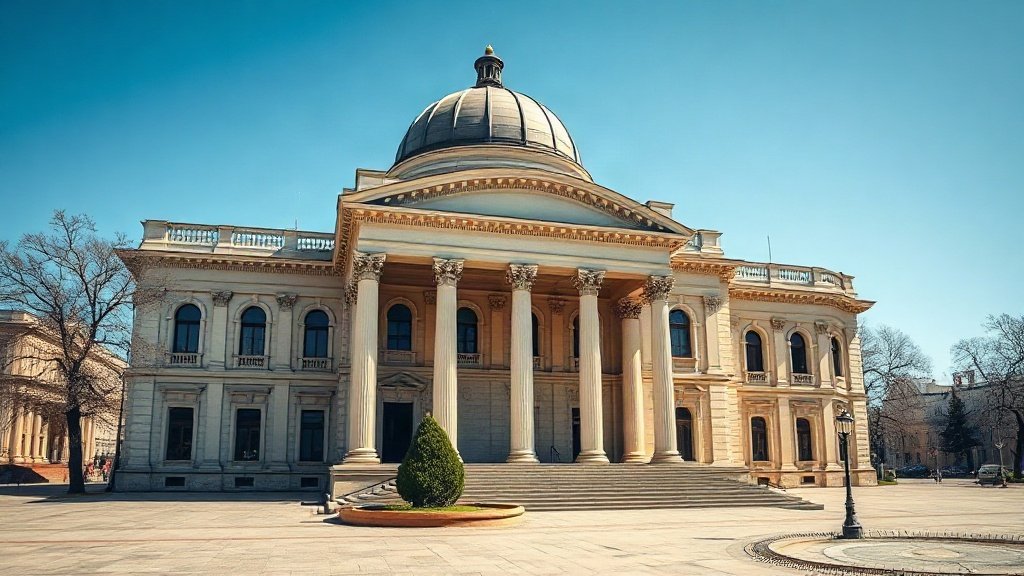
Illustration: AI-generated image
The Romanian Athenaeum stands as one of Bucharest's most recognisable landmarks, a circular temple of music that has anchored the city's cultural life since the late 19th century. Its elegant dome and columned entrance greet visitors on Calea Victoriei, but the building's story is as rich as the performances held within.
A Hall Built by Public Will
Construction began in 1886 and was completed in 1888, funded largely through a public subscription campaign with the slogan "Give a penny for the Athenaeum." The project aimed to create a dedicated space for culture and science in the young Romanian state. French architect Albert Galleron designed the building, drawing inspiration from ancient Greek temples, which suited the institution's name and aspirations.
Neoclassical Splendour and National Frescoes
The Athenaeum's exterior is a harmonious blend of a domed rotunda and a portico with six Ionic columns. The dome rises to 41 metres, making it a distinctive feature of the city skyline. Inside, the main concert hall is circular, with seating arranged around a central stage, and it is renowned for its excellent acoustics. A wide frieze encircles the interior of the dome, painted by Costin Petrescu, depicting key moments from Romanian history, from the Dacian era to the Great Union of 1918. These frescoes add a layer of national identity to the space, making each concert a journey through the country's past.
Home of the George Enescu Philharmonic
Since its inauguration, the Athenaeum has been the principal venue for the George Enescu Philharmonic, one of Romania's leading musical institutions. The hall has hosted countless world-renowned conductors and soloists, and it has been the main stage for the George Enescu International Festival, one of Europe's most prestigious classical music events. For over a century, it has been a place where both Romanian and international artists have shared their craft with appreciative audiences.
A Living Monument
Beyond its role as a concert hall, the Romanian Athenaeum has been a symbol of Bucharest's resilience and cultural pride. It has witnessed dramatic historical changes, yet it has remained a constant beacon for the arts. Today, it stands not only as a magnificent example of neoclassical architecture but also as a living testament to the power of community effort and the enduring appeal of music. For any visitor to Bucharest, even a glimpse of its graceful dome is a reminder of the city's deep cultural roots.