The Nai: Romania's Panpipes and the Sound of the Carpathians
Discover the nai, Romania's traditional panpipes, from its ancient roots to its place in folk ensembles today.
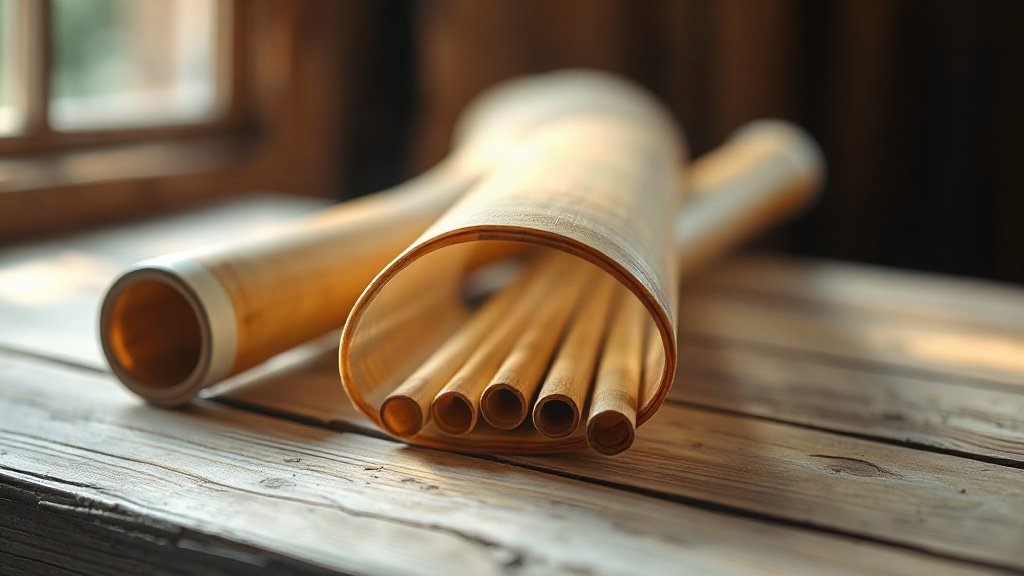
Illustration: AI-generated image
The nai is one of Romania's most distinctive folk instruments. A set of panpipes made from a curved row of wooden or bamboo tubes, it produces a soft, breathy sound that has echoed through the Carpathian Mountains for centuries. Though similar instruments exist across the world, the Romanian nai has its own tuning, playing style and deep ties to rural life.
Ancient roots and Romanian identity
The nai's origins are ancient. Panpipes appear in cultures from South America to Asia, and in Europe they are often linked to the Greek god Pan. In Romania, the instrument became associated with shepherds, who played it while tending flocks in the high pastures. The name 'nai' is thought to come from the Persian ney, reflecting a long history of trade and cultural exchange.
By the nineteenth century, the nai had become a staple of lăutari ensembles, groups of professional Romani musicians who performed at weddings and celebrations. It was during this period that the instrument evolved from a simple shepherd's pipe into a sophisticated concert instrument.
How a nai is made and played
A traditional nai consists of around twenty pipes of graduated length, arranged in a slight curve. The pipes are usually made from bamboo, though plum or cherry wood is also used. Each pipe is closed at the bottom and open at the top, and the player blows across the rim to produce a note. The longer the pipe, the lower the pitch.
Playing the nai requires precise breath control. Musicians use a technique called vibrato by moving the instrument slightly back and forth while blowing, creating a gentle wavering tone. Advanced players can perform rapid runs and trills, and some even use a technique called tremolo, where the tongue or throat interrupts the airflow to produce a fluttering effect.
From village dances to world stages
In folk music, the nai often carries the melody in pieces like the doina, a free-form, improvisatory song of longing. It also appears in lively dance tunes such as the sârba and hora. While the nai was traditionally played by men, today both men and women perform on the instrument.
The nai gained international recognition in the late twentieth century, when recordings featuring the instrument became popular far beyond Romania's borders. Today, you can hear it at folk festivals, in concerts of world music, and even in film scores. For visitors to Romania, a live performance of the nai offers a direct connection to the country's pastoral heritage and the enduring power of its folk traditions.
Where to experience the nai
If you wish to hear the nai in an authentic setting, look for local village festivals, especially in regions like Maramureș or Bucovina. Many restaurants in larger cities also feature folk music ensembles. Recordings by traditional and contemporary musicians are widely available online, offering a taste of this enchanting instrument wherever you are.
The nai remains a symbol of Romanian cultural identity. Its haunting melodies, born in the mountains and carried through centuries, continue to captivate listeners with their timeless beauty.