Exporting Goods from Romania: A Practical Guide for Businesses
Romania's EU membership and strategic location make it an attractive base for exporting. This guide covers the essential steps, documentation and VAT implications for companies sending goods abroad.
Illustration: AI-generated image
Romania’s position as an EU member state and its proximity to both Western European markets and the Black Sea make it an increasingly popular hub for exporting goods. Whether you are a manufacturer, wholesaler or e-commerce seller, understanding the export process is essential for smooth international trade. This guide outlines the key steps, documentary requirements and tax considerations for businesses exporting from Romania.
EU vs non-EU destinations
The first distinction to make is whether your goods are destined for another EU country or for a non-EU (third) country. For intra-EU movements, the process is simpler: no customs declaration is required, and the transaction is treated as an intra-community supply. You will, however, need to report the sale in your periodic VAT return and, if your annual intra-EU dispatches exceed a certain threshold, you may need to file Intrastat declarations.
For exports to non-EU countries, a formal customs export declaration is mandatory. This must be submitted electronically through the Romanian customs authority’s system. Goods cannot leave the EU until the declaration is accepted and the shipment is cleared.
Registering as an exporter
Before exporting to non-EU countries, your business will need an EORI (Economic Operators Registration and Identification) number. This is obtained from the Romanian customs authority and is valid throughout the EU. The EORI number must be used on all customs declarations and related documents.
Additionally, if you are exporting goods that are subject to excise duties (such as alcohol or tobacco), you may need to register with the relevant excise authority. Most standard commercial goods are not excisable, but it is wise to check the specific commodity code.
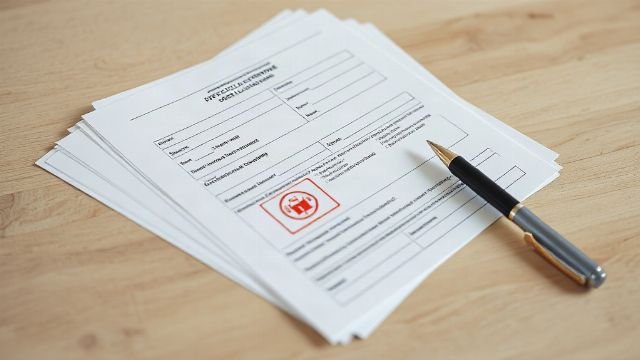
Key documents for export
The exact documents required depend on the nature of the goods, the destination and any trade agreements in force. Typically, you will need:
- Commercial invoice – detailing the seller, buyer, description of goods, value, Incoterms and currency.
- Packing list – describing the contents of each package, weights and dimensions.
- Transport document – such as a bill of lading (sea), airway bill (air) or CMR (road).
- Certificate of origin – if required by the importing country or to claim preferential tariff treatment under a trade agreement.
- Export licence – only for controlled goods (e.g. dual-use items, cultural goods, certain chemicals).
For food, agricultural products or items of animal origin, additional health or phytosanitary certificates may be required. It is advisable to consult the relevant authority for your product category.
Customs declaration process
The export declaration is submitted electronically via the Romanian customs IT system. Most businesses use a customs broker or freight forwarder to handle this step, as the process can be complex and errors can lead to delays. The declaration includes the commodity code (based on the Harmonised System), the customs value, the origin of the goods and the export procedure code.
Once the declaration is accepted, customs may select the shipment for documentary checks or physical inspection. If all is in order, the goods receive an export release and can leave the EU. It is important to keep all export documents for at least five years for audit purposes.
VAT on exports
Exports to non-EU countries are generally zero-rated for VAT in Romania, provided you have proof of export. This proof is usually the customs export declaration stamped by the customs office of exit, or an electronic confirmation. You must retain this evidence to justify the zero-rating in your VAT return. For intra-EU supplies, VAT is not charged if the customer provides a valid VAT number in another EU member state; instead, you issue an invoice without VAT and report the transaction in your EC Sales List.
Incoterms and responsibilities
Incoterms (International Commercial Terms) define the responsibilities of buyer and seller for delivery, risk and costs. Common Incoterms for exports include EXW (Ex Works), FOB (Free on Board), CIF (Cost, Insurance and Freight) and DAP (Delivered at Place). Choosing the right Incoterm is crucial, as it affects pricing, insurance and who handles customs procedures.
Practical tips for smooth exporting
- Classify your goods correctly using the Harmonised System to avoid misdeclaration penalties.
- Consider using a licensed customs broker, especially for your first shipments.
- Check whether the destination country has any import restrictions or special labelling requirements.
- Keep abreast of changes to trade agreements, as Romania benefits from EU free trade deals with many countries.
- Maintain accurate records for VAT and customs audits.
Exporting from Romania can be a profitable expansion of your business. With careful preparation and a clear understanding of the rules, you can navigate the process efficiently and tap into global markets.