The Nai: Romania's Pan Flute and Its Haunting Melodies
Discover the nai, Romania's traditional pan flute, an instrument of ancient roots and ethereal sound that remains a cherished part of the country's folk music.
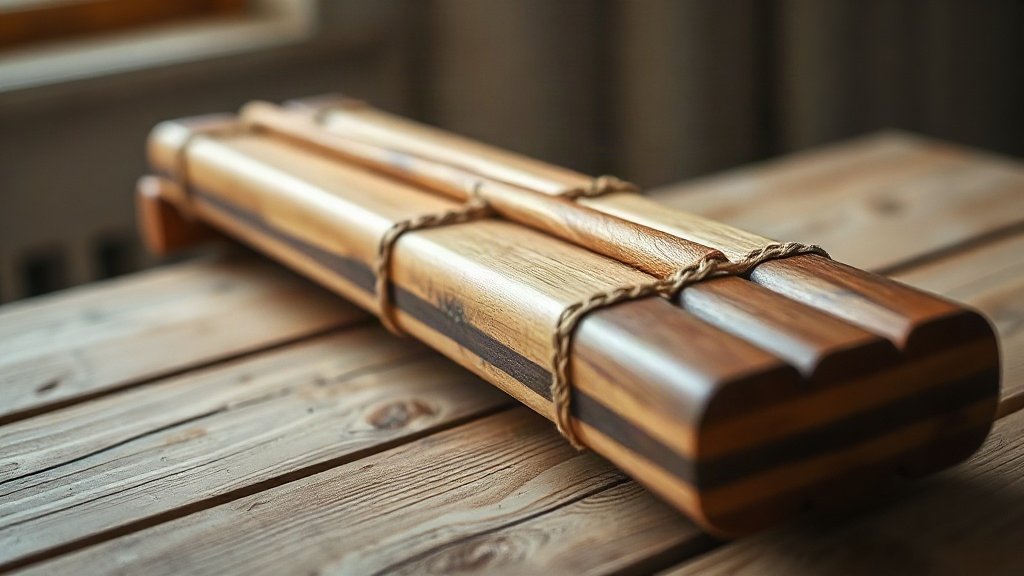
Illustration: AI-generated image
The nai is Romania's version of the pan flute, a wind instrument consisting of a row of closed-end pipes of graduated lengths, bound together in a gentle arc. Traditionally made from bamboo, reed, or wood, it produces a breathy, ethereal tone that has echoed across Romanian landscapes for centuries. While similar instruments exist worldwide, the Romanian nai has a distinct tuning system and playing style that set it apart.
What is the Nai?
A typical nai has between 20 and 25 pipes, arranged from longest to shortest. The longest pipe produces the lowest note, while the shortest gives the highest. The pipes are open at the top and closed at the bottom, and sound is produced by blowing across the rim. The slight curvature allows the musician's lips to travel smoothly across the row. Historically, pipes were made from local materials like elder wood or bamboo, but modern versions may use other woods or synthetic materials for durability.
A Brief History
The nai's origins can be traced to ancient times; pan flutes appear in many cultures, from Greek mythology to the Andes. In Romania, the nai became a signature instrument of the lăutari, the professional folk musicians who performed at weddings, celebrations, and gatherings. Its pastoral character evokes the shepherding traditions of the Carpathians, where it was often played while tending flocks. By the 20th century, the nai had secured its place in professional folklore ensembles and concert stages.
How the Nai is Played
Playing the nai requires precise breath control and lip movement. The musician holds the instrument against the lower lip and blows across the top of the pipes, much like playing a bottle. By shifting the angle of the instrument or the lips, the player can produce the full chromatic scale, even though the pipes are tuned diatonically. Vibrato and expressive effects are achieved through hand movements that partially cover the pipe openings or by modulating air pressure. The resulting sound is fluid, melancholic, and deeply evocative.
The Nai in Romanian Music
In traditional repertoire, the nai is featured in doinas—lyrical, improvised songs of longing—as well as in lively dance tunes like horas and sârbe. It often pairs with other instruments such as the violin, cimbalom, and double bass in taraf ensembles. Internationally, the nai gained fame through artists like Gheorghe Zamfir, whose recordings brought the instrument to classical and popular audiences worldwide. Today, it remains a beloved emblem of Romanian folk culture, heard at festivals, in concert halls, and on countless recordings.
Experiencing the Nai
If you wish to hear the nai live, folklore festivals and cultural events across Romania frequently feature performances. Even without attending an event, listening to recordings of traditional lăutari music or contemporary interpretations offers a window into its haunting beauty. Whether in a shepherd's tune or a virtuosic solo, the nai's voice continues to resonate as a timeless expression of the Romanian soul.