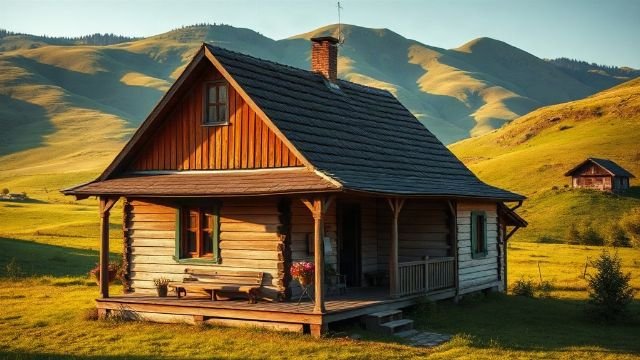
Step Back in Time at Bucharest's Open-Air Village Museum
The Dimitrie Gusti National Village Museum in Bucharest is one of Europe’s largest open-air ethnographic museums, preserving Romania’s rural architectural heritage.
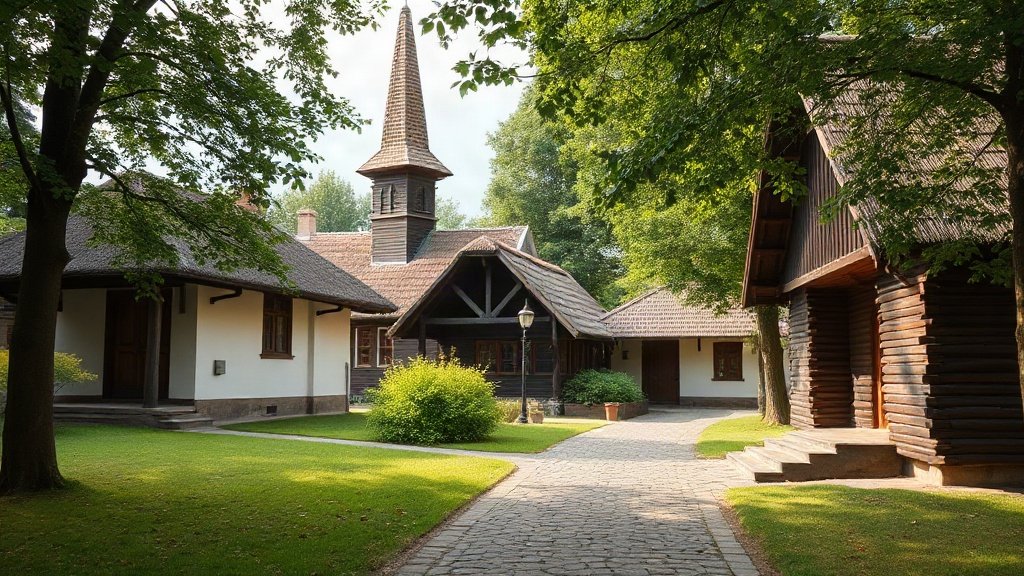
Illustration: AI-generated image
On the shores of Lake Herăstrău in northern Bucharest, the Dimitrie Gusti National Village Museum offers a peaceful escape into Romania’s rural past. Founded in 1936 by the sociologist Dimitrie Gusti, this open-air museum is one of the largest of its kind in Europe, displaying over 300 authentic buildings from all corners of the country.
A Living Archive of Rural Romania
The museum was created to preserve the vanishing world of the Romanian village at a time of rapid modernisation. Researchers travelled across the country, selecting representative peasant homes, churches, mills, and workshops, which were then carefully dismantled, transported, and reassembled in Bucharest. The result is a sprawling collection that feels like a real village, complete with cobbled lanes, gardens, and even livestock.
Each building is furnished with original objects—handwoven textiles, painted ceramics, wooden tools—offering a glimpse into daily life as it was lived for centuries.
What You’ll See
The buildings are grouped by region, allowing visitors to compare architectural styles from Transylvania, Maramureș, Moldavia, Oltenia, and the Danube Delta. Among the most striking are the tall wooden churches of Maramureș with their slender spires, the thatched peasant houses of the Danube plain, and the elaborate carved gates that once marked the entrance to a family’s property.
- Wooden churches from Maramureș, some dating back to the 18th century, with interiors painted in vivid frescoes.
- Peasant houses with earthen floors, low doorways, and open hearths, reflecting the practical needs of rural life.
- Windmills and watermills from the Dobrogea and Moldavia regions, still in working order on special occasions.
- Workshops for pottery, weaving, and blacksmithing, demonstrating traditional crafts.
The museum also includes a small collection of Roma households, acknowledging the diversity of rural communities.
Why It Matters
In a country where many villages still follow traditional rhythms, the Village Museum serves as a vital record of disappearing craftsmanship and building techniques. It is not merely a collection of old houses; it is a narrative of resilience, adaptation, and the deep connection between people and their environment. For visitors, it offers a tangible introduction to the folk culture that continues to inspire Romanian art, music, and literature.
Tips for Your Visit
Allow at least two to three hours to wander the shaded paths. Wear comfortable shoes, as the terrain is uneven and some buildings have steep steps. A guided tour can enrich the experience, but even exploring independently, the informative plaques in English and Romanian provide context. The museum is located in Herăstrău Park, so it pairs well with a lakeside walk or a picnic.
Whether you are a first-time visitor to Bucharest or a local seeking a quiet afternoon, the Village Museum offers a window into the soul of Romania—one doorway at a time.