Sorcova: Romania's New Year Wishing Branch and Its Joyful Rhymes
On New Year's morning, Romanian children carry a decorated branch called sorcova, wishing health, luck and prosperity to family and neighbours with playful rhymes.
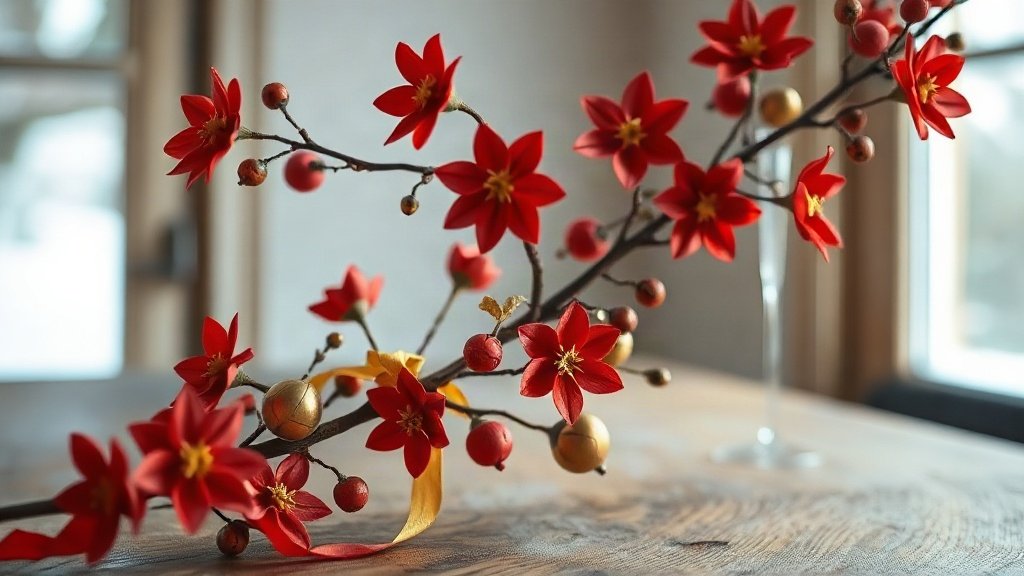
Illustration: AI-generated image
On the first morning of January, as winter sunlight spills over snowy rooftops, Romanian villages come alive with the sound of children's voices. They knock on doors, eager to share a tradition that has been passed down for generations: the sorcova. This simple yet joyful custom involves carrying a decorated branch and reciting rhyming wishes for health, luck and prosperity in the year ahead.
What is Sorcova?
Sorcova is both the name of the tradition and the object itself – a small branch, usually from an apple, pear, cherry or plum tree, adorned with coloured paper, ribbons, dried flowers and sometimes tiny bells. The word is believed to derive from the Bulgarian surov, meaning 'fresh' or 'green', referring to the living twig that symbolises new life and the coming spring.
Unlike the ploughing ritual of Plugușorul, which is performed by older boys and young men, sorcova is primarily a tradition for younger children. On New Year's Day, they visit relatives, neighbours and friends, gently tapping them with the branch while reciting verses that wish them a year as healthy and fruitful as the blossoms on the tree.
The Branch and Its Decorations
A traditional sorcova is made from a branch cut just before the New Year, so that it is still flexible and full of buds. The twigs are then decorated with strips of coloured paper – red, gold, blue – twisted into small flowers or stars. Ribbons, wool threads and even small pretzels or bagels are sometimes added, particularly in rural areas where the tree's fertility is emphasised.
Each decoration carries a symbolic meaning: red for life and vitality, gold for wealth and sunlight, and the budding branch itself for renewal and the hope of spring. In some regions, the sorcova is kept until spring and planted in the garden, believed to bring good luck to the household.
The Rhymes Children Say
As they tap the sorcova lightly on the shoulder or arm of the person they are greeting, children recite short, rhythmic verses. One of the most common rhymes goes:
Sorcova, vesela,
Să trăiți, să-mbătrâniți,
Ca un măr, ca un păr,
Ca un fir de trandafir,
Tare ca piatra,
Iute ca săgeata,
La anul și la mulți ani!
This translates roughly as: 'Merry sorcova, may you live and grow old, like an apple tree, like a pear tree, like a rose stem, strong as stone, swift as an arrow, for many years to come!' The words vary from region to region, but the intention is always the same: to bless the recipient with health, strength and a long life.
When and Where Sorcova Takes Place
Sorcova is traditionally performed on the morning of 1 January, after the New Year has been welcomed. It is most common in the regions of Muntenia, Oltenia and Dobrogea, though variations exist throughout Romania. Children often go from house to house in small groups, receiving sweets, fruit or small coins in return for their wishes.
In urban areas, the custom has adapted: children may carry sorcova branches to grandparents or family friends, and the rhymes are sometimes shortened. But the core of the tradition – a child wishing good fortune to elders – remains a heartwarming start to the year.
Making Your Own Sorcova
Creating a sorcova is a simple and enjoyable activity for families. Begin with a small branch, about 30–40 cm long, with several small twigs. Remove any dead leaves, but keep the buds intact. Cut coloured paper into strips about 1 cm wide and 20 cm long, then twist or fold them into flower shapes, securing each with a dot of glue or a small knot of thread. Tie the paper flowers to the branch using thin wire or thread, spacing them evenly. Add ribbons, a small bell or dried flowers if desired.
Once decorated, the sorcova is ready to be used. Children can practise the rhymes beforehand, and on New Year's morning, they set off to share their good wishes – a beautiful way to begin the year with community and joy.