Sezătoarea: Romania's Winter Evening Gatherings of Story, Song and Craft
Discover the cherished Romanian tradition of the sezătoare, where villagers once gathered on winter evenings to spin wool, share stories and keep community bonds alive.
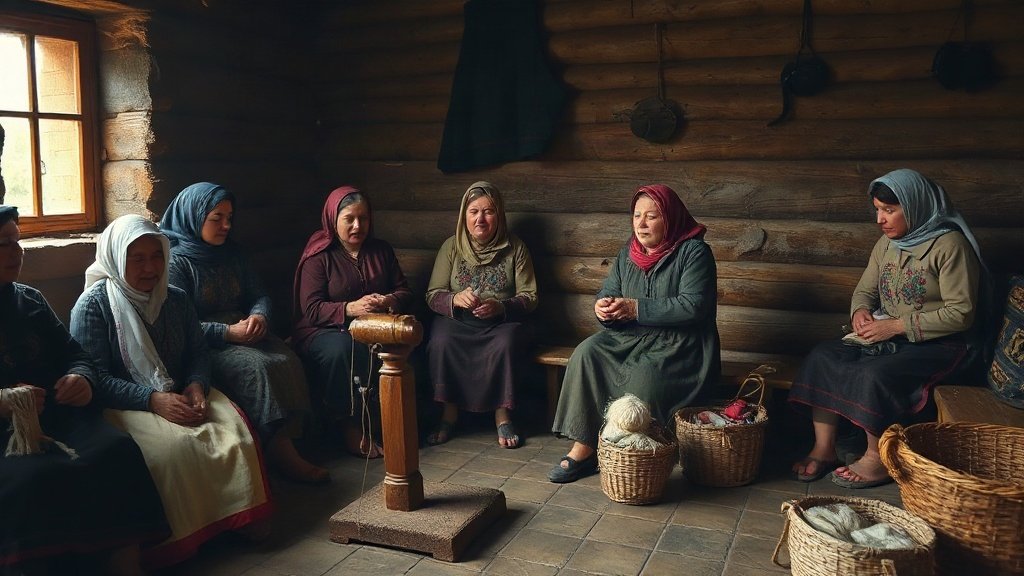
Illustration: AI-generated image
Long before television and the internet, Romanian villagers looked forward to the long winter nights as a time for work, creativity and companionship. The sezătoare (plural: sezători) was a cherished social institution, bringing neighbours together in a warm room to spin wool, embroider, tell stories and sing. More than just a practical arrangement, it was the heartbeat of village culture.
What is a Sezătoare?
The word sezătoare comes from the Romanian verb a ședea, meaning 'to sit'. True to its name, it was an evening gathering where people sat together to work on textile crafts while socialising. Typically held from late autumn until early spring, when agricultural work slowed, the sezătoare rotated among homes in the village. The host provided a warm space, often lit by oil lamps or candles, and sometimes simple refreshments like roasted pumpkin seeds or apples.
Women were the main participants, bringing their distaffs and spindles to spin wool or hemp, or embroidery and knitting projects. Men sometimes joined later in the evening, especially if music and dancing were involved. Young people saw the sezătoare as a rare opportunity to court under the watchful eyes of elders.
What Happened at a Sezătoare?
The atmosphere was one of focused industry mixed with lively conversation. As hands worked, voices filled the room with folk songs, ballads and humorous anecdotes. Older women taught younger ones the intricate patterns of regional embroidery, passing down skills that might otherwise be lost. Storytelling was a highlight: tales of heroes, supernatural beings and local legends were told and retold, often with dramatic flair.
Sometimes a lăutar (folk musician) might be invited, turning the gathering into an impromptu dance. More commonly, participants sang doine (lyrical songs) or colinde (carols) during the Christmas season. Riddles and proverbs were also exchanged, sharpening wits and preserving oral tradition.
The Role of Sezătoarea in Romanian Culture
The sezătoare was not merely a pastime; it was essential for the production of clothing and household textiles. In the days before industrial fabrics, every family needed spun wool for winter garments, blankets and woven rugs. By pooling labour, villagers made tedious work enjoyable and efficient.
Equally important was its social function. The sezătoare reinforced community bonds, provided a space for teaching values and etiquette, and offered young people a structured setting for courtship. It was also a place where news and gossip circulated, keeping the village informed and connected.
Experiencing a Sezătoare Today
While the traditional sezătoare has largely faded with modern life, its spirit survives in cultural events, museums and folk ensembles that recreate the atmosphere for visitors and younger generations. Many ethnographic museums in Romania, such as the Village Museum in Bucharest or the ASTRA Museum in Sibiu, host demonstrations where you can see spinning, weaving and storytelling in an authentic setting.
Some rural communities, particularly in Maramureș and Bucovina, still organise sezători as cultural evenings, especially during winter festivals. If you have the chance to attend, expect a warm welcome, the smell of wool, and the sound of old songs filling the room—a living link to Romania's rich heritage.