Sarmizegetusa Regia: A Visitor's Guide to Romania's Ancient Dacian Capital
Hidden in the Orăștie Mountains, Sarmizegetusa Regia is the mysterious heart of the ancient Dacian kingdom. A UNESCO site that rewards the curious traveller.
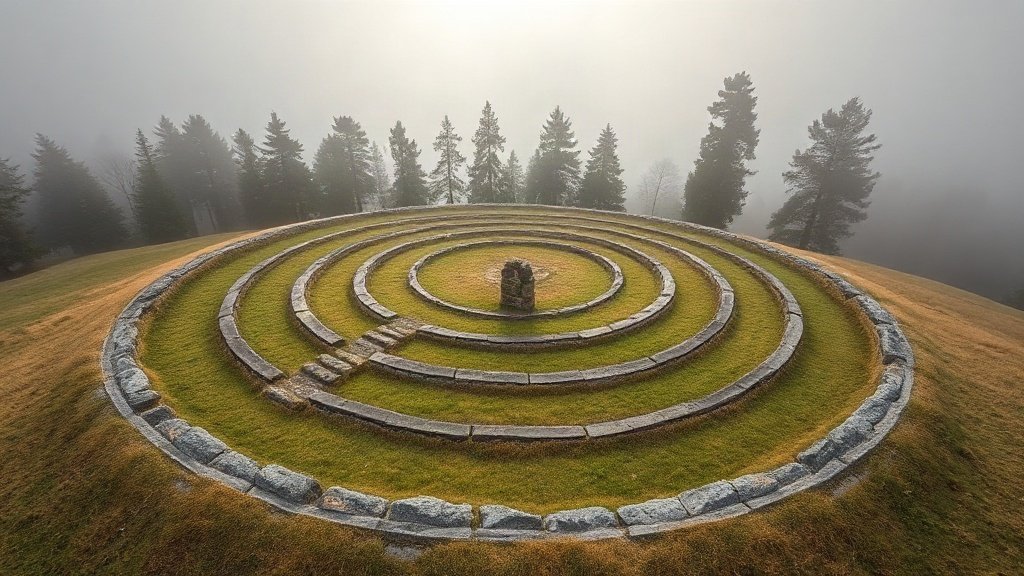
Illustration: AI-generated image
High on a forested plateau in the Orăștie Mountains, the ruins of Sarmizegetusa Regia feel a world away from Romania's busy cities. This was the political, military and spiritual centre of the Dacian kingdom, a sophisticated civilisation that flourished before the Roman conquest. Today, its circular stone sanctuaries and defensive walls draw hikers, history lovers and those simply seeking a quiet moment among ancient pines.
Why visit Sarmizegetusa Regia?
The site is part of the UNESCO World Heritage listing of Dacian fortresses in the Orăștie Mountains, but it remains far less crowded than better-known attractions in Transylvania. The journey through dense forests and the sense of discovery on arrival are half the reward. From the plateau, you can see across valleys to other fortified peaks, and the air is fresh and cool even in summer.
A brief history
Sarmizegetusa Regia was the capital of Dacia from around the 1st century BC until the Roman conquest in 106 AD. The name distinguishes it from the later Roman city of Ulpia Traiana Sarmizegetusa, built about 40 kilometres away after the Dacian defeat. The original capital covered roughly three square kilometres, including fortifications, residential areas and a sacred precinct. Its most famous remains are the great circular sanctuary and a smaller circular structure often called the "Andesite Sun" or "Dacian calendar" – a central disc surrounded by stone blocks, once used for rituals and astronomical observations.
Getting there
The ruins sit at about 1,200 metres above sea level, near the village of Grădiștea de Munte. The most practical starting point is the small town of Orăștie, connected by train and bus to major cities. From Orăștie, a paved road leads to the village of Costești, where the asphalt ends. A forest road then climbs roughly 18 kilometres to the site. The road is unpaved but generally passable for standard cars in dry weather, though it can be slow and bumpy. Alternatively, hikers can follow a marked trail from Costești through the forest, a walk of three to four hours each way.
What to see
The sacred precinct is the highlight. You will see the foundations of temples, the great circular sanctuary with its concentric stone rings, and the smaller "Andesite Sun" nearby. The fortification walls, built in the distinctive Dacian style with timber and stone, still trace the plateau's edge. A well-preserved stone-paved road and traces of water channels hint at the site's original sophistication. The surrounding landscape, with its beech and spruce forests, adds to the atmosphere – on a misty morning, the stones seem to float above the clouds.
Practical tips
- Wear sturdy walking shoes – the site covers uneven ground and forest paths.
- Bring water and snacks; there are no shops or cafés at the ruins.
- Check the weather before setting out; the road can become muddy after rain.
- Allow at least two hours at the site to explore without rushing.
- Consider combining a visit with nearby Dacian fortresses like Costești, Blidaru or Piatra Roșie, each with its own character.
Sarmizegetusa Regia does not have the polished amenities of a major tourist site, and that is precisely its charm. It asks for a little effort, and in return offers a rare connection to a civilisation that disappeared nearly two millennia ago. If you are looking for a travel experience that blends hiking, history and quiet wonder, this ancient capital belongs on your Romanian itinerary.