Sârba: Romania's Spirited Circle Dance and How to Join In
Discover the lively steps, driving music and social joy of the sârba, one of Romania's most beloved folk dances. Learn its origins and how to take part at any village celebration.
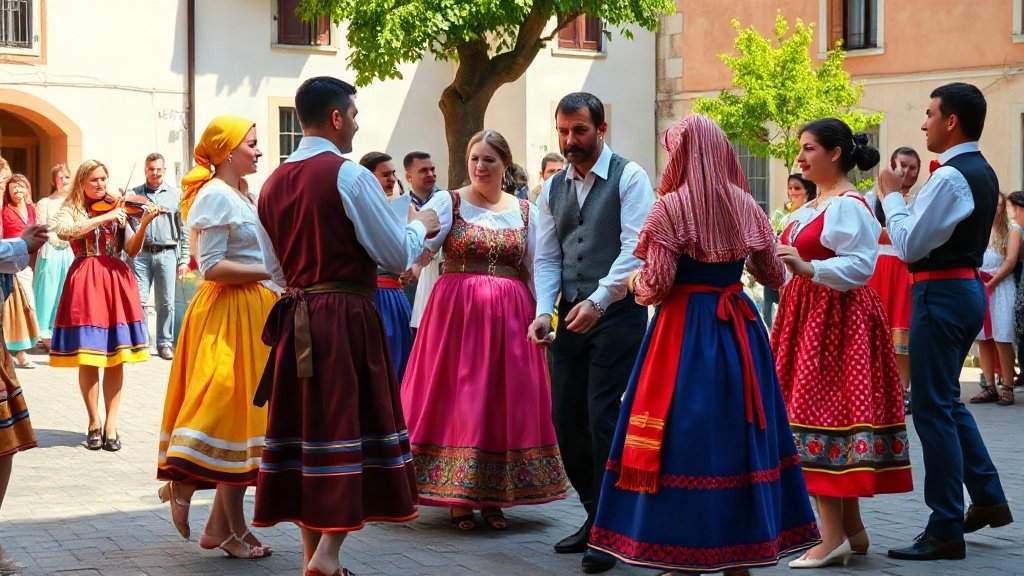
Illustration: AI-generated image
If you have ever been to a Romanian wedding, festival or village celebration, chances are you have seen the sârba. This fast, energetic circle dance pulls everyone to their feet, from young children to grandparents. Its infectious rhythm and simple steps make it one of the easiest ways to join in Romanian folk culture.
The sârba (plural sârbe) is a widespread dance genre found across Romania, as well as in neighbouring Moldova and parts of the Balkans. Its name comes from the word "sârbă", meaning "Serbian", suggesting historical connections, but over centuries it has become thoroughly Romanian, with countless local styles and melodies.
What does the sârba look like?
Dancers form a circle or a line, holding hands or linking arms. The dance moves in a counter-clockwise direction, with quick, light steps. The basic step involves a series of small hops and side steps, often with a lilting, syncopated rhythm. The tempo is moderate to fast, and the music is typically played by a traditional band featuring violins, accordions, and a double bass or cimbalom.
Unlike the slower, more solemn hora, the sârba is lively and playful. Dancers often break away to perform solo improvisations, spinning and stamping in the centre of the circle. The atmosphere is joyful and inclusive, encouraging participation rather than perfection.
Origins and regional styles
The sârba has deep roots in Romanian rural life, where it was danced at weddings, harvest festivals and other community gatherings. Each region of Romania has developed its own variants:
- Muntenia and Oltenia (southern Romania): fast, virtuosic sârbe with intricate footwork, often accompanied by panpipes.
- Moldavia: slightly slower, with a swinging, lyrical quality and rich violin ornamentation.
- Transylvania: sârbe are often paired with other dance forms, such as the învârtita, and feature distinctive harmonies.
- Banat (western Romania): known for syncopated rhythms and strong brass band traditions.
These local differences mean that even within a single village, you may hear several distinct sârbe, each with its own melody and step pattern.
How to join in
The beauty of the sârba is its accessibility. If you are at a Romanian celebration and want to dance, simply watch the circle and follow along. The basic sequence is repeated throughout the dance, so after a few bars you will get the feel of it. Here are a few tips:
- Hold hands or link arms with the dancers beside you. In a circle, your left hand faces down and your right hand faces up.
- Start with a simple side step: step to the left, bring your right foot to meet it, then repeat. Add a small hop on the third beat as you become comfortable.
- Let the music guide you. The sârba has a clear pulse; listen for the strong beat and move with it.
- Don't worry about mistakes. Romanians are very welcoming, and the dance is meant for everyone.
For a more structured introduction, many folk dance groups and community centres in Romania offer classes for beginners. These are a great way to learn the exact steps and regional variations before trying them out at a live event.
Where to experience the sârba
The sârba is present at nearly every traditional celebration in Romania, including weddings, christenings, and village festivals known as rugi. In cities, performances by professional folk ensembles, such as those at the Romanian Athenaeum or the National Village Museum, showcase the dance in its full splendour. During summer, open-air festivals in towns like Sighetu Marmației or Sibiu often feature participatory dance evenings where visitors can join in.
Learning the sârba is more than mastering steps; it is a way to connect with the warmth, humour and collective spirit of Romanian culture. So next time you hear the fiddle strike up, don't stay on the sidelines — take a hand and join the circle.