Săpânța's Merry Cemetery: Romania's Colourful Tribute to Life
The Merry Cemetery of Săpânța in Maramureș is a unique folk art site where hand-painted crosses and witty epitaphs celebrate life rather than mourn death.
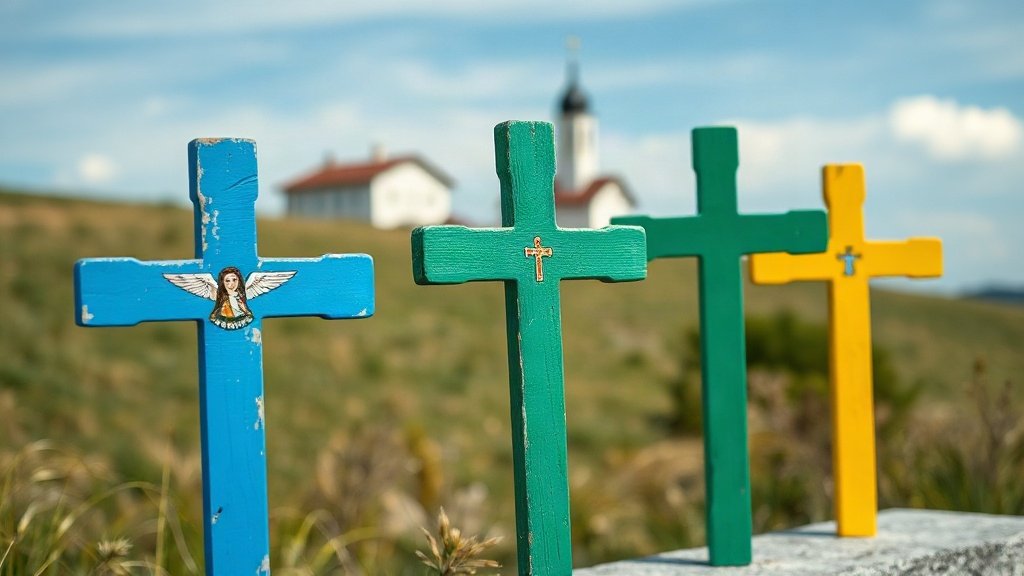
Illustration: AI-generated image
In the village of Săpânța, in Romania's northern Maramureș region, death wears a smile. The Merry Cemetery (Cimitirul Vesel) is a one-of-a-kind folk art site where hundreds of hand-carved oak crosses are painted in bright blues, greens and yellows, each telling the story of the person buried beneath – often with a humorous or ironic twist. Far from a sombre place, it draws visitors from around the world to see how a small community turns grief into a celebration of life.
The history and the man behind it
In the 1930s, local woodcarver Stan Ioan Pătraș began painting crosses with scenes from the deceased's life and witty verses. He carved each cross from oak, painted them a specific shade of blue known as 'Săpânța blue', and added a short poem, usually in the first person, as if the dead were speaking from beyond. After his death in 1977, his apprentice and later his family members continued the tradition, ensuring that every new burial receives the same colourful treatment.
The art of the crosses
Each cross is a canvas: the background is the famous blue, and on it are painted colourful scenes from the person's life – a shepherd with his flock, a housewife baking, a mechanic with his tools, a driver behind the wheel. The paintings are naive in style, with bold outlines and flat colours, resembling a comic strip. The deceased's name and dates are carved, and sometimes a portrait is painted. The crosses face east, towards the rising sun, a nod to Orthodox tradition.
Epitaphs that make you smile
The epitaphs are short, rhyming verses written in the local dialect, often narrated from the perspective of the dead. They can be self-deprecating, ironic or gently mocking. One famous example paraphrased says: "Under this heavy cross lies my poor mother-in-law... if she had lived three more days, I would be lying here and she would be reading." Another: "Here I rest, and my name is... I loved to drink and sing, and now I am silent." These verses are meant to ease the pain of loss and remind the living that death is part of life. They are not meant to disrespect but to humanise the departed.
A place of living culture
The Merry Cemetery is not just a tourist attraction; it is an active burial ground. New crosses are added regularly, maintaining the tradition. The cemetery has been featured in documentaries and travel shows, and it has become a symbol of Maramureș's vibrant folk culture. It sits next to the village church, and the combination of sacred and playful makes it a poignant experience.
Visiting Săpânța
The cemetery is open to visitors year-round, and a modest entrance fee is charged. The village is accessible by bus or car from Sighetu Marmației or Baia Mare. The best time to visit is late spring to early autumn, when the crosses are bright against the green landscape. Visitors are reminded that it is a functioning cemetery, so respect is essential. The Merry Cemetery offers a rare glimpse into a culture that faces mortality with honesty and humour, making it one of Romania's most unforgettable cultural experiences.