Sânziene: Romania's Midsummer Night of Flowers, Fire and Fortune
Every year on 24 June, Romanians celebrate Sânziene, a magical summer solstice festival of flowers, bonfires and folk beliefs.
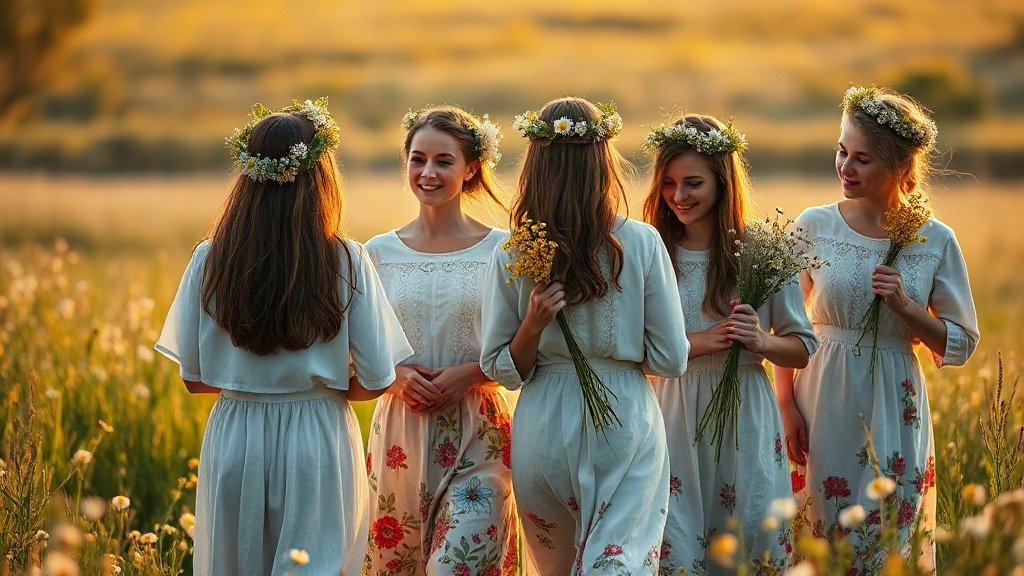
Illustration: AI-generated image
As summer reaches its peak, Romania lights up with one of its most poetic folk celebrations: Sânziene. Held on 24 June, this ancient festival blends pre-Christian solstice rites with the feast of Saint John the Baptist, creating a day rich in flowers, fire and whispered predictions of love and fate. For travellers and folk enthusiasts, Sânziene offers a window into a living tradition that still thrives in villages across the country.
What is Sânziene?
Sânziene are both the celebration and the mythical figures it honours—gentle fairies who dance in meadows by night, blessing flowers and herbs with healing powers. The festival falls on the summer solstice in the old calendar, when the sun is at its strongest and nature is in full bloom. It is a time when, according to folk belief, the heavens open and wishes made with a pure heart may come true.
The roots of Sânziene stretch back to pre-Christian fertility and sun worship. Over centuries, the Orthodox Church dedicated the day to Saint John the Baptist, but many older customs survived, blending seamlessly with Christian practice. Today, the festival is marked by flower gathering, wreath making, bonfires and joyful outdoor gatherings.
Flower Crowns and Love Divination
The heart of Sânziene is the gathering of wildflowers, especially yellow bedstraw, known in Romanian as sânziană, which gives the festival its name. On the morning of 24 June, young women head to meadows and hillsides to pick armfuls of these fragrant blossoms, along with chamomile, wild roses and other summer blooms.
From these flowers, they weave intricate wreaths and crowns. The crowns are worn throughout the day, then ritually thrown onto the roofs of houses. The custom holds that if a wreath stays on the roof, the girl who threw it will marry within the year; if it falls, she must wait a little longer. In some regions, the wreaths are thrown over the shoulder without looking, and the direction they fall hints at where a future husband may come from. It is a playful, hopeful tradition that fills the air with laughter and the sweet scent of fresh blossoms.
Bonfires and Healing Herbs
As evening falls, bonfires are lit on hillsides and in village clearings. Young people leap over the flames to purify themselves and ensure good health and luck for the coming year. The fires, like the midsummer sun, are seen as sources of strength and protection against illness and evil spirits.
Herbs collected on Sânziene are believed to have extraordinary healing powers. People dry bunches of bedstraw, mint, thyme and other plants to use in teas, baths and home remedies throughout the winter. Some also place flowers under their pillows, hoping to dream of their future spouse. In many households, the day ends with a feast of fresh cheese, honey and newly baked bread, shared with family and neighbours.
Where to Experience Sânziene Today
Sânziene is still celebrated with enthusiasm in rural Romania, particularly in Transylvania, Maramureș and Bukovina. While every village has its own variations, the core elements of flower gathering, wreath throwing and bonfire leaping remain constant. Visitors who find themselves in the countryside in late June may be invited to join the dances and songs that carry on until dawn.
For those who cannot travel, the spirit of Sânziene can be summoned anywhere: pick a handful of wildflowers, weave a simple crown, and as the sun sets, make a quiet wish. In that moment, you are part of a tradition that has linked Romanians to the land and to each other for centuries.