Saint Anne Lake: A Guide to Romania's Volcanic Crater Lake
Discover Lacul Sfânta Ana, a stunning natural lake formed in an extinct volcano's crater, perfect for a peaceful day of walking, legend and cool mountain air.
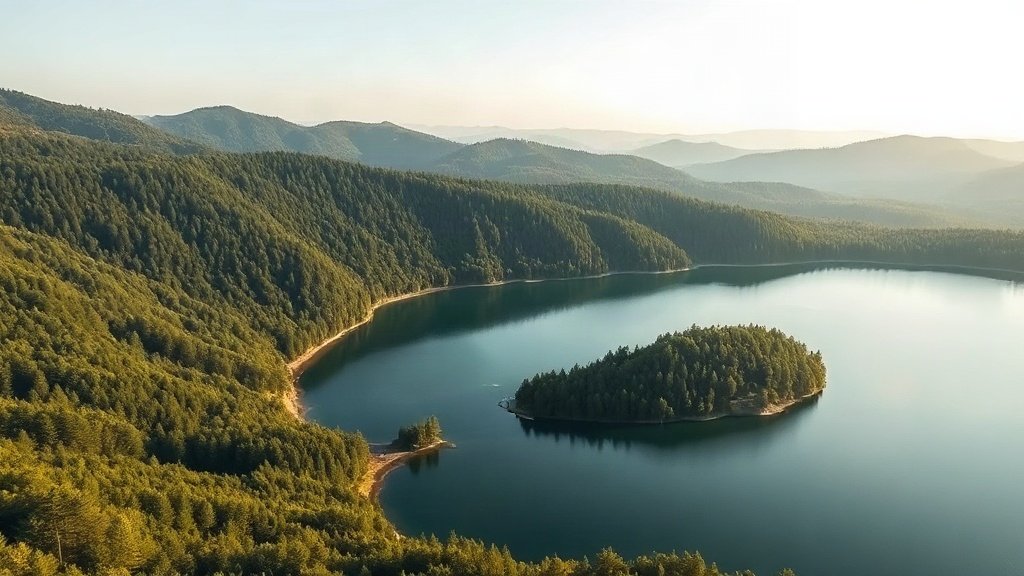
Illustration: AI-generated image
Hidden among the forested hills of Harghita County in the Eastern Carpathians, Saint Anne Lake (Lacul Sfânta Ana) is a rare geological gem. It is the only volcanic crater lake in Romania, resting inside the crater of the Ciomatu Mare volcano, which has been silent for tens of thousands of years. The lake's near-perfect elliptical shape and deep green waters create a scene of quiet, almost mystical beauty that attracts nature lovers, photographers and anyone seeking a break from busy tourist routes.
Why visit
The lake sits at an altitude of around 950 metres, surrounded by dense spruce and beech forest. Because it has no natural inlets or outlets, its water level depends entirely on rainfall and snowmelt. This makes the lake exceptionally sensitive to weather, but also incredibly pure. On a calm day, the surface mirrors the sky and the surrounding slopes, making it a favourite spot for peaceful contemplation. A gentle path circles the lake, offering ever-changing views and a chance to breathe in the cool mountain air.
The legend of Saint Anne
Local folklore tells of a wealthy landowner's daughter named Ana, who was forced into an unwanted marriage. Rather than accept her fate, she fled into the mountains and disappeared. It is said that the lake appeared where she was last seen, and that her tears formed the water. Over time, Ana became associated with Saint Anne, and a small chapel near the shore honours her memory. The story adds a layer of romance and mystery to an already atmospheric place.
Getting there
The most common starting point is the town of Băile Tușnad, a small spa resort known for its mineral springs. From there, a winding mountain road leads towards the lake. A car park is located a short walk from the water, and the final approach is on foot along a well-marked forest path. Public transport is limited, so most visitors arrive by car, bicycle or as part of an organised tour. The drive itself is scenic, with glimpses of the surrounding Harghita Mountains.
What to do
The main activity is simply walking the circular trail that hugs the shoreline. The path is mostly flat and suitable for families with children, though sturdy shoes are recommended after rain. In summer, the wooded edges offer shade, and on warm days some visitors take a dip in the lake, though the water remains refreshingly cold even in high season. Winter transforms the area into a silent, snow-covered landscape, but access can be more challenging and the trail may be icy.
Practical tips
Bring layers: the altitude and forest cover mean temperatures can be noticeably cooler than in nearby lowlands. There are no shops or cafés directly at the lake, so carry water and snacks. The nearest facilities are in Băile Tușnad, about ten kilometres away. The lake is a protected natural area, so stick to the marked paths and take any litter home. For the best photographs, visit in early morning or late afternoon when the light is soft and the water is often still.
Saint Anne Lake is a place to slow down and appreciate a corner of Romania that feels far removed from the everyday. Whether you come for the geology, the legend or simply the fresh air, this volcanic crater lake offers a memorable and calming escape.