Romanian Folk Instruments: Nai, Cobza and Bucium
Discover the distinctive instruments behind Romania's folk music, from the haunting pan flute to the booming alphorn, and where you might hear them.
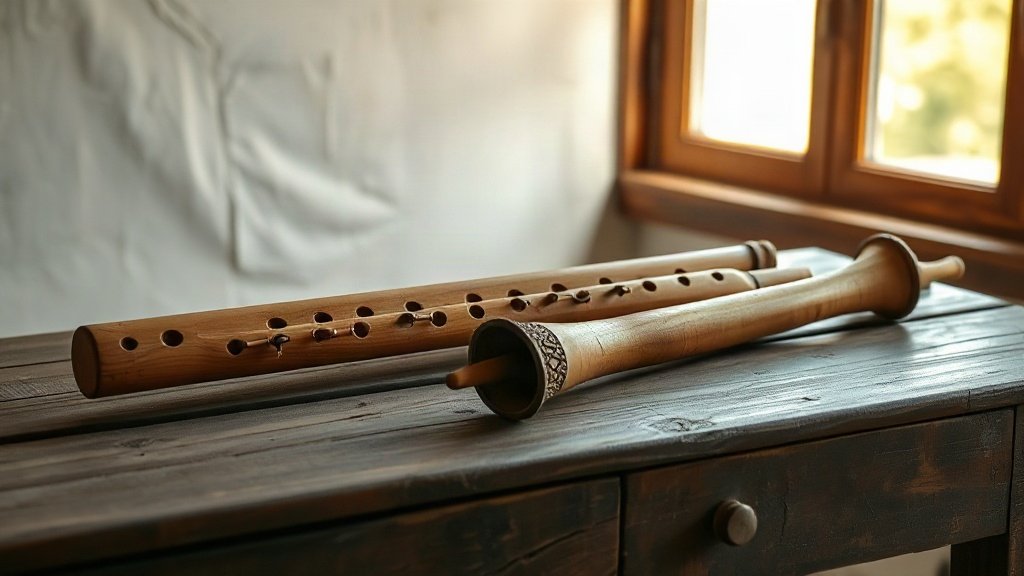
Illustration: AI-generated image
Romania's folk music is instantly recognisable, yet many visitors know little about the instruments that produce its distinctive sound. From the lilting melody of the pan flute to the deep resonance of a wooden horn, these instruments carry centuries of tradition and are still played at festivals, weddings and village celebrations throughout the country. Here is an introduction to three iconic Romanian folk instruments and the music they make.
The Nai (Pan Flute)
The nai is perhaps Romania's most famous folk instrument, a set of bamboo or reed pipes of graduated length bound together in a curved row. The player blows across the open tops of the pipes to produce a soft, breathy tone. Traditionally associated with shepherds in the Carpathian Mountains, the nai is now a feature of professional folk ensembles and has been brought to international stages by virtuoso performers. Its sound is often described as haunting and pastoral, evoking mountain landscapes and open skies.
The Cobza (Lute)
The cobza is a short-necked, pear-shaped lute with a round back and a flat soundboard. It usually has eight to twelve strings arranged in courses, played with a plectrum. The cobza provides rhythmic and harmonic accompaniment in Romanian folk bands known as taraf, where its bright, percussive sound helps drive fast dance tunes like the hora and sârba. Although the cobza has become less common in some regions, it remains a cherished symbol of the old lautari (traditional musicians) tradition.
The Bucium (Alphorn)
The bucium is a long wooden horn, often over two metres in length, traditionally used by shepherds in the mountains to communicate over long distances. Made from a single piece of spruce or fir, the bucium produces a powerful, resonant sound that can carry for kilometres. Its uses ranged from signalling the return of the flock to announcing the start of a festival. Today, the bucium is mostly played at folklore events and pastoral celebrations, where its deep tones create an atmosphere of ancient ritual.
Other Traditional Instruments
Romania's folk music features many other instruments, each with its own regional character. The violin, accordion and cimbalom (hammered dulcimer) are common in Transylvania and Banat, while the tulnic, a long wooden horn similar to the bucium, is associated with the women of the Apuseni Mountains. The fluier, a small wooden whistle or fipple flute, is played throughout the country and is often one of the first instruments children learn. Together, these instruments form the backbone of a living musical heritage.
Where to Hear Them
You can experience these instruments live at folk festivals across Romania, such as those held in towns and villages during summer, at wedding celebrations, or at dedicated folklore shows in major cities. Recordings by professional ensembles offer an accessible introduction, but nothing compares to hearing a nai or bucium in its natural setting, especially in the countryside where the music grew out of daily life. If you travel through rural Romania, keep an ear open for the sound of a shepherd's flute or the distant call of a horn.