Poale-n Brâu: Romania's Traditional Cheese-Filled Pies Explained
Discover poale-n brâu, the beloved Moldavian pastry with a soft dough and sweet or savoury cheese filling. Learn its history, how it's made, and where to find it.
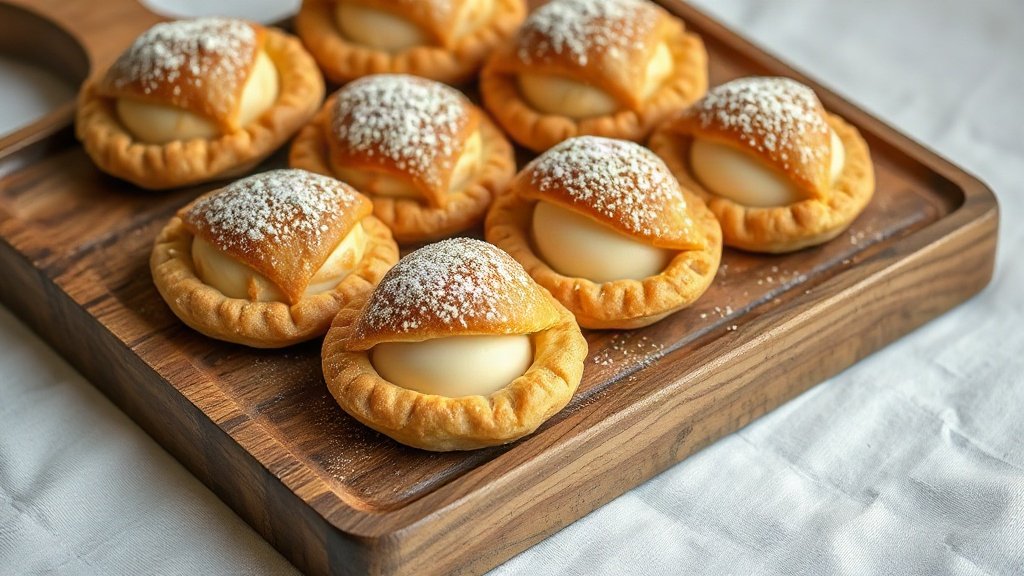
Illustration: AI-generated image
Ask any Romanian about the comforting snacks of childhood, and you may hear about poale-n brâu. These golden, pillow-like pastries, whose name translates to "in the belt," are a staple of Moldova, the eastern region of Romania. They consist of a soft, lightly yeasted dough wrapped around a generous filling of fresh cow's cheese, then baked until blistered and fragrant. Whether enjoyed as a sweet treat with a dusting of sugar or as a savoury bite with fresh dill, poale-n brâu is a humble yet deeply satisfying part of Romania's culinary heritage.
A Brief History
Poale-n brâu has roots in the rural kitchens of Moldavia, where households baked them for special occasions, market days, or simply as a hearty snack for workers in the fields. The name likely comes from the way the dough is folded around the filling, resembling a belt around the waist. Traditionally, they were cooked in wood-fired ovens, often alongside bread, and were prized for their portability and energy-giving qualities.
Over time, the pastry spread across Romania, with each region adding its own touch. While the sweet version is more common today, savoury variations remain popular, especially in the countryside where cheese and herbs were always on hand.
Sweet or Savoury: The Fillings
The heart of poale-n brâu is the filling, and the most traditional version uses brânză de vaci, a fresh, slightly tangy cow's cheese similar to ricotta or quark. For a sweet filling, the cheese is mixed with sugar, eggs, and sometimes raisins, vanilla, or lemon zest. The result is creamy, mildly sweet, and contrasted by the bread-like dough.
Savoury versions often skip the sugar and add chopped fresh dill or parsley, salt, and sometimes a bit of sour cream. Some cooks incorporate finely chopped spring onions or even a little feta for extra saltiness. Regardless of the filling, the dough remains the same: soft, elastic, and lightly enriched, providing a tender casing that browns beautifully in the oven.
Making Poale-n Brâu at Home
If you wish to try your hand at these pastries, the process is straightforward and forgiving. Start with a basic yeast dough made from flour, water or milk, yeast, a pinch of salt, and sometimes an egg or a little oil. After kneading and allowing the dough to rise, divide it into equal pieces and roll each into a circle roughly the size of a small plate.
Place a generous spoonful of the cheese filling in the centre, then fold the edges up and over, pinching them together to create a sealed parcel with a slight opening at the top—this opening is characteristic and helps the filling set without bursting. Arrange the pastries on a baking tray, brush with beaten egg for a shiny crust, and bake until golden. Serve warm or at room temperature.
How to Enjoy
Poale-n brâu is versatile enough for breakfast, a midday snack, or dessert. Sweet versions pair wonderfully with a cup of strong coffee or a glass of cold milk, while savoury ones go well with a bowl of soup or a simple tomato salad. In Romania, you will find them in bakeries, at farmers' markets, and on family tables during holidays such as Easter or Christmas, though they are by no means limited to festive occasions.
Whether you bite into one fresh from the oven or savour a slightly cooled pastry with a hot drink, poale-n brâu offers a taste of Moldavian comfort that is both rustic and refined.