Plugușorul: Romania's New Year's Ritual of Wishes and Plenty
Discover Plugușorul, the Romanian New Year's ritual where children and adults recite verses, crack whips and offer wishes for a prosperous year ahead.
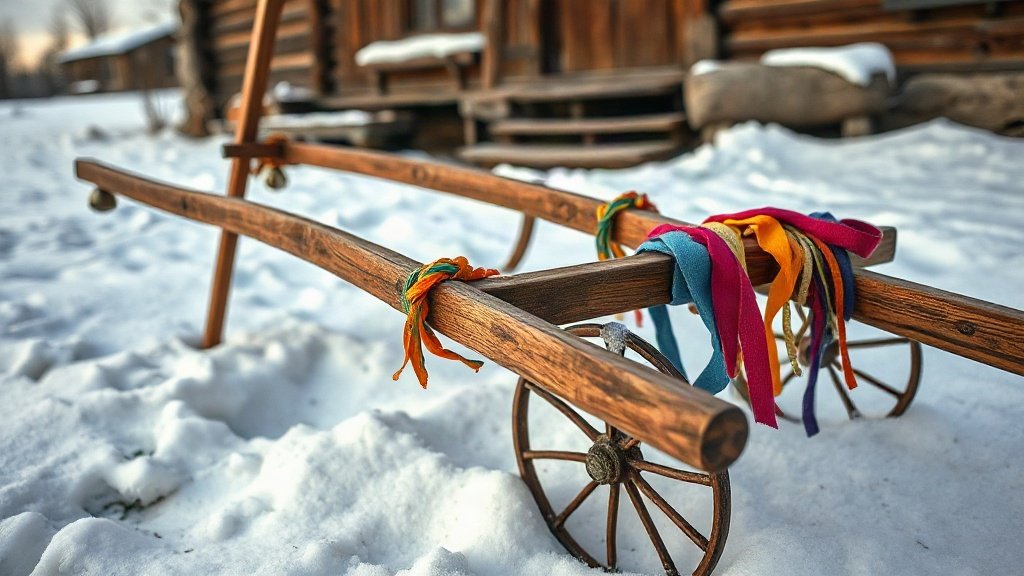
Illustration: AI-generated image
Plugușorul is one of Romania's oldest and most cherished New Year traditions, a ritual of verses, whip cracks and wishes for a fertile and prosperous year ahead. Rooted in pre-Christian agricultural customs, it has survived for centuries, evolving into a colourful performance that still echoes through Romanian villages every winter.
What is Plugușorul?
The word "plugușorul" means "the little plough" in Romanian. On New Year's Eve or New Year's Day, groups of carollers — traditionally young men, but today often children or mixed groups — travel from house to house, carrying a small wooden plough, a whip or a bell. At each home, they recite a long poem that recounts the agricultural year, from ploughing and sowing to harvesting, while cracking whips and ringing bells to drive away evil spirits and symbolically awaken the earth.
The ritual and its verses
The Plugușorul poem is a vivid narrative of rural life. It begins with the first ploughing of the fields and follows the entire cycle: preparing the land, sowing the seed, the growth of crops, the harvest, and finally the threshing and winnowing. Each stanza is recited in a rhythmic, almost chant-like manner, often accompanied by the sound of whips cracking like thunder or the jingle of small bells attached to the plough. The verses are rich in imagery, describing golden wheat, heavy grape clusters and abundant haystacks — all symbols of a wished-for bountiful year.
The performance is not just a recitation; it is a mini-drama. Some versions include a character called "the ploughman" who mimes ploughing with the miniature plough, while others use a real plough pulled by a horse or oxen, though this is less common today. The cracking of whips is believed to purify the air and scare away any lingering winter spirits.
Symbols of the plough
The plough itself is a powerful symbol of fertility and renewal. In agrarian societies, the plough breaks the earth and prepares it for new life, making it a natural emblem for the New Year. Many ploughs used in Plugușorul are decorated with coloured ribbons, paper flowers, evergreen branches and bells, turning a simple farming tool into a festive object. Some groups also carry a bundle of twigs or a wooden harrow, reinforcing the theme of agricultural work.
Plugușorul today
Despite the modernization of Romanian society, Plugușorul remains a beloved custom, especially in rural areas of Moldavia, Transylvania and Wallachia. Children often learn the verses from their parents or grandparents, and schools and cultural centres organise performances to keep the tradition alive. In towns and cities, you might hear Plugușorul recited on television or at community events, a reminder of the deep connection between Romanians and their agrarian roots.
For visitors to Romania during the winter holidays, witnessing Plugușorul is a memorable experience. The rhythmic verses, the sharp crack of whips and the sight of a decorated plough against the snow create a vivid picture of a living tradition that has not lost its power to wish for a better year.