Pasca: Romania's Easter Cheese Bread Explained
A guide to pască, the traditional Romanian Easter bread with a sweet cheese filling, including its regional variations and how it's enjoyed.
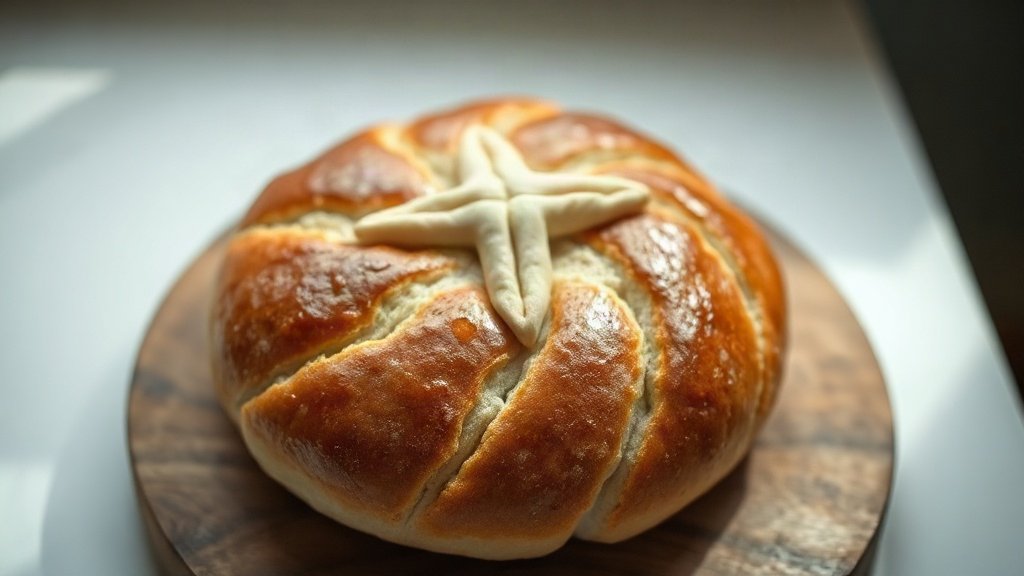
Illustration: AI-generated image
Pască is a beloved Romanian Easter bread, distinguished by its rich, sweet cheese filling. Baked only a few times a year, it takes pride of place on festive tables across the country, especially after the midnight church service on Easter Sunday. For anyone curious about Romania's culinary traditions, pască is a symbol of spring and renewal, combining soft enriched dough with a creamy, tangy centre.
What is pască?
At its heart, pască is a round or rectangular sweet bread with a generous layer of cheese filling. The dough is similar to that used for cozonac, another celebration bread, made with flour, eggs, milk, butter, sugar and yeast. The filling typically consists of fresh cow's cheese (brânză de vaci), eggs, sugar, raisins, and sometimes sour cream, with hints of vanilla or lemon zest. The edges of the dough are often braided or folded over the filling, and the top is traditionally decorated with a cross made from strips of dough, symbolising the Christian faith.
Regional variations
While the basic concept is consistent, pască recipes vary from region to region. In Moldova, the bread is often tall and round, with a thick, almost cake-like cheese layer. In Transylvania, it may be flatter, with a lattice or woven top. Some cooks add poppy seeds to the filling, while others enrich it with cream or even a thin layer of sweetened sour cream on top before baking. These differences are a source of local pride, and every family tends to have its own cherished version.
When and how it's eaten
Pască is almost exclusively an Easter food. It is prepared on Holy Saturday or early Easter morning, then taken to church to be blessed along with other festive foods like painted eggs, cozonac, and drob de miel. After the service, it is eaten as part of the celebratory breakfast or lunch. Many Romanians enjoy a slice with a glass of sweet wine or fresh milk, often as a dessert following the savoury courses. Because it contains dairy and eggs, pască also marks the end of the long Lenten fast, making its first taste particularly meaningful.
Making pască at home
While pască requires time and patience, it is not overly complicated. The dough must be kneaded and left to rise until doubled, then rolled out and placed in a round tin or on a baking tray. The cheese filling is spread in the centre, the edges are folded or braided over it, and the whole loaf is baked until golden and puffed. A key tip is to drain the cheese thoroughly before mixing, to prevent a soggy base. The result is a stunning centrepiece that is both sweet and savoury, with a soft, brioche-like crumb and a moist, tangy filling.
Where to try pască
If you are in Romania during the Easter period, pască is easy to find. Bakeries, patisseries and even supermarkets stock it in the days leading up to the holiday, and many home cooks are happy to share. In larger cities, some speciality bakeries offer pască by order outside the season, but for the most authentic experience, nothing beats a slice made in a Romanian home. Even if you cannot visit, understanding this bread offers a sweet window into the country's rich Easter traditions.