Ouă Încondeiate: Romania's Art of Decorated Easter Eggs
Discover the centuries-old craft of Romanian Easter egg decoration, a wax-resist technique producing intricate symbols of faith and renewal.
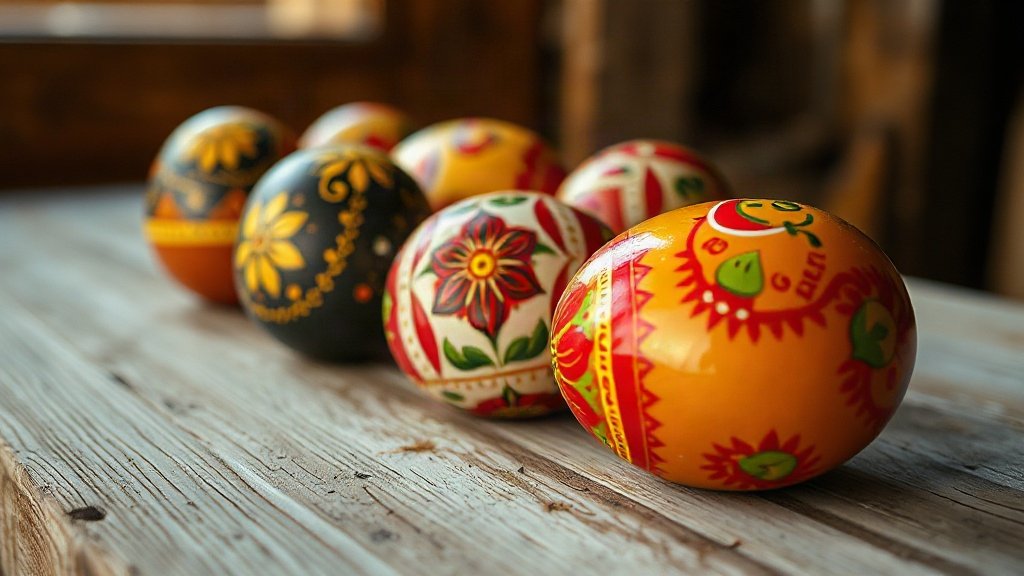
Illustration: AI-generated image
In Romania, Easter is heralded by the delicate art of decorating eggs, known as ouă încondeiate. This centuries-old craft transforms simple eggs into intricate symbols of renewal and faith, and it remains a vibrant part of the country's folk heritage. Unlike the dyed eggs common in many cultures, Romanian decorated eggs are created using a wax-resist technique that requires patience and precision. The result is a miniature masterpiece, rich in colour and meaning.
The Art of Încondeiere
The process begins with a clean, empty eggshell. Using a condei—a small wooden tool with a fine brass tip—artisans apply melted beeswax to the areas they wish to remain undyed. The egg is then dipped into a bath of natural dye, often made from red onion skins, walnut shells, or beetroot. By repeating the waxing and dyeing process with different colours, intricate layered patterns emerge. Finally, the wax is gently melted away to reveal the design in all its glory. This technique requires a steady hand and considerable skill, often passed down through generations.
Regional Styles and Motifs
Different regions of Romania have developed their own distinctive styles. In Bucovina, eggs are renowned for their complex geometric patterns, typically in black, red, and yellow, covering every millimetre of the shell. Vrancea is known for more floral and flowing motifs, often using vibrant greens and blues. In Maramureș, the designs tend to be bolder and sparser, with strong symbolic shapes. Common motifs include the sun, represented as a circle with rays; the cross, symbolising faith; the star, guiding light; and the wheat ear, a sign of prosperity. Another frequent pattern is the "lost path", a meandering line that represents life's unpredictable journey.
Symbolism and Meaning
The decorated egg itself is a symbol of new life and resurrection. Red is the most sacred colour, recalling the blood of Christ and the joy of Easter. Other colours carry their own meanings: yellow signifies fertility and a good harvest, black represents eternity and the mystery of life, and green stands for nature and renewal. The motifs are never random; each carries a wish for health, luck, or protection. Eggs are often exchanged as gifts among family and friends, and displayed prominently in the home during the Easter season.
How to Try It Yourself
For those inspired to try their hand at this craft, it is possible to begin with basic materials. You will need wax, a stylus or a simple pin, and natural or commercial dyes. Many cultural centres and craft workshops across Romania offer demonstrations and classes, especially in the weeks leading up to Easter. Even a simplified version—using a candle to drip wax onto an egg before dyeing—can yield satisfying results. The key is patience and a willingness to learn from mistakes. As you master the technique, you can experiment with more complex patterns and colour combinations.
Whether admired in a museum or attempted at the kitchen table, ouă încondeiate offer a window into Romania's soul. This timeless craft continues to captivate, linking generations and keeping alive a tradition of beauty and belief.