Claca: Romania's Tradition of Collective Work and Community Bonding
Discover claca, the Romanian custom of neighbours gathering to help with big tasks like harvesting or building, followed by feasting and celebration.
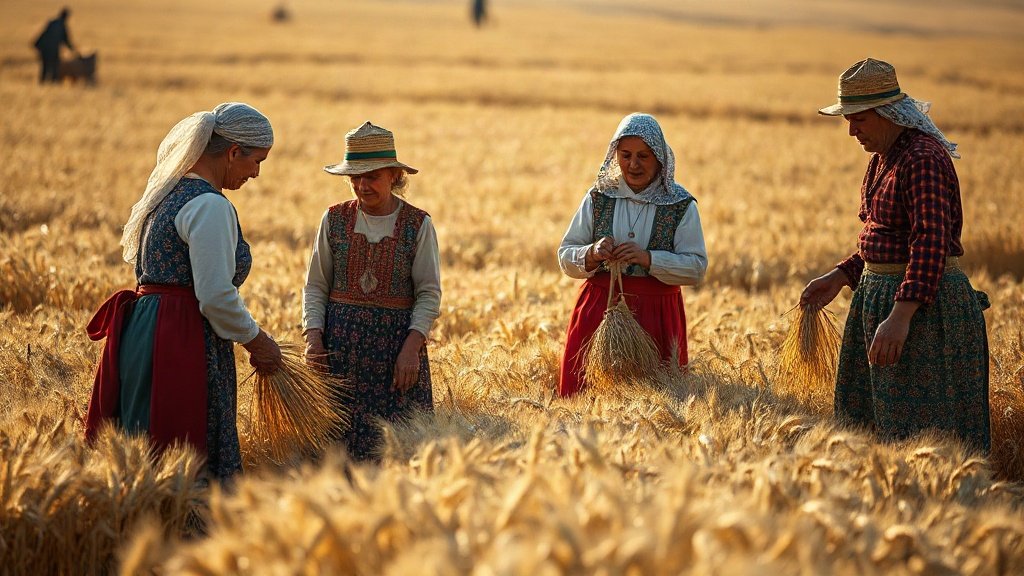
Illustration: AI-generated image
In the villages of Romania, the rhythm of life has long been marked by a powerful sense of togetherness. One of the most enduring expressions of this communal spirit is claca (or clacă), a tradition of collective work that turns heavy tasks into occasions for solidarity, song and celebration.
What is Claca?
Claca is a form of mutual aid in which villagers come together to help a family complete a large or time-sensitive job. The work could be harvesting crops, threshing grain, spinning wool, husking corn, building a house, or even making a wedding trousseau. The host family provides food, drink and often music as a thank you, transforming labour into a festive gathering.
The word clacă derives from the Slavic tlaka, meaning a group of people working together. For centuries, it was an essential part of rural life, ensuring that no family had to face overwhelming tasks alone. It also served as a social glue, reinforcing bonds between neighbours and passing on skills and stories from one generation to the next.
How a Claca Unfolds
A claca was organised by the family in need, who would announce the date and task. Neighbours and relatives would arrive early in the morning, often bringing their own tools. The work was carried out in a lively atmosphere, with participants singing traditional songs, telling jokes and sharing news. For tasks like corn husking, a special claca de desfăcut porumb, young people would compete to find the rare red corn cob, which entitled the finder to a kiss or a dance.
At the end of the day, the host family would lay out a generous meal, often featuring dishes like sarmale (cabbage rolls), mămăligă (polenta), homemade bread, cheese and plum brandy. Music and dancing often followed, with the hora circle dance bringing everyone together. The claca was as much about joy as about work, and it left lasting memories among all who took part.
The Social and Cultural Significance
Beyond its practical purpose, claca embodied values of reciprocity, generosity and community. It was a way of life that reduced inequality and isolation, ensuring that even the poorest families could call on help when needed. The tradition also played a role in courtship, as young men and women worked side by side and had a chance to get to know each other in a supervised, communal setting.
In many regions, claca was accompanied by specific rituals and beliefs. For example, in some areas, the last sheaf of wheat was decorated and kept as a symbol of good luck, while in others, the end of the work was marked by a mock "wedding" or playful games. These customs added layers of meaning to the event, connecting it to the cycles of nature and the spiritual life of the village.
Claca in Modern Times
Today, claca survives in a modified form, especially in rural communities and among diaspora groups. It is often revived for cultural festivals, harvest celebrations or to help families in need. While mechanisation and urbanisation have reduced the necessity of collective manual labour, the spirit of claca lives on in community projects, volunteering and neighbourhood initiatives.
For visitors to Romania, witnessing a claca—if one is fortunate enough to be invited—offers a glimpse into the heart of traditional village culture. It is a reminder that work, when shared, can become a source of happiness and deep human connection.