Opinci: Romania's Traditional Leather Sandals and the Craft Behind Them
From shepherds' trails to national costume, opinci remain a symbol of rural Romania. Here's the story of these handcrafted leather sandals.
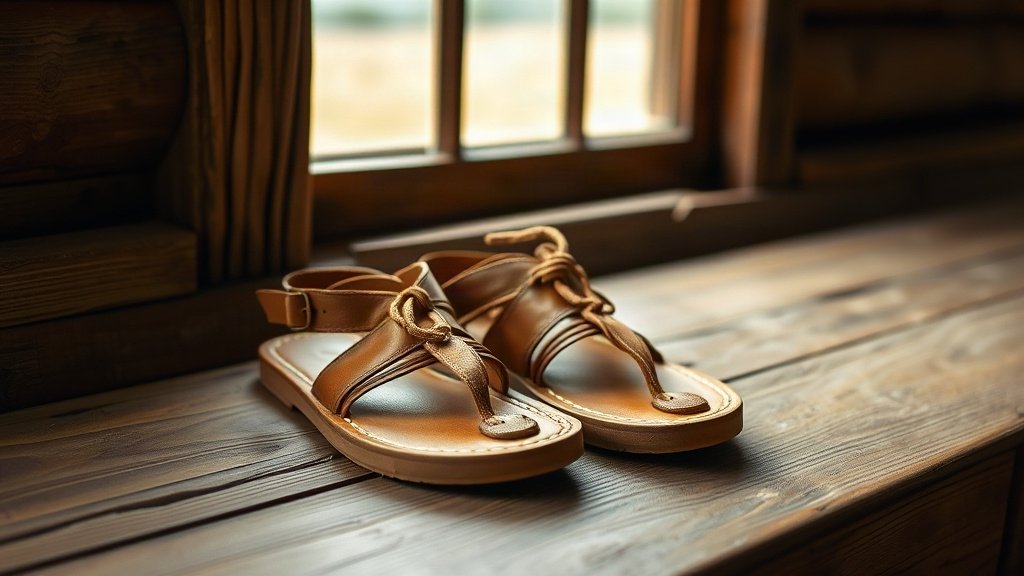
Illustration: AI-generated image
For centuries, the opinci were the everyday footwear of rural Romania. These simple leather sandals wrapped around the foot and tied with cords, carrying peasants, shepherds and children across fields, hills and village lanes. Today they survive as a symbol of national costume and a link to a self-sufficient past.
A Shoe for the Land
Opinci are remarkably simple: a single piece of rawhide, usually cowhide or pigskin, cut to the shape of the foot. The edges are folded up and punched with holes, then a leather cord or woollen string is threaded through and wound around the ankle and lower calf. The result is a flat, flexible sole that lets the wearer feel the ground, grip rocky paths and move quietly through forest and field.
Unlike stiff wooden clogs or heavy boots, opinci suited the needs of subsistence farming and shepherding. They could be made at home, repaired with a new cord or patch, and worn with thick woollen socks called obiele for warmth. In summer, they were often worn barefoot, allowing feet to breathe while still offering protection from thorns and stones.
How They Were Made
Making opinci required patience and skill with simple tools. The hide was tanned using natural methods, sometimes with oak bark or animal brains, then softened with grease. A village leatherworker or the family itself would cut the sole, punch holes around the rim, and shape the leather to the foot. Some regions added a second layer for durability, while others embossed simple patterns or stitched decorative borders for special occasions.
The cords that held the opinci in place were as important as the leather. They could be thin strips of the same hide, braided wool, or hemp twine. The way they wrapped around the leg varied by region and gender; in some areas, women crossed the cords in an X pattern up to the knee, while men wrapped them more closely around the ankle. These subtle differences became part of local identity.
From Work to Stage
As factory-made shoes and boots spread through Romania in the twentieth century, opinci gradually disappeared from daily use. But they never vanished entirely. In villages where folk traditions remained strong, dancers performed in opinci because the soft soles allowed the precise footwork of the hora, sârba and învârtita. The sandals protected the dancer’s feet while letting the toes point and flex naturally.
Today, opinci are an essential part of national folk costume. They appear on stage at festivals, in school performances, and at weddings where traditional dress is worn. Artisans continue to make them by hand, using traditional patterns, for folk ensembles, collectors and those who want a piece of living history.
Regional Styles
Across Romania’s historical regions, the basic opincă took on different forms. In the highlands of Maramureș and Transylvania, thicker leather and higher lacing protected against rocks and cold. In the plains of Wallachia and Moldavia, opinci were often more delicate, with pointed or rounded toes. Some communities in the Banat and Oltenia used a woven strap system rather than simple cords. These regional variations are now studied by ethnographers and displayed in village museums.
Where to See Them
Open-air ethnographic museums in Bucharest, Sibiu, Cluj-Napoca and other cities hold collections of opinci, often displayed alongside the regional costumes they accompanied. During summer folk festivals, visitors can watch dance troupes perform in authentic opinci, the leather creaking softly as they spin in the hora. Craft fairs occasionally feature leatherworkers demonstrating the cutting and stitching of a new pair.
For anyone curious about how rural Romanians once walked, worked and danced, the opinci tell that story with every crease and frayed cord. They are not just old shoes; they are a memory of a time when everything a family wore came from the land around them.