Mămăligă: Romania's Traditional Polenta and How to Cook It
Mămăligă is more than a side dish in Romania—it's a staple with a rich history. Learn how to cook it perfectly and discover the many ways it's enjoyed.
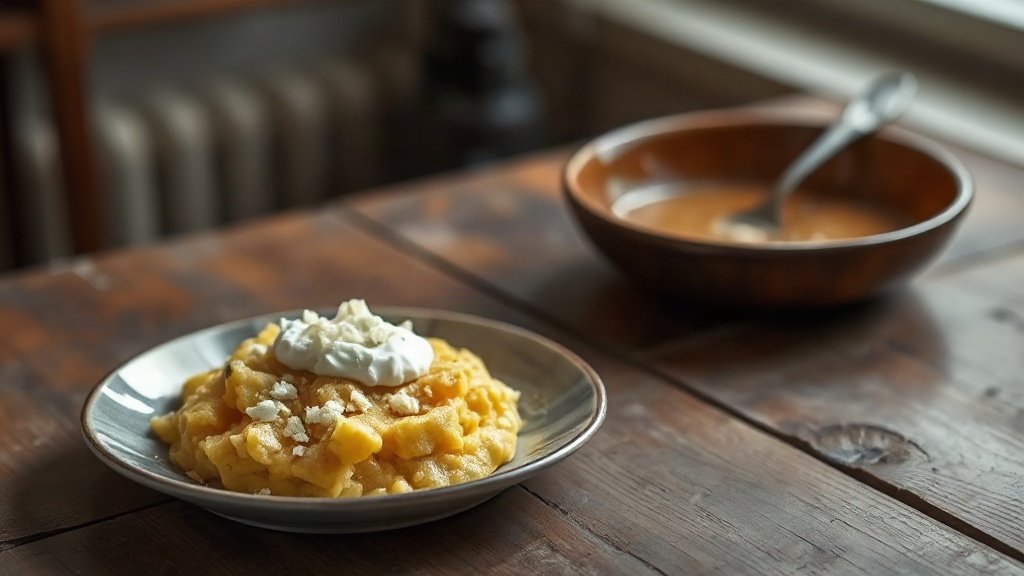
Illustration: AI-generated image
If you spend any time exploring Romanian food, you will soon meet mămăligă. This golden cornmeal dish is often compared to Italian polenta, but in Romania it is a category of its own: a daily staple, a comfort food and a canvas for countless toppings and accompaniments.
What exactly is mămăligă?
Mămăligă is made from coarsely ground yellow cornmeal, boiled with water and a little salt until thick and smooth. The result is firmer than a soft polenta, and when cooked traditionally it holds its shape well enough to be sliced. Historically, it was a peasant food that sustained rural communities, especially in the mountainous regions where wheat was harder to grow. Today it appears on tables across the country, from simple home kitchens to traditional restaurants.
You might hear it called “mămăliguță” as a diminutive, or see it served alongside stews, soups, grilled meats and cheese. In many households it replaces bread entirely, and it is naturally gluten-free and vegan, making it an inclusive choice for many diets.
How to cook a perfect mămăligă
The classic method is straightforward and forgiving. For a firm mămăligă that can be sliced, use a ratio of about 1 part cornmeal to 3 parts water. For a softer, creamier version, increase the water slightly. Start by bringing salted water to a boil in a heavy-bottomed pot. Then add the cornmeal in a steady stream while whisking constantly to prevent lumps.
Once all the cornmeal is incorporated, reduce the heat to low and continue stirring with a wooden spoon. Traditional cooks say mămăligă is ready when it pulls away cleanly from the sides of the pot and the spoon stands upright in the centre. This usually takes around 15 to 20 minutes. For a truly authentic texture, some cooks finish it by placing the pot in a warm oven for a few minutes to dry out the surface slightly.
Serving ideas: from humble to hearty
The simplest way to enjoy mămăligă is hot, topped with a knob of butter and a spoonful of sour cream (smântână). Add a crumbling of salty cheese such as telemea and you have a satisfying light meal. It is also the classic accompaniment to rich meat stews like tochitură or gulaș, soaking up the juices wonderfully.
In Transylvania, you may encounter mămăligă served alongside cabbage rolls (sarmale) or a bowl of bean soup with smoked pork. In the north, it appears with mushroom sauce or a fried egg. And for a true taste of tradition, try mămăligă with a generous spoonful of zacuscă, the smoky vegetable spread made from aubergines and peppers.
A few variations worth trying
Once you master the basic mămăligă, you can experiment with regional twists. Bulz is a beloved version where the polenta is wrapped around cheese and grilled until the outside is crisp. Leftover mămăligă can be sliced and fried in a little oil or butter until golden, then served with honey or jam for breakfast. Some cooks stir in milk or cheese during cooking for extra richness, while others bake it into a layered dish with bacon and eggs.
However you choose to serve it, mămăligă is a reminder that the simplest ingredients often create the most memorable meals. Next time you are looking for a versatile, comforting side dish, give this Romanian staple a try.