Living Fires of Buzău: A Guide to Romania's Natural Flames
Discover the surreal landscapes of Buzău county, where eternal flames flicker from the earth and mud volcanoes bubble in a lunar terrain.
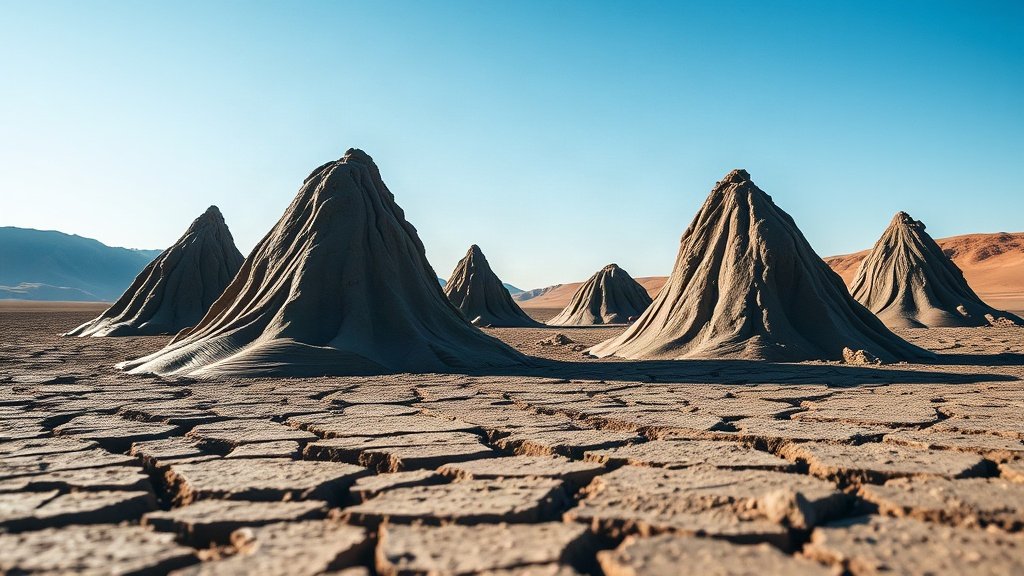
Illustration: AI-generated image
Romania's Buzău county hides one of Europe's most unusual natural phenomena: the Living Fires (Focurile Vii), where flames dance from cracks in the earth, burning continuously for centuries. Nearby, the mud volcanoes create a desolate, moon-like landscape of bubbling grey cones. Together they form a surreal day trip from Bucharest or Brașov, perfect for travellers seeking something beyond the usual castles and churches.
What are the Living Fires?
Near the village of Lopătari, natural gas seeps through fissures in the ground and ignites spontaneously, producing small, steady flames that flicker day and night. Locals have long known these fires, which burn even in rain or snow. The flames range from a few centimetres to over half a metre high, and the area has an otherworldly feel, especially at dusk when the blue and yellow tongues of fire become most visible.
The Mud Volcanoes of Berca
About 20 kilometres south, near the commune of Berca, lie the Pâclele Mari and Pâclele Mici mud volcanoes. These are not hot, but cold mud eruptions driven by underground gas. The grey, mineral-rich mud oozes up through cones, creating a barren landscape that looks like a scene from another planet. The largest cones reach several metres high, and the constant gurgling of gas adds to the eerie atmosphere. The mud is said to have healing properties, though visitors are advised not to touch it.
How to visit
Both sites are free to enter, though you may need to park a short walk away. A car is essential, as public transport is limited. From Bucharest, the drive to Berca takes about two hours via the A3 motorway and DN10. From Brașov, the route through the Buzău Pass offers scenic mountain views before descending into the hills. Many visitors combine the two sites in a single day, starting with the mud volcanoes in the morning and ending at the Living Fires for sunset.
When to go
The sites are accessible year-round, but spring and autumn offer the most comfortable temperatures. Summer can be very hot on the bare, sun-baked mud fields, and winter visits are possible but may involve muddy or icy paths. Early morning or late afternoon provides the best light for photography, and the Living Fires are most atmospheric after dark.
Practical tips
- Wear sturdy shoes: the ground around both sites can be muddy and uneven.
- Bring water and sun protection, as there is no shade.
- Respect the fragile environment: stay on marked paths and do not climb the mud cones.
- There are no facilities at the sites, so use the toilet before arrival.
- If visiting at night for the fires, take a torch and be mindful of the terrain.
The Living Fires and mud volcanoes of Buzău offer a glimpse into Romania's raw geological power. They are a reminder that this country's natural beauty extends far beyond the Carpathian peaks, and they make for an unforgettable off-the-beaten-path adventure.