Gutui: Romania's Fragrant Quince and How to Use It
From poached desserts to thick jams, quince is a beloved autumn fruit in Romanian kitchens. Here's why it's worth seeking out and how to enjoy it.
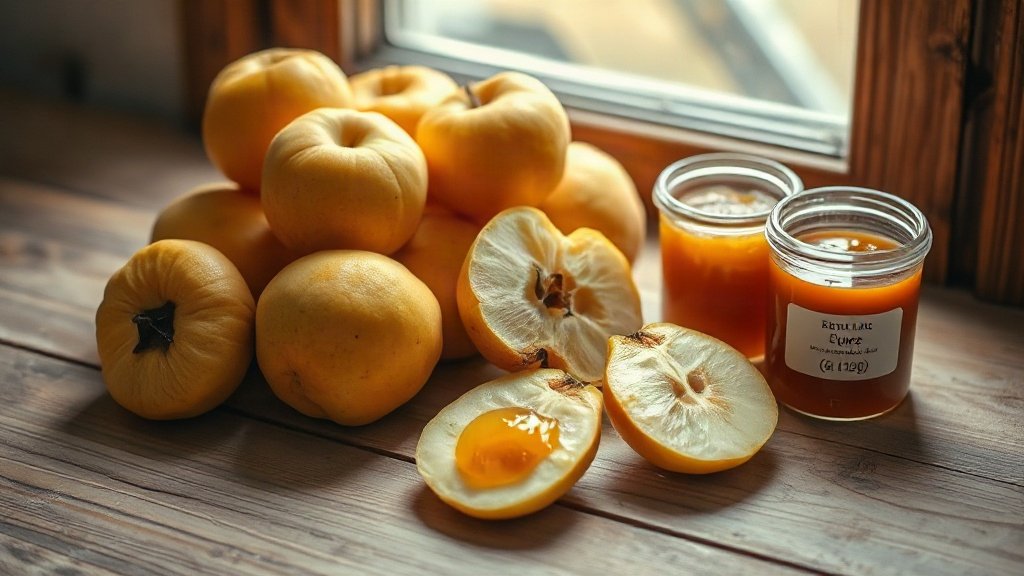
Illustration: AI-generated image
When autumn arrives in Romania, markets fill with golden, pear-shaped fruit that often looks a little fuzzy and smells intensely floral. That is gutui (quince), a fruit that rarely gets eaten raw but transforms into some of the country's most comforting winter preserves and desserts.
Quince has been grown in Romania for centuries, and it remains a common sight in household gardens and orchards, especially in the hillier regions. The fruit is hard and astringent when uncooked, but heat and sugar work magic, turning it soft, rosy and deeply fragrant.
What Makes Romanian Quince Special
Most Romanian quince varieties are large, yellow and covered with a fine down. The fragrance is so strong that a single ripe quince can perfume an entire room; many people keep one in a bowl simply for its scent.
Compared with quince from warmer climates, Romanian-grown fruit is often more tart, which makes it excellent for preserving. The high pectin content means quince jams and jellies set easily without added thickeners.
Classic Ways to Enjoy Gutui
- Compot de gutui – quince poached gently in light syrup, sometimes with a cinnamon stick or a few cloves. Served chilled as a simple dessert or alongside roasted meats.
- Dulceață de gutui – a whole-fruit preserve in which quince slices or chunks keep their shape, cooked until translucent and amber-coloured. Traditionally served with a glass of cold water and a spoon, or spread on fresh bread.
- Pâine cu gutui – not bread at all, but a dense, sliceable quince paste, similar to Spanish membrillo. Made by cooking quince purée with sugar until very thick, then setting it in a tin. Served in thin slices with cheese, nuts or on its own.
- Gutui coapte – baked quince, often stuffed with honey, walnuts and a little butter. A warming autumn dessert that needs almost no effort.
- Ceai de gutui – dried quince slices steeped in hot water make a delicate, soothing tea that is popular during cold season.
How to Choose and Store Quince
Look for fruit that is firm, heavy for its size and has an intense aroma. Avoid any with bruises or soft spots, as they spoil quickly. Quince keeps well in a cool, dark place for several weeks, and the smell will become stronger as it ripens.
If you buy more than you can use, quince can be peeled, cored, sliced and frozen raw, then cooked from frozen when needed. It also dries beautifully in a low oven or dehydrator for use in teas or stews.
A Simple Quince Compote to Try
For an easy introduction, peel and core four quince, cut them into chunks and place in a saucepan with the juice of half a lemon, a cinnamon stick, two tablespoons of honey and enough water to just cover. Simmer gently for 30–40 minutes until the fruit is tender and the liquid has thickened slightly. Serve warm or chilled, with a spoonful of thick yogurt or smântână.
Quince may not be the easiest fruit to eat out of hand, but its transformation in Romanian kitchens is a reminder that patience and a little sugar bring remarkable rewards.