Doina: Romania's Soulful Song of Longing and Landscape
Doina is Romania's lyrical folk song, an improvised expression of deep emotion that echoes across hills and valleys.
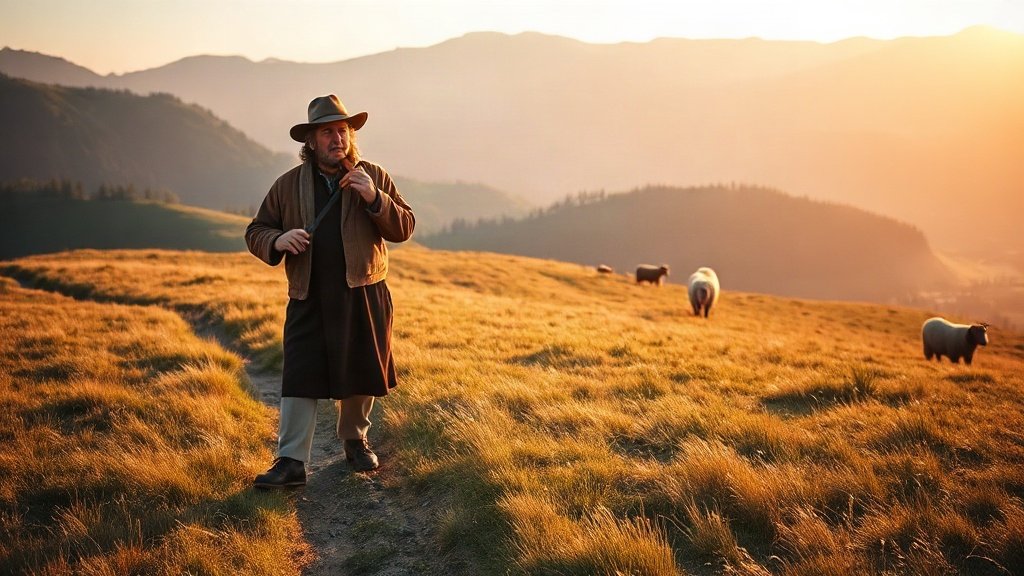
Illustration: AI-generated image
Doina is the sound of the Romanian soul, a deeply personal and improvised folk song that expresses emotions ranging from longing and sorrow to love and resilience. Unlike fixed musical compositions, a doina is created in the moment, shaped by the singer's mood and the surrounding landscape. It is often performed solo, with a free rhythm that mirrors the natural cadence of speech and the rolling hills of the Romanian countryside.
What Makes a Doina?
A doina typically begins with a slow, introspective melody that gradually builds in intensity before returning to a calm close. The lyrics are usually poetic, drawing on themes of nature, separation, unrequited love, or the pain of emigration. The melody is richly ornamented with vocal techniques such as portamento and melisma, giving it a wailing, almost crying quality that is instantly recognisable. While the voice is the primary instrument, doinas are also played on traditional instruments like the fluier (shepherd's flute), nai (panpipes), or taragot.
Origins and Regional Variations
Doina is considered one of the oldest forms of Romanian folk music, with roots that may stretch back to ancient pastoral traditions. Every region of Romania has its own variant: the doina of Maramureș is known for its long, melismatic phrases, while the doina of Oltenia tends to be more rhythmic and dance-like. In Transylvania, instrumental doinas are common, often played by lăutari (professional folk musicians) at weddings and gatherings. Despite these differences, all doinas share a sense of improvisation and emotional depth that sets them apart from other folk genres.
The doina is not merely entertainment; it has historically served as a means of emotional release and communication. Shepherds used it to signal across valleys, while women sang doinas while working or grieving. In times of hardship, the doina became a way to express collective sorrow without direct complaint.
UNESCO Recognition and Cultural Significance
In 2009, doina was inscribed on UNESCO's Representative List of the Intangible Cultural Heritage of Humanity, acknowledging its importance to Romania's cultural identity. This recognition highlights the doina as a living tradition that continues to inspire contemporary musicians, from folk revivalists to classical composers. George Enescu, Romania's most famous composer, incorporated doina-like melodies into his works, bridging the gap between folk and classical music.
Today, doina remains a vital part of Romanian cultural life, performed at festivals, on radio, and in intimate gatherings. Learning to sing a doina is considered a rite of passage for aspiring folk musicians, who must master not only the technique but also the ability to channel genuine emotion. For visitors, hearing a live doina—whether in a village tavern or a concert hall—offers a profound glimpse into the Romanian spirit.
How to Experience Doina
If you are travelling in Romania, you may encounter doina at traditional music festivals, particularly in rural areas of Maramureș, Bucovina, or Oltenia. Many ethnographic museums and cultural centres also host performances. Listening to recordings by renowned folk singers such as Maria Tănase or Ion Petre Stoican can provide an introduction, but nothing compares to the raw, unamplified sound of a doina sung in its natural setting. When you hear it, let the melody wash over you—it is an invitation to feel, not just to listen.