Cornulețe: Romania's Crescent-Shaped Filled Cookies Explained
A guide to the buttery, jam-filled pastries that appear on Romanian tables at Christmas, Easter and every celebration in between.
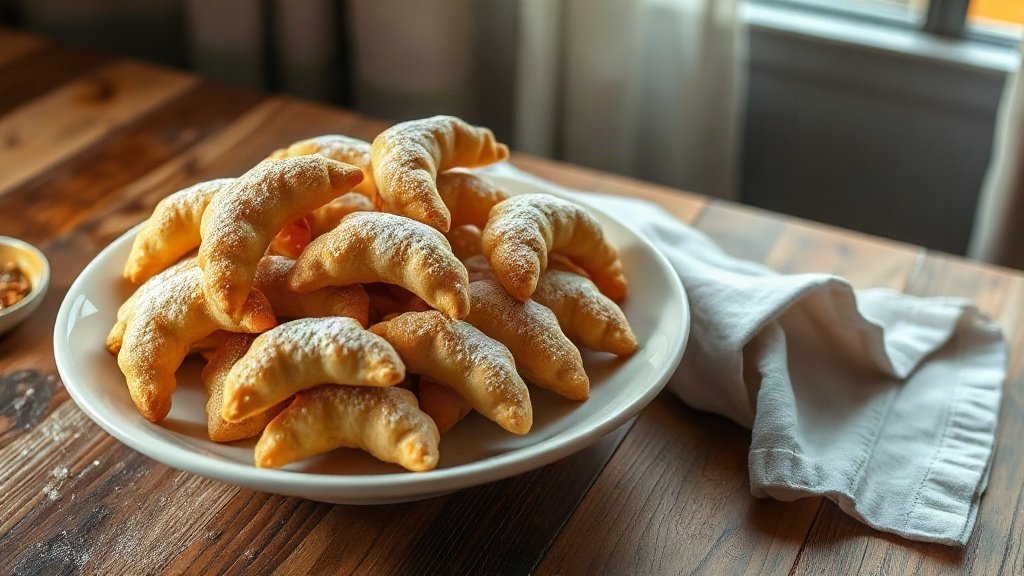
Illustration: AI-generated image
If you have a sweet tooth and find yourself in Romania, keep an eye out for cornulețe. These small, crescent-shaped cookies are a beloved part of the country's baking tradition, appearing on festive tables from Christmas to Easter and at countless family gatherings in between. Their name comes from the Romanian word for 'little horns', and they're as charming to look at as they are to eat.
What are cornulețe?
Cornulețe are delicate, crumbly cookies made from a rich dough that typically combines flour, butter or lard, and sour cream or yogurt. The dough is rolled thin, cut into small squares or circles, filled, and then shaped into crescents before baking. The result is a golden, melt-in-the-mouth pastry with a sweet surprise in the centre.
The cookies are closely associated with Romanian home baking, where recipes are often passed down through generations. While you can find them in bakeries and pastry shops, many Romanians insist the best cornulețe are the ones made at home, especially around the winter holidays.
Traditional fillings
The filling is what gives cornulețe their character, and there are several classic options:
- Jam: Thick plum or apricot jam is a favourite, its slight tartness balancing the buttery dough.
- Ground walnuts: Walnuts mixed with sugar, sometimes with a hint of rum or vanilla, create a rich, nutty centre.
- Turkish delight (rahat): Small cubes of rose or lemon-flavoured Turkish delight melt slightly during baking, adding a fragrant, chewy sweetness.
- Poppy seed paste: Less common but still traditional, poppy seeds ground with sugar and milk make a filling with a distinctive texture.
Some bakers also use a combination, such as jam with a piece of walnut, or they dust the finished cookies generously with icing sugar.
How to make them at home
Making cornulețe is a rewarding project for home bakers. The process is straightforward but requires a little patience for shaping. Start by mixing flour with cold butter or lard until the mixture resembles breadcrumbs. Add sour cream or yogurt and a pinch of salt, then knead gently into a smooth dough. Chill the dough for at least an hour to make it easier to handle.
Roll the dough to about 5mm thick and cut it into squares or use a round cutter. Place a small amount of filling in the centre of each piece, then fold the dough over to form a crescent and pinch the edges to seal. Bake in a preheated oven at 180°C (350°F) for 15–20 minutes, or until lightly golden. Once cool, dust with icing sugar if desired.
The cookies keep well in an airtight container for up to two weeks, making them a practical make-ahead treat for the holidays.
When to enjoy them
Cornulețe are a staple of Romanian Christmas and Easter baking, often prepared in large batches alongside other sweets like cozonac and turta dulce. They're also served at weddings, baptisms and other family celebrations, where platters of assorted cookies are offered to guests with coffee or tea.
If you're visiting Romania and spot cornulețe in a bakery or at a market, don't hesitate to try one. Their delicate texture and sweet fillings offer a true taste of Romanian home cooking, and they pair beautifully with a cup of strong black coffee or a glass of cold milk.