Cheile Nerei-Beușnița: A Hiker's Guide to Romania's Hidden Canyons
Discover turquoise lakes, cascading waterfalls and dramatic limestone gorges in one of Romania's least-visited national parks.
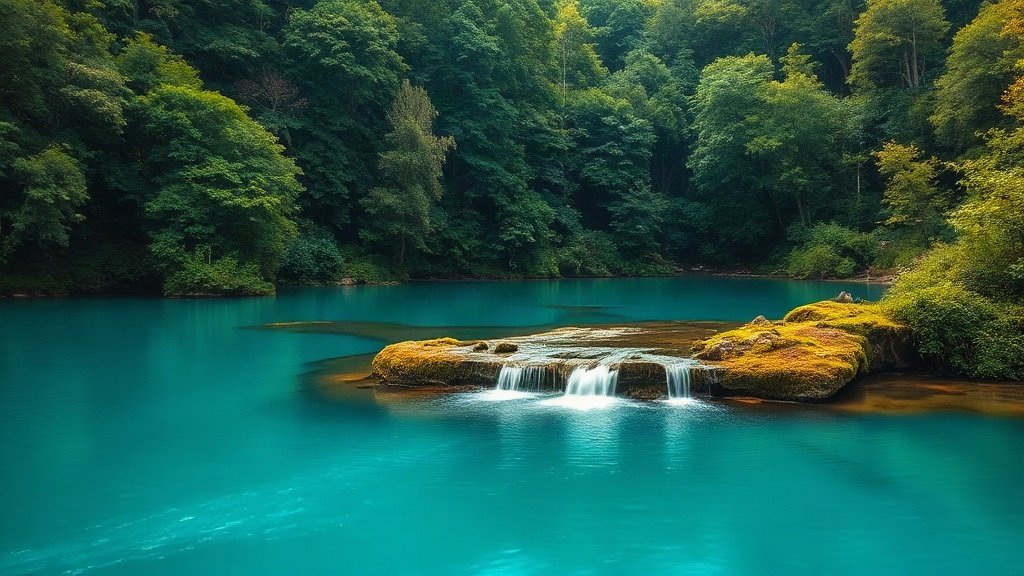
Illustration: AI-generated image
While the Bucegi and Retezat mountains draw crowds each summer, the far southwest of Romania hides a landscape so surreal it feels like a secret. Cheile Nerei-Beușnița National Park, tucked into the foothills of the Anina Mountains, is a hiker's dream of turquoise lakes, mossy gorges and waterfalls that seem to pour from the forest itself.
Why visit Cheile Nerei-Beușnița
The park's centrepiece is a series of limestone canyons carved over millennia by the Nera River and its tributaries. The Nera Gorge itself runs for nearly 18 kilometres, with walls rising over 600 metres in places. Inside this karst wonderland, water has sculpted caves, sinkholes and hidden valleys that remain cool even in midsummer. For travellers who prefer quiet trails over crowded lookouts, this park offers a rare sense of discovery.
Ochiul Beiului: the blue eye of the forest
One of the park's most photographed sights is Ochiul Beiului, a perfectly round, deep-blue spring that looks like a giant eye staring up from the forest floor. The water is so clear you can see the limestone bottom, and its constant temperature hovers around 8°C. The spring feeds the Beușnița River, which immediately tumbles over a series of small waterfalls into a turquoise pool. A short, well-marked trail leads from the road to this cluster of natural wonders, making it accessible for families.
Beușnița waterfalls: a chain of green cascades
Beyond Ochiul Beiului, the Beușnița stream flows through a narrow canyon, creating a chain of waterfalls known locally as the "Bigăr of the west". The most impressive is Beușnița Mare, a wide curtain of water that drops into a deep, emerald basin. Moss-covered rocks and overhanging trees give the whole area a primeval atmosphere. A circular route of about 5 km takes you past several falls, across wooden bridges and through tunnels of beech and hornbeam.
Hiking trails for every level
The park has a growing network of marked trails, many of which follow old forest roads and shepherd paths. The most popular loop starts at the forest canton at Poiana Beușniței and takes about three hours at a relaxed pace, covering Ochiul Beiului, the Beușnița waterfalls and a stretch of the Nera Gorge. For a longer adventure, the trail to the Devil's Lake (Lacul Dracului) climbs onto a plateau dotted with sinkholes and wildflower meadows. Experienced hikers can tackle the full Nera Gorge crossing, a demanding two-day route that requires good fitness and a head for heights.
What else to see nearby
The park is surrounded by quiet villages where traditional life continues much as it has for generations. Wooden watermills still grind corn along the streams, and in autumn the forests turn a patchwork of rust and gold. The nearby town of Anina is home to one of Romania's oldest mining railways, and the Semenic Mountains offer panoramic views over the whole region. For those with a car, a scenic drive along the Nera valley links the park with the Danube at the Iron Gates gorge.
Planning your visit
The park is open year-round, but the best time for hiking is from late April to early October. Summer days can be hot, though the canyons stay cool, and sudden thunderstorms are common in the afternoons. Spring brings high water levels and lush vegetation, while autumn offers clear skies and fewer visitors. The terrain is rocky and often slippery, so sturdy footwear is essential. There is no entry fee, and visitor facilities inside the park are minimal—carry water and snacks, and let someone know your route if you plan to hike the longer trails.
Getting there is easiest by car from Timișoara or Reșița; public transport is limited to a few daily buses. The nearest villages with guesthouses are Sasca Română and Șopotu Nou, both within a short drive of the main trailheads. For a truly immersive experience, consider staying in a rural pensiune and exploring the park over several days.