Bucharest Metro: A Visitor's Guide to Getting Around the Capital
Learn how to navigate Bucharest's efficient underground network, from buying tickets to reaching key attractions.
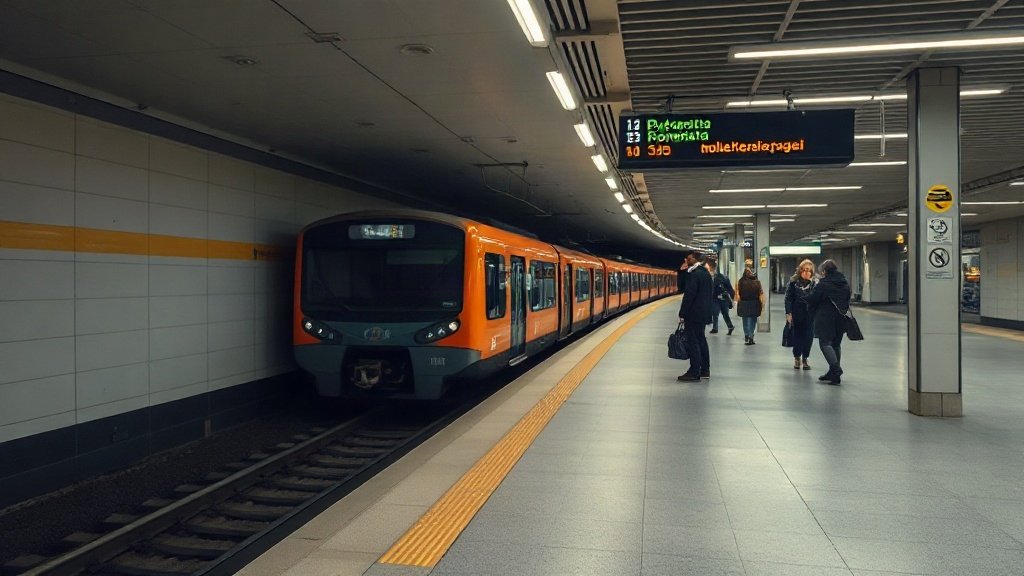
Illustration: AI-generated image
Bucharest’s metro is the fastest way to cross the Romanian capital, whisking you beneath the city’s traffic-clogged boulevards in clean, air-conditioned carriages. First opened in 1979, the network now spans five lines and over 70 stations, connecting the main railway station, key museums and many residential districts.
Opened in 1979, the Bucharest metro was built during the communist era, with stations designed as grand public spaces. Many feature ornate marble walls, chandeliers and intricate mosaics that reflect a bygone aesthetic. Today, some of the deepest stations double as civil defence shelters, a reminder of their original dual purpose.
Understanding the network
Four main lines (M1, M2, M3, M4) form a rough cross through central Bucharest, with a fifth line (M5) serving the western Drumul Taberei neighbourhood. The busiest interchange is Piața Unirii, where M1, M2 and M3 meet beneath one of the city’s largest squares. Line M2 is particularly useful for visitors, linking the main Gara de Nord railway station with the old town and the Palace of Parliament area.
Buying a ticket
Tickets are sold at machines and staffed counters in every station. You’ll need a rechargeable contactless card, which can be loaded with single journeys, day passes or longer periods. A single journey allows one metro ride with unlimited transfers within the system, as long as you don’t exit through the barriers. Remember to validate your card by tapping it on the reader at the entry gate.
Riding the metro
Trains run frequently from early morning until around 23:00, with intervals of three to ten minutes depending on the time of day. Platforms are announced in Romanian and English, and digital displays show the next train’s arrival. Carriages are modern and generally less crowded than buses or trams, though rush hour (07:30–09:00 and 17:00–19:00) can be busy.
Reaching major sights
Many attractions are a short walk from a metro station. The old town (Lipscani) is best reached from Piața Unirii or Universitate. The Palace of Parliament is a 15-minute walk from Izvor station on M1 and M3. The Village Museum and Herăstrău Park are accessible from Aviatorilor on M2. The Antipa Natural History Museum is near Piața Victoriei, a major interchange for M1 and M2.
Practical tips for visitors
- Keep your card topped up, as exit gates require a valid balance for the trip.
- Stations are marked with a large white “M” on a blue background.
- Escalators are common, but lifts are available at many recently modernised stations for step-free access.
- Bicycles are allowed on the metro outside peak hours, usually in the last carriage.
- During rush hours, avoid carrying large luggage if possible, as platforms can become congested.
Connecting to other transport
Most metro stations are linked to bus and tram stops, making it easy to continue your journey above ground. The same contactless card can be used on surface public transport, though you’ll need to validate again when boarding. Taxis and ride-hailing apps are also plentiful near major stations, but the metro often beats them for speed during peak traffic.
Accessibility
While older stations have steep escalators and limited step-free access, newer stations and those renovated in recent years include lifts, tactile paving and audio announcements. If you have reduced mobility, check the station map on the Metrorex website or ask staff for assistance.
Whether you’re heading to a museum, a restaurant or simply exploring a new neighbourhood, the Bucharest metro offers a reliable and affordable way to travel like a local.