Bătuta: Romania's Spirited Men's Dance from Maramureș
Discover the fast footwork, boot-slapping rhythms and proud tradition of bătuta, a men's dance from Romania's northern Maramureș region that keeps village celebrations alive.
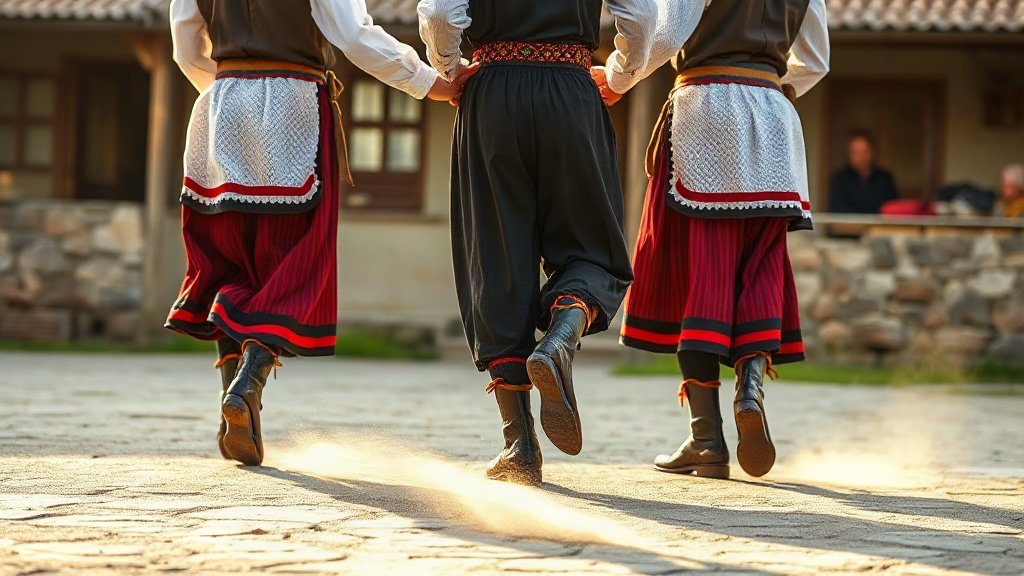
Illustration: AI-generated image
If you find yourself at a village celebration in northern Romania's Maramureș region, you will likely witness a dance that seems to defy gravity. Men leap, crouch and strike their boots with lightning speed, their movements precise and powerful. This is bătuta, a traditional men's dance that has been passed down through generations and remains a highlight of weddings, festivals and folklore performances.
Bătuta (pronounced buh-TOO-tah) takes its name from the Romanian verb a bate, meaning "to beat" or "to hit". The dance is known for its rhythmic stamping, heel-and-toe tapping and sharp slaps on the soles and sides of the boots. Danced almost exclusively by men, it showcases strength, stamina and virtuoso footwork, often performed solo or in small groups that share the same rhythmic patterns.
Origins and cultural role
Bătuta is rooted in the shepherd and farming communities of Maramureș, a region celebrated for its well-preserved folk traditions. Historically, the dance served as a display of physical prowess and coordination, qualities valued in rural life. Today, it is a source of local pride and a way for young men to demonstrate their agility during community gatherings.
Unlike couple dances such as învârtita, bătuta is primarily a solo or group display. Men often dance in a line or semicircle, facing the musicians who provide the driving rhythm. The music is typically played on a vioară cu goarnă (horn violin) or other local instruments, with a lively tempo that pushes the dancers to their limits.
Steps and style
The core of bătuta lies in its intricate foot patterns. Dancers alternate between rapid toe taps, heel clicks and full-foot stamps, all while slapping their leather boots in time with the music. The upper body remains upright and steady, allowing all motion to originate from the hips down. This contrast between a calm torso and explosive legs is a hallmark of the style.
A typical sequence might include:
- Heel-and-toe taps – quick alternation between striking the floor with the heel and the toe while shifting weight.
- Boot slaps – striking the sole or side of the boot with one hand, often combined with a jump or squat.
- Crouching step – bending low while kicking one leg forward, then springing back up.
- Spins and turns – sharp pivots that reset the dancer's position for the next phrase.
Each village may have its own variations, but the essence remains the same: speed, precision and an unwavering connection to the beat.
Where to experience bătuta
While bătuta is performed throughout Maramureș, you are most likely to see it at Sunday dances in villages, at rugă (village feast days) and during wedding celebrations. Folklore ensembles across Romania also include bătuta in their repertoires, helping to keep the tradition alive for audiences far beyond the region. If you attend a performance, watch for the dancers' expressions: concentration mixed with joy, a reflection of both the difficulty and the deep satisfaction of mastering this demanding art.
Learning bătuta takes time and patience, but enthusiasts often begin with the basic heel-and-toe rhythm before adding the slaps and jumps. Even attempting a few steps can give you a new appreciation for the athleticism embedded in Romania's folk heritage.