Varză Călită: Romania's Comforting Braised Cabbage
Varză călită is a humble Romanian dish of slowly braised cabbage, often enriched with smoked meat and tomato, that has warmed home tables for generations.
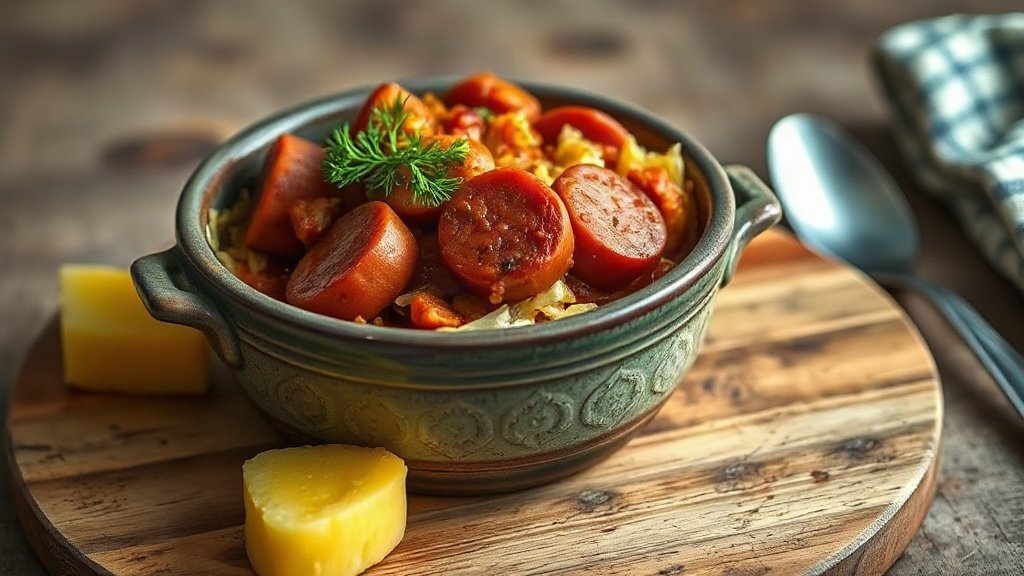
Illustration: AI-generated image
Varză călită, or braised cabbage, is one of Romania's most beloved comfort foods—a simple, slow-cooked dish that transforms humble cabbage into something deeply savoury and satisfying. It appears on family tables throughout the colder months, often as a side dish or a light main course, and its unpretentious character reflects the resourcefulness of traditional Romanian cooking.
What is varză călită?
The name comes from the Romanian verb a căli, meaning to sauté or soften, and varză, cabbage. The dish is essentially shredded cabbage cooked gently with onions, tomato and fat until it becomes tender and richly flavoured. It can be made with fresh white cabbage or with sauerkraut (varză murată), which gives it a tangier profile.
A dish with peasant roots
Varză călită has its origins in rural kitchens, where cabbage was a staple that could be stored for months. In autumn, families would preserve whole heads of cabbage in barrels to last through winter. Braising that cabbage with onions and a little pork fat was a practical way to create a nourishing meal from ingredients always on hand. Over time, it became a fixture of home cooking, especially during fasting periods when meat was omitted and vegetable oil replaced lard.
Key ingredients and method
The base of varză călită is finely shredded cabbage and sliced onions, cooked slowly in oil or lard until soft and lightly golden. Tomato paste or fresh tomatoes are added for colour and a subtle sweetness, along with a little water or stock. Seasonings are simple: salt, pepper, sweet paprika, and a bay leaf or two. Many cooks add a spoonful of sugar to balance the acidity, especially when using sauerkraut.
The magic happens in the long, gentle cooking. The cabbage must be stirred occasionally and allowed to absorb the flavours, becoming almost meltingly tender. Some versions include smoked pork ribs, bacon or sausage, which infuse the dish with a deep smokiness. Vegetarian versions rely on the natural sweetness of slow-cooked cabbage and caramelised onions.
Variations across Romania
Recipes vary from region to region and even from one household to the next. In Transylvania, smoked sausage or afumătură is a common addition. In Moldova, cooks might stir in a little rice or serve the cabbage with a dollop of sour cream. When made with sauerkraut, the dish is often called varză călită acră and has a pleasantly sharp edge that pairs beautifully with rich meats.
How to enjoy it
Varză călită is typically served hot, either as a side dish alongside roasted meats or as a main course with mămăligă (polenta) or crusty bread. A spoonful of smântână (sour cream) or a few pickled cucumbers add a cooling contrast. It is a staple of Romanian winter meals and a favourite during the Christmas season, when it often accompanies sarmale and other festive dishes.
Because it is inexpensive, filling and easy to prepare in large quantities, varză călită remains a go-to dish for family gatherings and everyday dinners. Its comforting, homely flavour is a reminder that Romanian cuisine excels at turning simple ingredients into something truly heart-warming.