Transfăgărășan: A Guide to Driving Romania's Mountain Road
Romania's most spectacular drive climbs through the Făgăraș Mountains, offering tunnels, hairpins and glacial lakes along the way.
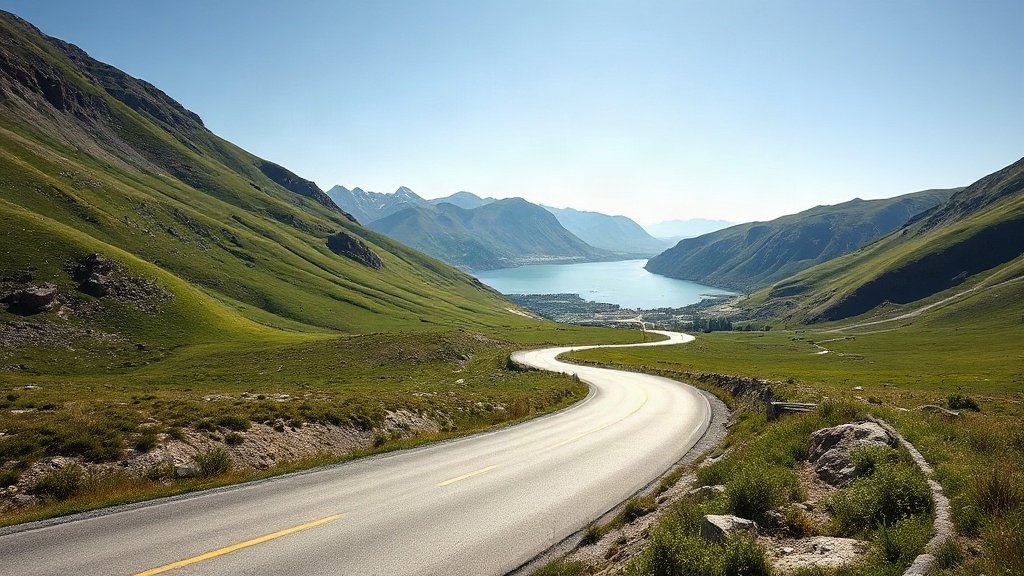
Illustration: AI-generated image
The Transfăgărășan is often called one of the world's most beautiful roads, and it's easy to see why. Winding for about 90 kilometres through the Făgăraș Mountains, it connects the historic regions of Wallachia and Transylvania, crossing the highest pass in Romania at over 2,000 metres above sea level. Built as a strategic military route in the 1970s, it now draws drivers, motorcyclists and cyclists eager to tackle its serpentine curves and dramatic scenery.
The Route
The road has two main entry points: the northern end near the village of Cârțișoara in Sibiu County, and the southern end near Curtea de Argeș in Argeș County. From the north, the climb is more gradual as you pass through dense forests and alongside rushing streams. From the south, the ascent is steeper, with a long series of switchbacks leading up to the glacial Bâlea Lake. The highest point is the Bâlea Tunnel, which cuts through the ridge at about 2,042 metres, linking the two sides. Beyond the tunnel, the landscape opens up to alpine pastures and craggy peaks, with the road clinging to the mountainside as it descends toward the Vidraru Dam.
When to Go
The Transfăgărășan is a seasonal road. It usually opens from late June or early July until late October, depending on snow conditions. Even in summer, weather can change rapidly, with fog and cold temperatures possible at the summit. Autumn brings brilliant foliage, but the road can close early if snow arrives. For the best driving conditions and clear views, plan your trip between July and September.
Driving Tips
- Allow at least three hours for the full crossing without stops, but plan for much longer if you want to take photos and hike.
- The road is narrow and has many blind corners; use your horn on bends and keep an eye out for oncoming traffic.
- Parking is limited at popular viewpoints, especially near Bâlea Lake and the tunnel.
- Fuel up before you start—there are no petrol stations along the mountain road itself.
- Carry water, snacks and a warm layer, even in midsummer.
Highlights Along the Way
Bâlea Lake is the most famous stop, a glacial lake surrounded by peaks, with a cable car running from the northern side. Nearby, the Bâlea Waterfall cascades down the mountainside. On the southern section, the Vidraru Dam impresses with its sheer height—one of the highest arch dams in Europe. Below the dam, the road passes through a short tunnel and then follows the Argeș River valley.
Practical Information
The road is open to all vehicles, but larger motorhomes and caravans may find the hairpin turns challenging. There is no toll to drive the Transfăgărășan itself. Mobile phone coverage is patchy in the mountains, so download offline maps before you go. For those without their own transport, organised day trips run from cities like Sibiu and Brașov, though driving yourself offers the most flexibility.