Taking the Train in Romania: A Traveller's Guide
Romania's rail network is a scenic and budget-friendly way to explore the country. Here's what to know before you board.
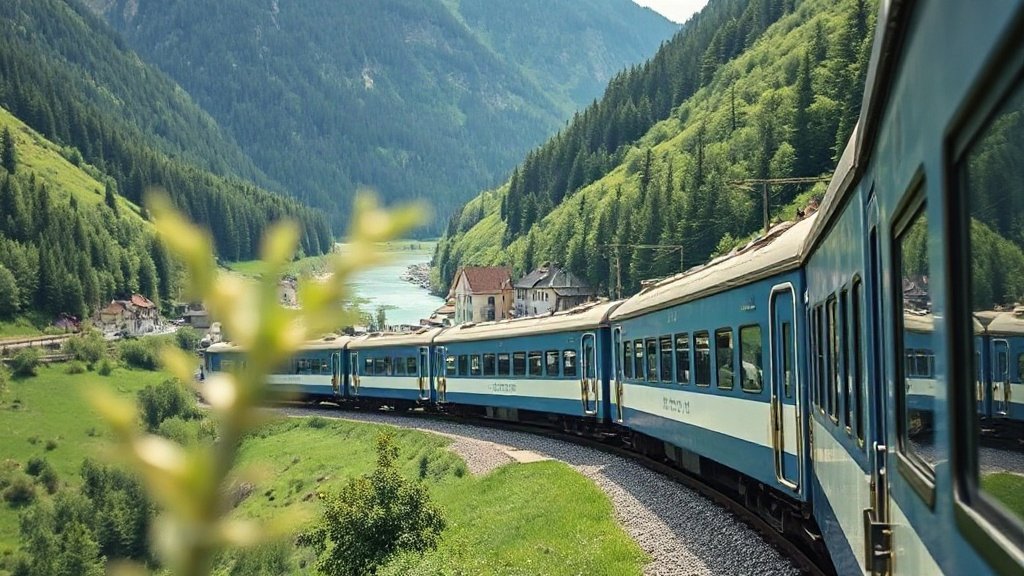
Illustration: AI-generated image
Romania’s railway network is extensive, affordable and often wonderfully scenic. While journeys can be slower than driving, they offer a relaxed way to see the countryside, meet locals and travel between major cities without the stress of traffic. Whether you are crossing the Carpathians or trundling through rural valleys, the train is a memorable part of the adventure.
Types of trains
Most passenger services fall into three categories. Regio trains are the slowest, stopping at nearly every station; they are ideal for short hops and rural exploration. InterRegio services connect larger towns and cities with fewer stops and more comfortable carriages. Some routes also offer InterCity trains, which are the fastest option and usually require a seat reservation. Timetables are displayed at stations and online, and trains generally run on time enough for planning connections with a little buffer.
Buying tickets
Tickets can be purchased at station ticket offices, from self-service machines in larger stations, or online through the national operator’s website and mobile app. For long-distance or popular routes, especially at weekends and holidays, it is wise to buy in advance. If you board without a ticket, you can usually buy one from the conductor, but there may be an extra fee. Keep your ticket handy, as inspections are common.
Scenic routes to enjoy
Several rail journeys are worth taking for the landscape alone:
- Bucharest to Brașov – the line winds through the Prahova Valley, passing mountains, forests and resort towns.
- Oradea to Cluj-Napoca – rolling hills and traditional villages in Transylvania.
- Sibiu to Sighișoara – Saxon villages and fortified churches appear along the route.
- Timișoara to Arad – a gentle ride through the western plains, with vineyard views.
For a true classic, the journey along the Olt Valley between Sibiu and Râmnicu Vâlcea offers dramatic river gorges and monastery glimpses. Trains may be old, but the windows open in many carriages, making them perfect for photography.
Practical tips for a smooth trip
- Arrive at the station at least 20 minutes before departure in larger cities, as platforms can be a long walk from the entrance.
- Carry small change for station toilets, which often require a coin.
- Bring your own snacks and water, though many longer trains have a dining car or a trolley service.
- Seat reservations are recommended for InterRegio and InterCity trains on busy routes; they are sometimes included in the ticket price.
- Keep luggage close, especially on overnight trains, and use the luggage racks above seats.
Etiquette and local customs
Romanians are generally friendly and helpful on trains. It is common to share a compartment with strangers and conversation often follows. If you are travelling in a compartment, greet fellow passengers with a simple Bună ziua (good day). Offering a seat to elderly passengers or those with children is appreciated. Smoking is not permitted on trains or in stations, and many stations have designated areas outside.
Overnight and international connections
Overnight sleeper trains operate between Bucharest and cities such as Cluj-Napoca, Timișoara and Iași. Couchettes and sleeping cars provide a memorable way to cover long distances while you sleep. Romania also has direct international rail links to Budapest, Vienna, Sofia and Istanbul, making the train a practical option for continuing your European journey.
Whether you are planning a short hop or a cross-country adventure, Romania’s railways reward the unhurried traveller with views, stories and a genuine sense of place.