Sarmizegetusa Regia: Romania's Ancient Dacian Capital
Discover the hilltop ruins of the Dacian kingdom’s most important settlement, a UNESCO-listed site hidden in the Orăștie Mountains.
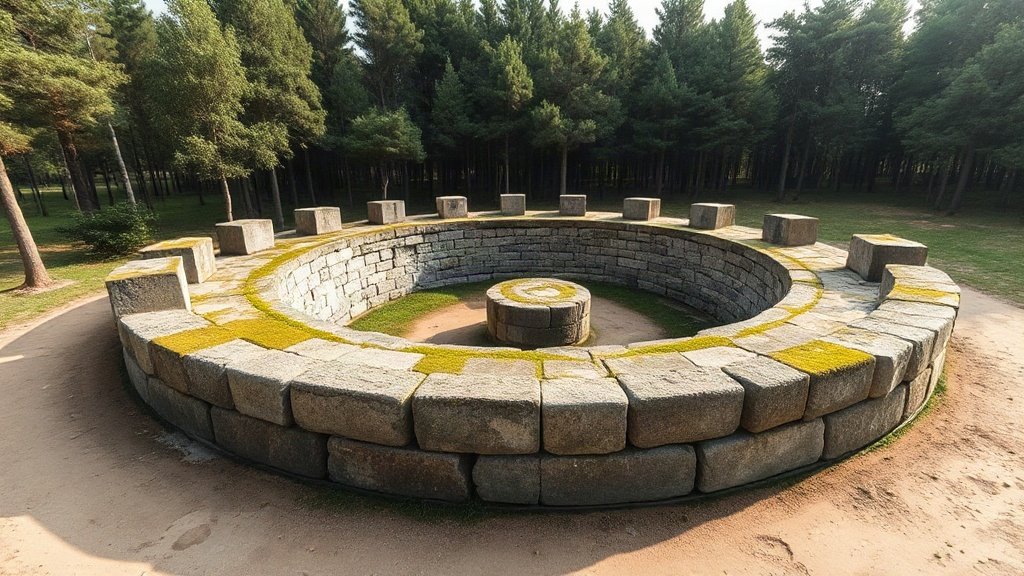
Illustration: AI-generated image
High in the Orăștie Mountains of Transylvania lies Sarmizegetusa Regia, the ancient capital of the Dacian kingdom and one of Romania's most evocative archaeological sites. Wrapped in beech forest and often shrouded in mist, this hilltop stronghold served as the political, military and spiritual heart of the Dacians until the Roman conquest in the early 2nd century AD. Today its ruins offer a powerful glimpse into a sophisticated civilisation that once challenged the might of Rome.
A Sacred Hilltop Sanctuary
Sarmizegetusa Regia was not merely a fortress; it was also the Dacians' most important religious centre. The site is famous for its cluster of sanctuaries, most notably the Great Circular Sanctuary, a precise arrangement of andesite blocks that likely functioned as a ritual calendar. Nearby, the so-called "Andesite Sun"—a large disc-shaped stone—draws visitors with its mysterious purpose. These structures, built with remarkable geometric accuracy, hint at the Dacians' advanced knowledge of astronomy and engineering.
Dacian Engineering and Mysteries
The Dacians constructed a network of fortifications across the Orăștie Mountains, with Sarmizegetusa Regia as its core. Stone walls, terraces and a sophisticated water supply system demonstrate their mastery of construction. The site's remote location, at roughly 1,200 metres above sea level, added to its defensibility and sacred atmosphere. While the Romans later destroyed much of the capital, the remaining foundations and scattered blocks still convey a sense of lost grandeur.
Planning Your Visit
Reaching Sarmizegetusa Regia requires a drive along a forest road from the village of Costești, followed by a short walk through the woods. The journey is part of the experience, with signs of ancient terraces appearing among the trees. Wear sturdy shoes, bring water, and allow at least two hours to explore the main sanctuary area and the surrounding ruins. The site is open year-round, but spring and early autumn offer the most comfortable weather. A visit pairs well with stops at other Dacian fortresses in the area, such as Blidaru and Costești-Cetățuie, each adding depth to the story of this remarkable civilisation.
For anyone interested in Romania's pre-Roman heritage, Sarmizegetusa Regia is an unmissable destination—a place where history feels tangible, and the mountains themselves seem to guard ancient secrets.