Romanian Retailers Plan Price Rises Despite Flat Sales Outlook
A new survey shows 38% of Romanian retailers expect to increase prices in the last quarter of 2026, while sales are expected to stagnate.
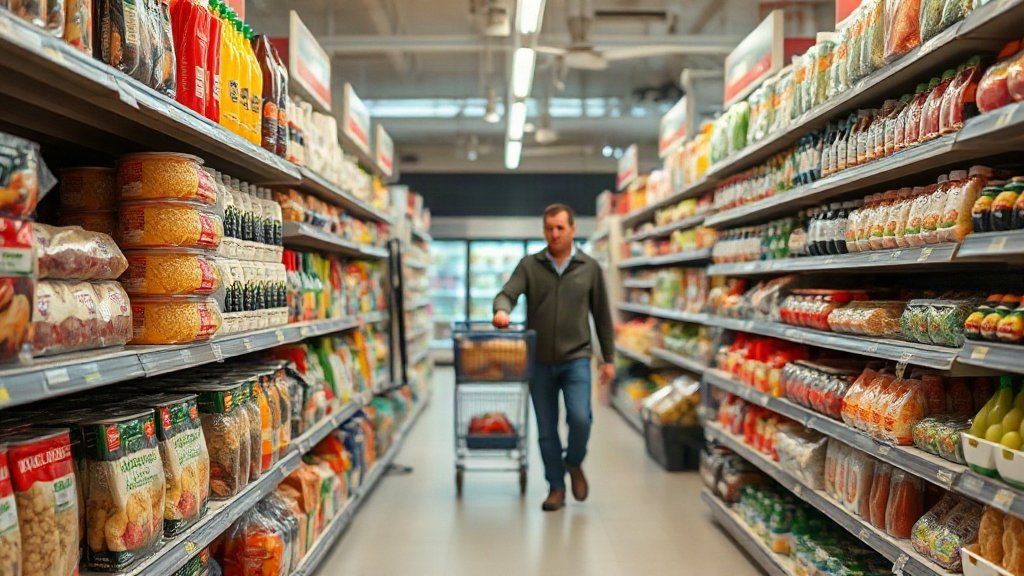
Illustration: AI-generated image
Romanian retailers are bracing for a more expensive end to the year, according to a new survey from the National Institute of Statistics (INS). Almost four in ten retail managers expect to raise prices in the final quarter of 2026, even though they do not foresee a rise in sales.
The survey, conducted in October among 2,633 retail firms, found that 38% of managers anticipate price increases, while only 3% expect to lower them. The resulting balance of +35 percentage points is a clear signal that consumers will likely face higher costs across many goods.
Pressure on prices is strongest in the automotive trade, where the balance reaches +46%, and in food, beverages and tobacco, at +40%. Because food purchases are essential and cannot be postponed, any rise in food prices is felt directly in household budgets.
Overall, retailers' expectations for economic activity are only slightly positive (+1%), and for employee numbers a modest +2%. Sales expectations for the fourth quarter are perfectly balanced at zero, indicating stagnation rather than growth.
The survey also reveals differences by company size. Large retailers with over 500 employees are the most optimistic, expecting an improvement in activity (+20%) and being the only ones planning noticeable hiring (+9%). In contrast, small firms with fewer than 50 employees are pessimistic, expecting a deterioration (-13%) and fewer staff (-4%). Mid-sized firms (50–249 employees) are similarly gloomy (-17%) but have the highest intention to raise prices (+51%).
Retailers cite insufficient demand as the main obstacle, mentioned by 16% of all respondents but by 29% of small firms. Mid-sized companies also point to economic instability, falling purchasing power, inflation and fuel costs.
The findings come from the INS's monthly business tendency survey, which collects managers' expectations rather than actual sales or price data. The results are weighted by turnover, so larger chains have a greater influence on the overall picture.