Romania's Painted Glass Icons: A Transylvanian Folk Art
Reverse painting on glass turned simple panes into radiant religious art. Discover the history, technique and lasting meaning of icoane pe sticlă.
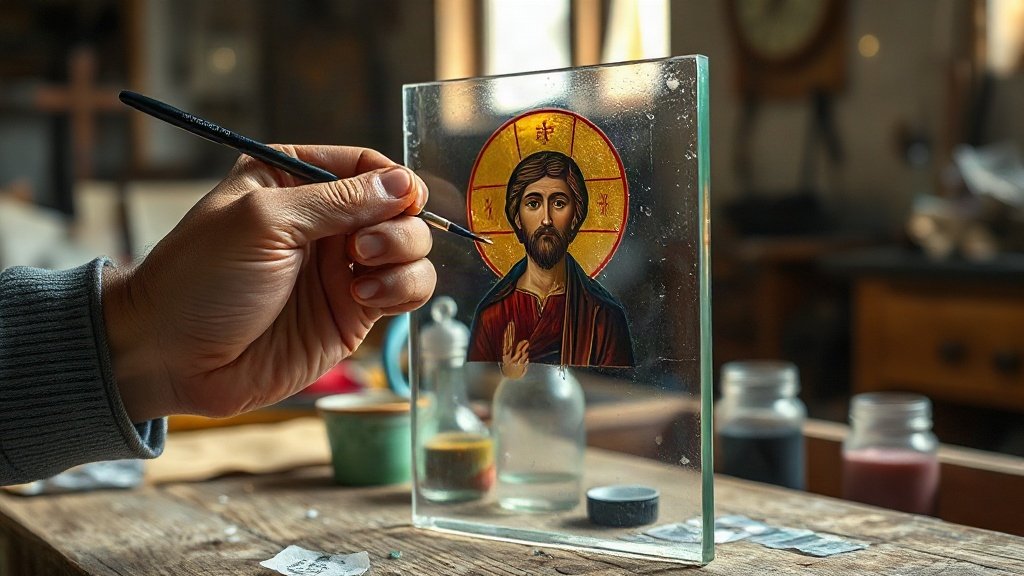
Illustration: AI-generated image
In the villages of Transylvania, a pane of glass can become a window to the divine. Romanian painted glass icons, known as icoane pe sticlă, are a distinctive folk art that flourished from the eighteenth century onward, blending Orthodox devotion with a bold, colourful aesthetic. Unlike icons painted on wood, these images are executed on the reverse side of the glass, so the viewer sees the finished work through the glass itself—a technique that gives the colours a unique depth and luminosity.
A Brief History
The craft took root in the rural communities of Transylvania, particularly around centres like Nicula, Laz and Șcheii Brașovului. Peasant painters, often untrained in formal art, adapted Byzantine iconography to a new medium, producing works for homes and small village churches. The tradition spread across the Carpathians, with regional variations emerging in colour schemes and decorative details. For centuries, these icons were not merely decorative but served as focal points for prayer, hung in the “beautiful corner” of the house reserved for holy items.
Reverse Painting Technique
Creating an icon on glass requires a precise sequence of steps, as the artist works from the foreground to the background—the opposite of normal painting. Typically, the painter begins with the fine lines of the face and hands, then adds garments, and finally lays down the background colour. Any mistake is almost impossible to correct, so the process demands steady hands and careful planning. The materials are simple: a pane of glass, pigments mixed with egg or oil, and sometimes gilding for halos. Because the paint is applied to the back, the glass protects the image and gives it a glossy finish that brightens the colours.
Motifs and Symbolism
Most icons depict Christ, the Virgin Mary, or popular saints such as Saint George, Saint Nicholas and the Archangels. Scenes of the Nativity, Crucifixion and Resurrection are common, as are local patron saints. The figures are often surrounded by floral borders—roses, peonies and stylised vines—painted with a naive charm that reflects the folk artist’s imagination. Halos may be rendered in gold or silver leaf, and the backgrounds range from deep blue to vibrant red. Each icon carries a specific meaning for the household: protection, healing, or a connection to a name day or family patron.
Where to See Icoane pe Sticlă Today
Though fewer families keep the tradition alive, painted glass icons remain a treasured part of Romania’s cultural heritage. Museums across Transylvania, including ethnographic collections in Sibiu, Cluj-Napoca and Brașov, display historic examples. Seasonal fairs and monastery workshops still offer new icons made by contemporary artisans who have inherited the technique. For visitors, a small glass icon makes a meaningful souvenir—a piece of Transylvanian folk art that carries both beauty and spiritual resonance.
The enduring appeal of icoane pe sticlă lies in their simplicity and sincerity. They are not the work of a refined elite but of village painters who turned everyday glass into a medium of devotion, leaving behind a luminous legacy that continues to shine in Romanian homes and museums.