Plachie de Pește: Romania's Baked Fish with Onions and Paprika
Plachie de pește is a traditional Romanian baked fish dish slow-cooked with onions, tomato and sweet paprika. Here's how it's made and how to enjoy it at home.
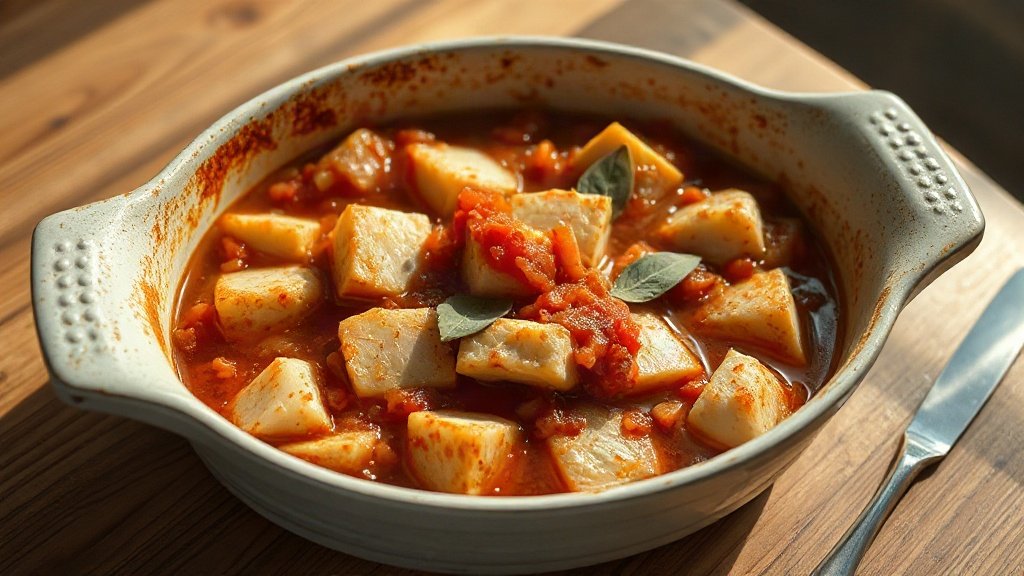
Illustration: AI-generated image
Plachie de pește is a traditional Romanian baked fish dish that turns simple ingredients into something deeply comforting. Onions, tomato and sweet paprika slowly meld together in the oven, creating a rich sauce that keeps the fish moist and flavourful. It is especially associated with Dobrogea and the Danube Delta, where freshwater fish is abundant, but it is loved across the country.
What is plachie de pește?
At its heart, plachie is a fish and onion stew baked in the oven rather than simmered on the hob. The name comes from the Turkish word "plaki", reflecting a shared culinary heritage around the Black Sea. In Romania the dish has its own character, typically using firm white fish such as carp, pike, catfish or even sea bass when made on the coast. The fish is cut into large chunks and gently cooked in a sauce made from slowly sautéed onions, tomato purée or fresh tomatoes, sweet paprika, garlic and a splash of dry white wine or water. Bay leaves and black peppercorns add aromatic depth.
How it is made
The key to a good plachie lies in patience. Onions are sliced thinly and cooked over low heat until they turn soft, golden and almost jammy. This step concentrates their natural sweetness and forms the base of the dish. Tomato and paprika are added next, creating a thick, brick-red sauce with a gentle smoky note. The seasoned fish pieces are nestled into the sauce, often layered with more onion and tomato, then baked slowly until the fish is just cooked through and the sauce has thickened. Some cooks add sliced red peppers, olives or capers for extra complexity, but the classic version remains reassuringly simple.
How to serve it
Plachie is traditionally eaten warm, though it is also delicious at room temperature, which makes it a practical dish for gatherings. It is almost always served with mămăligă – Romania's polenta – which soaks up the savoury sauce beautifully. Boiled or roasted potatoes and crusty bread are common alternatives. A spoonful of smântână (sour cream) on the side adds a cooling tang, while a few pickled cucumbers or a simple green salad brighten the meal. Because fish is allowed during Orthodox fasting periods when meat and dairy are restricted, plachie also appears regularly on fasting tables.
Where to enjoy it
If you travel through the Danube Delta or along the Black Sea coast, you will often find plachie on menus where local fish is celebrated. Fishermen's households have perfected the dish over generations, and small family-run restaurants in the region take pride in their own versions. At home, plachie is easy to adapt: any firm white fish works well, and the sauce is forgiving. It is a rustic, homely dish that rewards a slow approach and offers a genuine taste of Romania's rivers and seas.