Papanași: Romania's Beloved Fried Doughnuts with Cream and Jam
Discover papanași, Romania's iconic dessert of fried doughnuts topped with sour cream and fruit jam, served across the country.
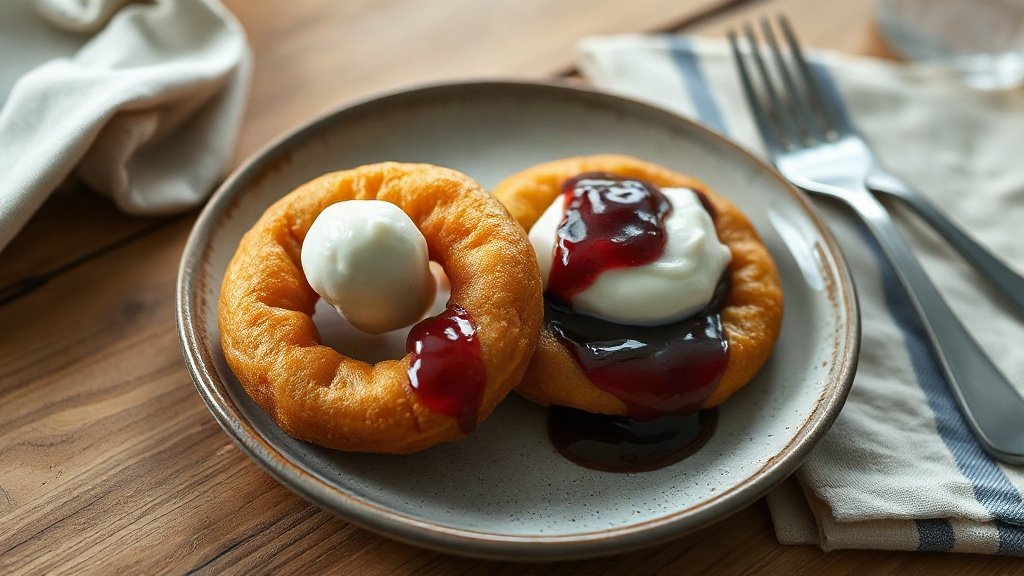
Illustration: AI-generated image
Papanași (pronounced pah-pah-nash) are one of Romania's most cherished desserts: golden fried doughnuts that are crisp on the outside and soft within, generously topped with smântână (sour cream) and a spoonful of tart fruit jam. Found in restaurants, street fairs and family kitchens alike, they are a treat that bridges the everyday and the festive.
What exactly are papanași?
The classic version consists of a large ring-shaped doughnut with a small ball of the same dough perched on top, like a little hat. Both are deep-fried until deep golden, then served warm. The dough is made from a soft cheese—often cow's milk cheese similar to ricotta or a fresh farmer's cheese—mixed with eggs, flour, semolina, a little sugar and a pinch of salt. Baking powder or bicarbonate of soda gives it a light rise. The result is a tender, slightly tangy base that pairs beautifully with the creamy and sweet toppings.
Once fried, papanași are traditionally smothered with a generous dollop of cold smântână, Romania's rich cultured sour cream, and then finished with a heaped spoon of jam—sour cherry, blueberry, apricot or blackcurrant are favourites. Some cooks dust them with icing sugar first. The contrast of hot doughnut, cold cream and sweet-tart jam is what makes the dessert so satisfying.
Where do papanași come from?
The exact origin is debated, but papanași are considered a traditional Romanian dish, particularly associated with the region of Moldova in the east, though they are now loved nationwide. The name likely comes from the Latin pappa, meaning food for children, or from an older Slavic word. Similar fried cheese desserts exist across Central and Eastern Europe, but the Romanian version's distinctive ring-and-ball shape and the use of smântână are identifying features.
Over time, papanași have moved from home kitchens to restaurant menus, often appearing as a signature dessert in traditional Romanian restaurants. They are also a staple at street food stalls during festivals and markets, where they are fried to order and served in paper trays.
Variations to look out for
While the fried version is most common, some recipes call for boiling the dough like dumplings before serving with the same toppings—this lighter version is sometimes called papanași fierți. Others are baked rather than fried. The cheese used can vary: some cooks use a drier cow's cheese like telemea, while others use a fresh, unripened cheese known as brânză de vaci. Modern interpretations may include fillings like chocolate or vanilla cream, but purists stick to the classic.
At home, papanași are not difficult to make, though the dough benefits from a short rest before shaping. The key is to use a well-drained cheese so the dough isn't too wet, and to fry at a steady temperature so the outside crisps without absorbing too much oil.
How to enjoy papanași like a local
Papanași are best eaten immediately after frying, while still warm and crisp. In a restaurant, they are usually served as a plated dessert, with the sour cream and jam already spooned on top. At a street stall, you'll often receive them in a paper bowl with the toppings added generously. Some Romanians eat them as a sweet main course for lunch or dinner, though they are mostly a dessert or a treat with coffee.
Pair papanași with a strong Romanian coffee or, for a more indulgent experience, with a glass of sweet dessert wine such as vin de colecție. If you're making them at home, don't skimp on the smântână—its slight sourness is essential to balance the richness of the fried dough.
Whether you encounter them at a rustic countryside inn or a smart city bistro, papanași are a must-try for anyone exploring Romanian food. They offer a delicious glimpse into the country's love of simple, hearty ingredients turned into something truly comforting.