Ostropel: Romania's Garlicky Chicken Stew Explained
Ostropel is a comforting Romanian stew of chicken simmered in a rich tomato and garlic sauce, served with mămăligă or mashed potatoes. Here’s what makes it special and how to enjoy it.
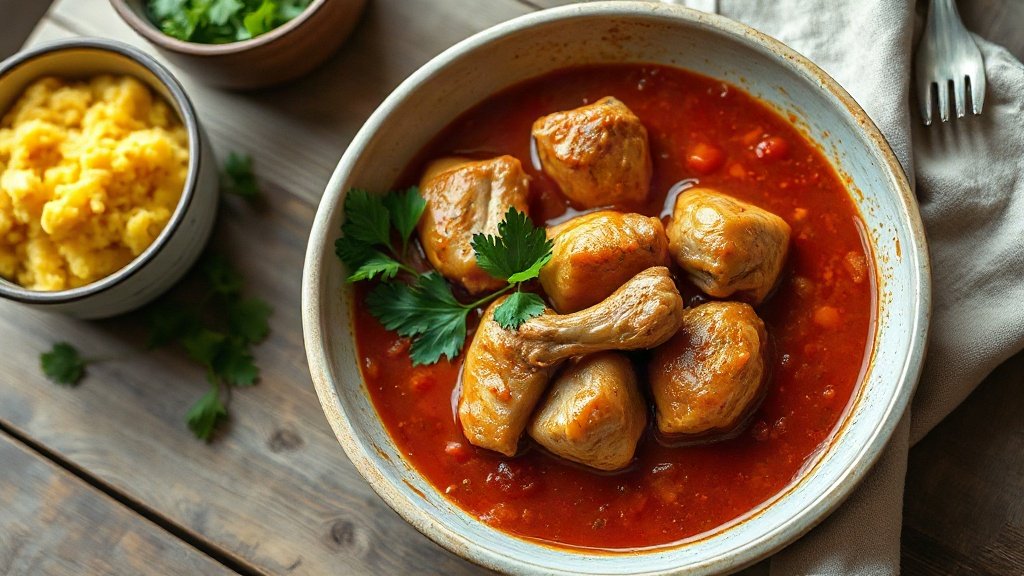
Illustration: AI-generated image
Ostropel is one of those dishes that quietly defines Romanian home cooking. It’s not flashy, but it is deeply satisfying: tender pieces of chicken, slowly simmered in a glossy sauce rich with tomatoes and garlic, served with something starchy to soak up every last drop. If you’re exploring traditional Romanian food beyond the well-known sarmale and mici, ostropel deserves a place on your table.
What is Ostropel?
At its heart, ostropel is a stew. The name comes from the Romanian word ostropel, which is linked to the idea of a sharp, garlicky sauce. While recipes vary from household to household, the core elements remain constant: chicken (usually thighs or drumsticks, sometimes a whole bird cut into pieces), plenty of garlic, onions, tomato purée or fresh tomatoes, and a little liquid—often water, stock, or even wine. The sauce is simple but bold, with the garlic providing a robust, aromatic kick that mellows beautifully as it cooks.
The dish is popular across the country, though some regions have their own twists. In parts of Moldavia, you might find it made with pork instead of chicken, while in others it’s served with a fried egg on top. But the chicken version is the most common and the one most Romanians think of when they hear the word.
How Ostropel is Made
Making ostropel at home is straightforward, which is likely why it appears so often on family dinner tables. The process usually goes like this:
- The chicken pieces are seasoned with salt and pepper and browned in a little oil or lard until golden. This step builds depth of flavour.
- Finely chopped onions are added to the same pot and cooked until soft and translucent.
- Plenty of minced garlic goes in next—sometimes as many as six or eight cloves, depending on how garlicky you like it. It’s cooked briefly so it loses its raw edge.
- Tomato purée (or fresh peeled tomatoes in summer) is stirred in, followed by a splash of water or stock. The mixture is brought to a simmer.
- The browned chicken is returned to the pot, covered, and left to cook gently until the meat is falling off the bone and the sauce has thickened. Some cooks add a little flour or cornstarch to help thicken, but many prefer a thinner, more rustic sauce.
- Towards the end, a final flourish of fresh herbs—parsley or dill—adds brightness.
The result is a dish with a deep, savoury tomato base, a pronounced garlic presence, and tender chicken that yields easily to a fork. It’s not particularly spicy, but the garlic gives it a satisfying pungency that pairs well with mild sides.
Serving and Enjoying Ostropel
Ostropel is almost always served with a hearty starch. The classic accompaniment is mămăligă (polenta), which soaks up the sauce beautifully. Mashed potatoes or boiled potatoes are also common, and many families enjoy it with simple white bread for mopping up the last bits. A crisp salad—cucumber and tomato in summer, or pickled vegetables in winter—rounds out the meal.
Because it’s a one-pot dish that reheats well, ostropel is a favourite for weekday dinners and for feeding a crowd. In many Romanian homes, it’s the kind of meal that appears when tomatoes are ripe in the garden and garlic is freshly harvested, making it a true taste of late summer and early autumn.
If you’re in Romania and see ostropel on a menu, order it with confidence. It’s a dish that speaks of home, of simple ingredients transformed by patience and garlic, and it’s likely to leave you wondering why you haven’t been making it yourself all along.