Merdenele: Romania's Flaky Savoury Pastry Explained
Discover merdenele, Romania's beloved savoury pastry with a rich cheese or meat filling, and learn how to enjoy it like a local.
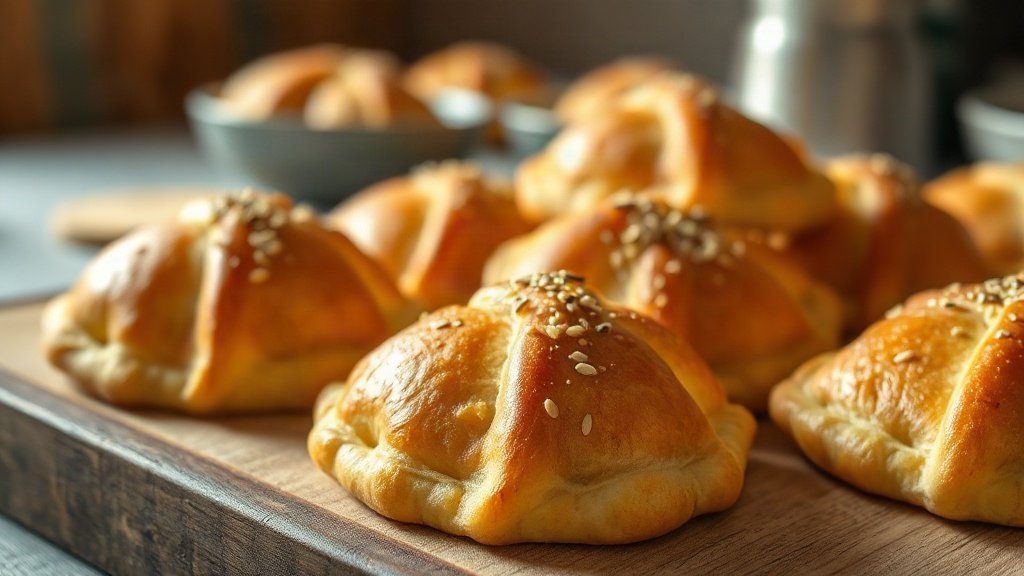
Illustration: AI-generated image
Walk past any Romanian bakery or patisserie in the early morning and you will likely spot trays of golden, glistening pastries with a distinctive spiral or rectangular shape. These are merdenele, a staple of Romanian street food and a beloved snack across the country. Simple yet deeply satisfying, merdenele offer a taste of everyday Romanian culinary tradition.
What are merdenele?
Merdenele are flaky pastries made from a laminated dough similar to puff pastry, though often a bit softer and more bread-like. The dough is rolled out thin, filled, then folded or rolled into shape before baking. The most classic filling is a salty, slightly tangy mixture of brânză de vaci (fresh cow's cheese) or telemea (a feta-style cheese), often combined with egg and fresh dill. Meat fillings such as minced pork or chicken are also common, as is a simple combination of cheese and spinach.
The name 'merdenea' comes from the Turkish word 'merdane', meaning rolling pin, reflecting the pastry's Ottoman-influenced roots. While similar to other Balkan pastries like burek or banitsa, merdenele have their own distinct character: smaller, more portable, and with a higher ratio of crisp, buttery layers to filling.
Variations across Romania
Depending on the region, you may encounter different shapes and fillings. In Dobrogea, near the Black Sea coast, merdenele are often made with a more bread-like dough and filled with cheese or pumpkin. In Transylvania, they might be baked in large trays and cut into squares, while in Muntenia and Oltenia, individual spiral or rectangular pastries are the norm. Some bakers brush the tops with egg wash and sprinkle sesame or poppy seeds for extra texture.
Sweet versions exist too, filled with apple, sweet cheese and raisins, or plum jam, but savoury remains the classic choice. A well-made merdenea should have a shatteringly crisp exterior giving way to a warm, savoury centre, with the filling's tanginess balancing the rich dough.
How to enjoy merdenele
Merdenele are traditionally eaten as a breakfast or mid-morning snack, often paired with a plain yogurt drink like sana or ayran, or a simple cup of tea. They are a common sight at train stations, bus stops, and corner bakeries, where workers and students grab one on the go. Because they are baked fresh throughout the day, the best merdenele are still warm from the oven.
If you are visiting Romania, do not limit yourself to hotel breakfasts. Seek out a local bakery early in the morning, ask for a merdenea cu brânză (with cheese) or merdenea cu carne (with meat), and enjoy it while walking through a park or waiting for a tram. It is a simple pleasure that captures the essence of Romanian comfort food.
Making merdenele at home
While the laminated dough takes time, keen home cooks can recreate merdenele using store-bought puff pastry for convenience. Roll the pastry thin, cut into rectangles, place a spoonful of filling at one end, then roll up or fold into a neat parcel. Brush with egg and bake at 200°C until deeply golden. For a traditional cheese filling, mix brânză de vaci or crumbled feta with a beaten egg, chopped dill, and a pinch of salt. The result is not quite as airy as a bakery version, but still delicious and authentic in spirit.
Whether enjoyed from a paper bag on a busy street or served warm at a family table, merdenele are a humble yet iconic part of Romania's food landscape. They deserve a place on any food lover's list of must-try Romanian specialities.