Călușari: Romania's Ancient Ritual Dance of Healing and Strength
Discover the Călușari, a men's ritual dance from southern Romania that blends acrobatics, music and ancient beliefs, recognised by UNESCO as a masterpiece of intangible heritage.
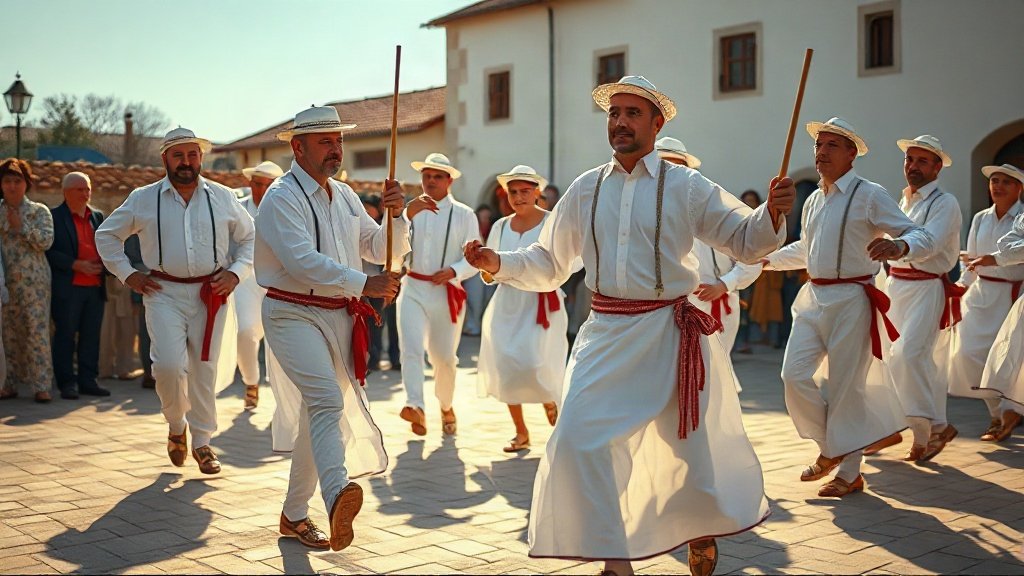
Illustration: AI-generated image
The Călușari is a dramatic men's ritual dance from southern Romania, blending acrobatics, music and ancient beliefs. Recognised by UNESCO as a masterpiece of the oral and intangible heritage of humanity, it is performed by a group of dancers who whirl, leap and strike the ground with sticks in a display of strength and agility.
Origins and History
The dance has deep roots, with some scholars tracing it to pre-Christian fertility and healing rituals. The name comes from the Romanian word cal (horse), and the dancers are sometimes seen as embodying the horse, a symbol of vitality and the sun. Historical references date back centuries, and the tradition has been passed down through secretive male brotherhoods in villages across the regions of Oltenia, Muntenia and Dobrogea.
Symbolism and Ritual
Traditionally, the Călușari dance was performed during the week after Pentecost (Rusalii), a time believed to be dangerous when supernatural forces roamed. The dancers' leaps and stick-clashing were thought to ward off evil spirits and bring healing, especially to those who had been "taken by the iele" (mythical fairy-like beings). A central figure, the mute or "mut", carries a wooden horse head and performs comedic acts, while the "vătaf" (leader) directs the group with strict discipline.
Costumes and Music
The dancers wear white trousers and shirts, often decorated with ribbons, and bells on their ankles. They carry sticks or short swords, and their hats may be adorned with flowers or flags. The music is provided by a small band, typically including a violin and a cobza or accordion, playing a fast, driving rhythm that the dancers match with intricate footwork and high leaps.
Steps and Performance
The dance features complex figures, including rapid spins, squatting kicks and synchronized stick-clashing. Dancers link arms or hold each other's belts, moving in circles or lines. The choreography requires great strength and stamina, and the group's unity is essential, as breaking formation is thought to break the ritual's power.
Where to See It Today
Although the ritual context has diminished, the Călușari remains a vibrant part of Romanian folk culture. It is performed at festivals, competitions and cultural events, particularly in southern Romania during the summer months. Visitors may encounter it at national folklore festivals or village celebrations, where the dancers' energy and precision continue to captivate audiences.
Experiencing the Călușari offers a window into Romania's living heritage, where ancient beliefs and athletic artistry meet in a dance that has endured for centuries.