Caltaboș: Romania's Traditional Blood Sausage Explained
Discover caltaboș, a rich and savoury Romanian sausage made with pork, rice and spices, served cold as a hearty appetiser.
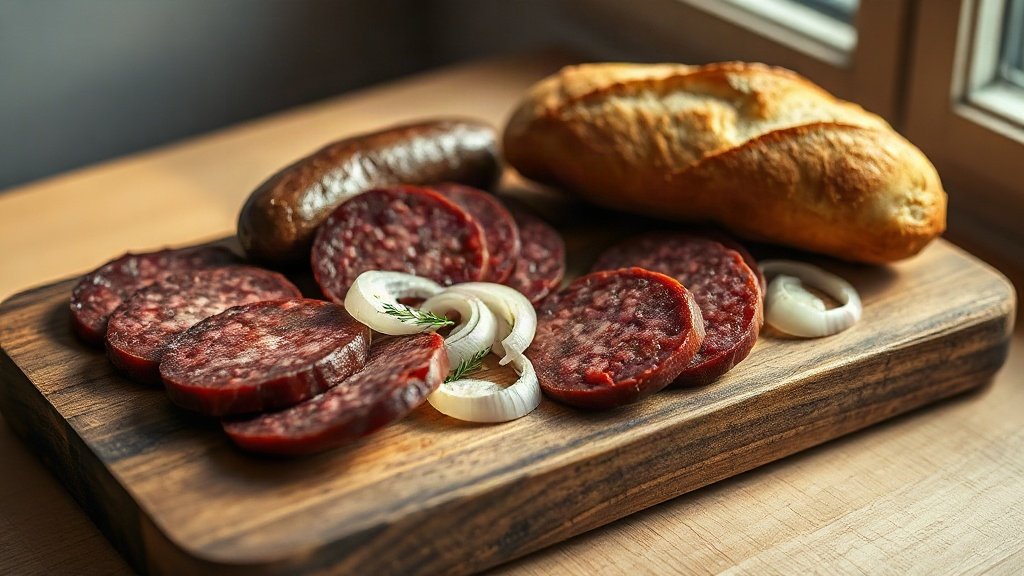
Illustration: AI-generated image
Caltaboș is one of Romania's most distinctive traditional foods, a blood sausage that appears on tables across the country, especially during the winter months. For visitors, it can seem intimidating at first, but those who try it often find a surprisingly delicate, spiced and satisfying dish that reflects the resourcefulness of Romanian country cooking.
What is caltaboș?
Caltaboș (also spelled caltaboş or călțaboș) is a type of blood sausage made with pork offal, rice or barley, and a blend of warm spices. Unlike some other European blood sausages, caltaboș is rich and moist, with a soft, almost creamy texture once sliced. It is always cooked before eating, usually by simmering or poaching, and is served cold or at room temperature.
The exact recipe varies by region and family, but the core ingredients remain consistent: pork blood, finely chopped organ meats (often heart, lungs, liver), cooked rice or barley, onions, garlic, and spices such as black pepper, allspice, thyme and sometimes a touch of paprika. The mixture is stuffed into natural pork casings and then gently boiled or baked.
How is it made?
Traditionally, caltaboș is prepared during the annual pig slaughter, a significant event in rural Romania known as tăierea porcului. Nothing goes to waste, and the blood sausage is one of the prized results. The blood is collected and combined with the other ingredients while still fresh, then seasoned generously. The stuffing is not overly firm; rice or barley helps to bind the mixture and give it a tender bite.
After being filled into casings, the sausages are simmered in water or stock until cooked through. They are then cooled, which allows the sausage to set. Some versions are lightly smoked, but most are sold or served fresh. In supermarkets and butcher shops, you will often find caltaboș in the chilled section, ready to slice.
How to eat caltaboș
Caltaboș is almost always eaten cold, sliced into thick rounds. It is a popular appetiser, served on a platter with fresh bread, raw onion rings, and a dab of mustard or horseradish. Its rich, savoury flavour pairs well with sharp, acidic accompaniments like pickles or a simple tomato salad.
- As part of a cold platter: Arrange slices with other traditional meats like tobă (head cheese) and leber (liver sausage).
- On bread: Spread a thick slice on a piece of crusty country bread, top with raw onion and a pinch of salt.
- With eggs: Fry a slice until crisp and serve alongside scrambled eggs for a hearty breakfast.
- In sandwiches: Use like a pâté, layered with pickled cucumbers and fresh herbs.
Because caltaboș is already cooked, it can also be gently fried or grilled, which gives the outside a pleasant caramelised crust.
Where to try it
Visitors to Romania will find caltaboș in traditional restaurants, especially those focusing on country-style or seasonal dishes. It is a common item on the appetiser menu, often listed under gustări reci (cold starters). Local food markets and butchers frequently sell homemade versions during the winter months, and some guesthouses in rural areas offer it as part of a traditional breakfast spread.
If you are feeling adventurous, ask for a slice at a cârciumă (tavern) or a restaurant that celebrates Romanian peasant cuisine. It is best enjoyed with a glass of țuică or a light red wine.
A note for first-timers
Caltaboș has a distinct, earthy taste that might be unfamiliar to those who have not tried blood sausage before. Start with a small portion alongside plenty of bread and onion. Its texture is softer and more crumbly than a typical meat sausage, and the spices are usually well balanced, not overpowering. Many first-time tasters are surprised by how mild and comforting it can be.