Balmoș: Romania's Traditional Shepherd's Polenta with Cheese
Balmoș is a rich, creamy cornmeal dish from Romania's mountain regions, made with sheep's cheese and butter and cooked slowly over an open fire.
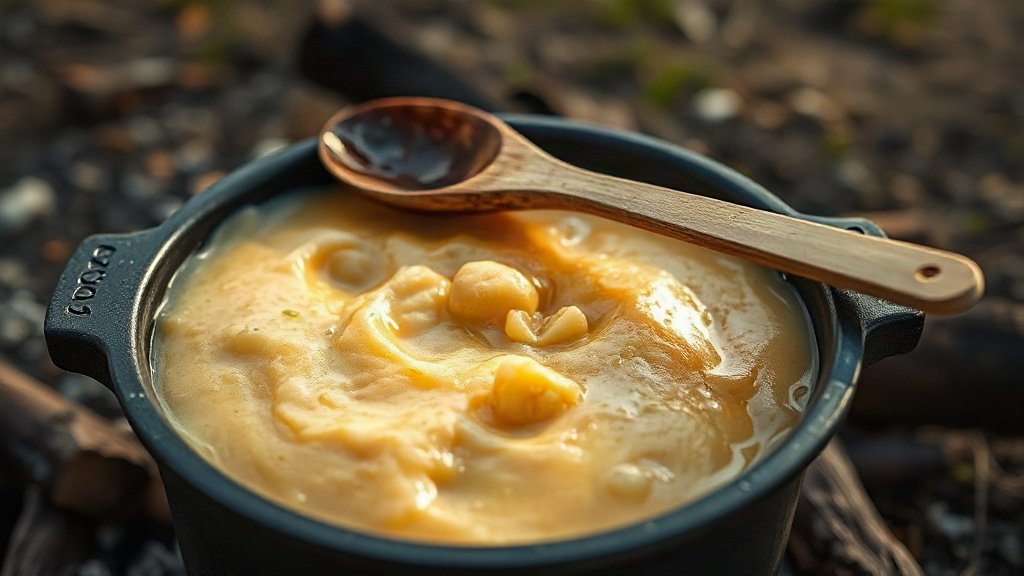
Illustration: AI-generated image
When you travel through the Carpathian Mountains of Romania, you may come across a dish that tastes of tradition and the high pastures. Balmoș (also spelled balmuș) is a creamy, satisfying polenta-like meal long prepared by shepherds who spent months away from villages with their flocks.
What is balmoș?
Balmoș is made from coarse cornmeal simmered slowly with water or whey, then enriched with fresh sheep's cheese, butter, and sometimes sour cream. The result is a thick, golden porridge with a stretchy, gooey texture and a deep, milky flavour. Unlike plain mămăligă, which is often served as a side, balmoș is a main dish in itself, hearty enough to fuel a day of walking the hills.
A dish rooted in shepherd life
For centuries, Romanian shepherds moved with their sheep to alpine meadows in summer. They carried simple supplies: cornmeal, salt, and the milk from their animals. Balmoș was born from necessity and skill. Traditionally, it is cooked in a large cast-iron cauldron called a ceaun over a wood fire. The shepherd stirs the cornmeal continuously with a long wooden stick, adding cheese and butter until the mixture turns glossy and begins to pull away from the sides of the pot.
Making balmoș is not a quick affair. The slow cooking allows the cornmeal to soften completely and the cheese to melt into every grain. The dish is often seasoned only lightly, letting the quality of the milk and cheese speak for itself.
Ingredients and preparation
The key to authentic balmoș lies in its ingredients. Coarse cornmeal, preferably stone-ground, gives the dish body. Fresh caș — a crumbly, lightly salted sheep's cheese — is the traditional choice, though some cooks use a mix of caș and brânză de burduf, a stronger cheese aged in fir bark. Generous amounts of butter, and sometimes a little sour cream, add richness.
To make balmoș at home, water or whey is brought to a gentle boil, and the cornmeal is added gradually, whisking to avoid lumps. The mixture is then cooked over low heat, stirred often, until it thickens. The fire is reduced, and the cheese and butter are folded in. The balmoș is ready when it has a glossy sheen and holds soft peaks. It is best eaten immediately, straight from the pot, with a spoon or a chunk of crusty bread.
How to enjoy balmoș
If you are visiting Romania, balmoș is most authentic when eaten in a mountain setting: at a shepherd's hut, a rural guesthouse, or a festival celebrating pastoral traditions. It is often paired with fresh milk, buttermilk, or a glass of țuică. The dish is deeply comforting on a cool evening, and its simplicity makes it a favourite among those who love rustic, unpretentious food.
Because balmoș relies on fresh sheep's cheese, it is a seasonal treat, most available from late spring to early autumn when flocks graze on mountain pastures. However, some home cooks prepare it year-round using cow's milk cheese, and the dish remains a beloved part of Romania's culinary heritage.
For anyone curious about the country's mountain food culture, balmoș is a must-try. It tells a story of resilience, resourcefulness, and the deep connection between people and the land.