A Guide to Romanian Housing: Blocks, Villas and Traditional Homes
From communist-era apartment blocks to interwar villas and rural cottages, here's what to expect from Romanian housing.
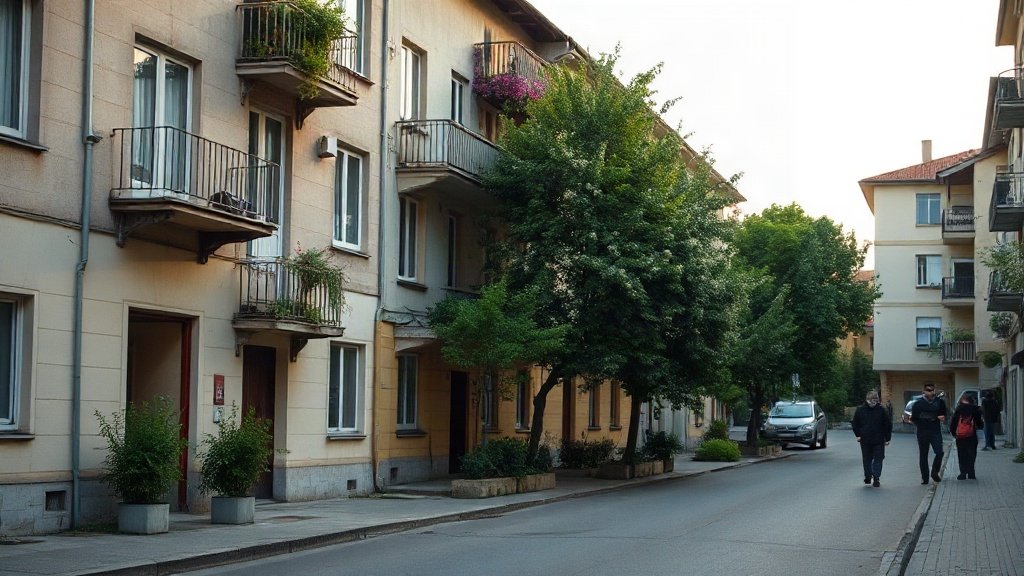
Illustration: AI-generated image
Romania's housing stock is as varied as its history. Whether you're renting a flat in a bustling city or considering a rural retreat, knowing the difference between a bloc, a vilă and a casă will help you find the right place. This guide explains the main types of homes you'll encounter and what to look for.
Communist-Era Apartment Blocks (Blocuri)
Most city dwellers in Romania live in blocuri – apartment blocks built between the 1950s and 1980s. These concrete or prefabricated panel buildings typically range from four to ten storeys and were designed for efficiency rather than luxury. Flats are often compact, with an entrance hall, a small kitchen, a bathroom, and one to three rooms. Many blocks have shared entrances and stairwells, and some still retain their original central heating systems, though individual gas boilers are now common.
Over the past two decades, many blocuri have been externally insulated and fitted with double-glazed windows, improving comfort and energy efficiency. Inside, flats vary widely: some have been modernised, while others remain in their original state. When viewing a flat, check the age of the heating system, the condition of pipes and wiring, and whether the building has an owners' association that maintains common areas.
Interwar and Historic Villas
In older neighbourhoods such as Bucharest's Cotroceni or Dorobanți, you'll find interwar villas built between the late 19th century and the 1940s. These houses often have high ceilings, parquet floors, decorative facades, and sometimes small gardens. Many were divided into individual flats during the communist period, so you might rent a room with original features but shared facilities. Full villas are also available, though they require more upkeep.
These homes are prized for their character and central locations, but they can be less energy-efficient and may need structural repairs. If you're considering one, ask about recent renovations, damp issues, and whether the building is listed or protected.
Traditional Rural Houses
In villages and small towns, the traditional casă is often a single-storey structure with a porch (prispă), a courtyard, and sometimes a separate summer kitchen. Built from wood, brick, or rammed earth, these houses are cool in summer and warm in winter when properly maintained. Many have been modernised with indoor bathrooms and central heating, while others retain a rustic charm.
Increasingly, urban dwellers are buying and renovating rural houses as second homes or for a quieter life. If this appeals to you, check the condition of the roof, foundations, and access to utilities like water, electricity, and internet.
New Residential Developments
Since the 1990s, new housing complexes have sprung up across Romania. These range from small blocks of a few storeys to large gated communities. Flats are typically built to modern standards, with parking, lifts, and balconies, though quality varies. Some developments include amenities such as playgrounds or shared green spaces. When buying or renting in a new block, verify the builder's reputation and check the sound insulation between flats.
What to Consider When Choosing
Regardless of the type, consider these practical points:
- Location and transport: Proximity to metro, bus, or tram lines can save time in cities.
- Heating: Ask about the heating source (central, gas, electric) and average winter costs.
- Storage: Older flats may lack built-in wardrobes or a cellar; a balcony is useful.
- Parking: On-street parking can be challenging in central areas.
- Owners' association: In blocuri, an active association keeps shared spaces maintained.
Understanding these housing types will help you navigate the Romanian property market with confidence, whether you're renting a flat in a communist-era block or falling in love with a historic villa.