Ștergarul: Romania's Woven Towel of Symbols and Ceremony
The ștergar is far more than a household cloth. Its patterns and uses reveal centuries of Romanian tradition, from weddings to everyday life.
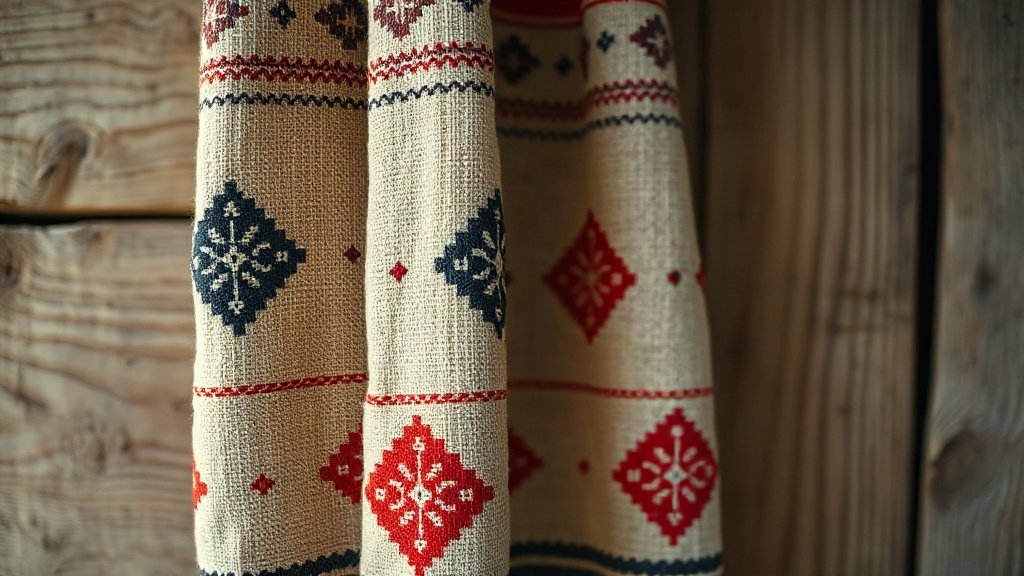
Illustration: AI-generated image
Walk into a traditional Romanian home and you may notice long, narrow cloths hanging near icons or draped over a chair. These are ștergare, woven towels that carry far more meaning than their simple name suggests. Unlike a modern bath towel, the ștergar is a piece of living heritage: a dowry item, a ritual object, a gift of honour and a symbol of identity.
What is a ștergar?
The ștergar (plural: ștergare) is a rectangular cloth, usually between one and two metres long and 30 to 50 centimetres wide. Traditionally it was woven from hemp, flax, or later cotton, on horizontal or vertical looms. The edges often end in fringes or are finished with narrow bands of colour. Its surface features stripes, checks, and occasionally more elaborate geometric or figurative motifs woven in red, black, blue, or natural tones.
In everyday life, the ștergar served as a hand towel, a cloth for drying dishes, or a cover for food. But its role extended far beyond the kitchen. It hung near the door for guests, decorated the walls around the family icons, and accompanied people at every major life event.
Patterns and their meanings
The decoration on a ștergar is not random. Weavers used a vocabulary of symbols passed down through generations. The tree of life, the sun, the rooster, the snake, and the shepherd's crook appear in varied forms. Red often symbolises life and protection; black can represent the soil or eternity; white is purity. Stripes in themselves had meaning, with alternating bands sometimes said to represent the rhythm of days and seasons. In some regions, the ends of a ștergar were decorated with woven or embroidered motifs that indicated the owner's village, age, or marital status.
The ștergar in rites of passage
Few textiles were as present in Romanian rites as the ștergar. At weddings, the bride's family presented ștergare to the groom's relatives as tokens of respect and alliance. The cloth was placed over the shoulders of wedding guests or tied around their waists, and it was used to wipe the hands of the newlyweds. A young woman preparing her dowry would weave dozens of ștergare, each intended for a specific moment in her future married life.
At funerals, ștergare were laid on the coffin, hung on the cross, or given to those who helped dig the grave and carry the deceased. They acted as a final offering, a way of thanking the community and easing the soul's passage. In church, the ștergar draped the frames of icons, drawn back like curtains to reveal the image on feast days.
Making a ștergar: a craft of patience
Creating a ștergar was a long process that began with growing flax or hemp. After harvesting, the stalks were retted, dried, broken, and combed to produce fibre, which was then spun into thread. The thread was dyed with plants, bark, or mineral pigments. Finally, the weaver set up the loom, often a horizontal model placed in the yard in summer or a vertical loom indoors. Weaving a single ștergar could take days, and the work was both practical and expressive, allowing the maker to improvise patterns within a regional style.
Where to see ștergare today
While mass-produced towels have replaced the ștergar in many homes, the tradition survives in museums, at village fairs, and in the hands of a few weavers who keep the craft alive. Ethnographic collections across Romania hold rich examples from different regions, showing variations in colour and motif. Visitors can still find ștergare at folk markets, where new pieces are woven for decoration or as gifts, and they remain a meaningful present for weddings, housewarmings, and christenings.