Romania's Open-Air Village Museums: A Traveller's Guide
Discover Romania's rural heritage at open-air village museums, where traditional houses, churches and workshops are gathered in one place.
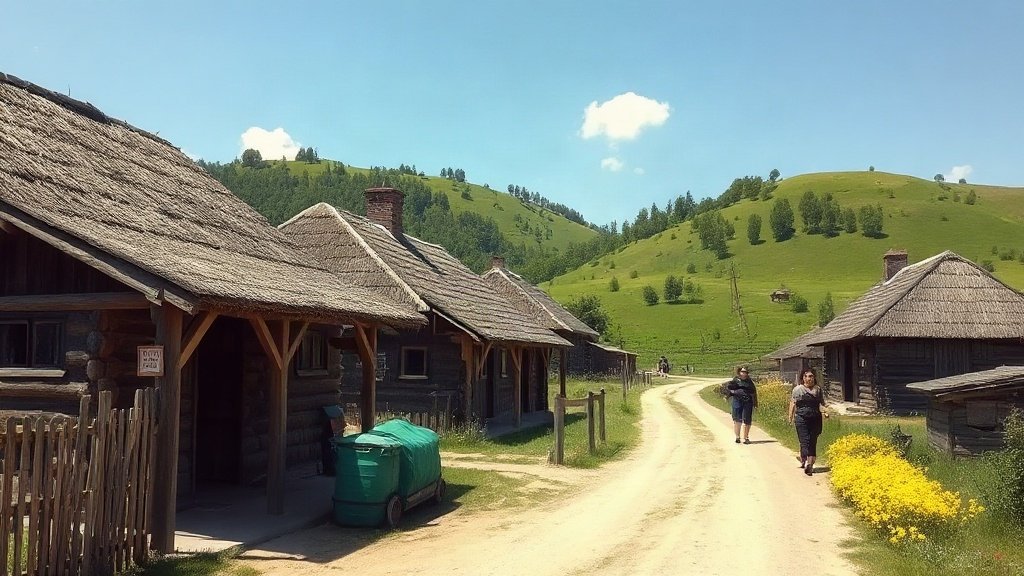
Illustration: AI-generated image
Romania's countryside is a patchwork of distinctive regional styles, from the wooden churches of Maramureș to the fortified Saxon farmhouses of Transylvania. But as modern life changes rural areas, many older buildings are disappearing. Open-air village museums offer a way to see these architectural treasures in one place, carefully relocated and preserved. They are among the country's most rewarding attractions for anyone curious about traditional life.
What to expect
An open-air village museum, sometimes called an ethnographic park, is a collection of authentic buildings—houses, barns, churches, mills, workshops—that have been dismantled from their original locations and rebuilt on a dedicated site. They are arranged to resemble a real village, often with paths winding between homesteads. Visitors can step inside many of the buildings to see original furniture, tools, textiles and ceramics. Some museums also host craft demonstrations, seasonal fairs and folk performances.
Because the buildings come from different regions, a single visit offers a condensed overview of Romania's vernacular architecture. You might see a thatched-roof hut from the Danube Delta next to a tall wooden house from Maramureș, all within a short walk.
Top museums to visit
Dimitrie Gusti National Village Museum, Bucharest
One of the largest open-air museums in Europe, it sits on the shores of Lake Herăstrău in the capital. Over 300 buildings represent all major ethnographic regions of Romania, including peasant houses, windmills, watermills and two wooden churches. It is a peaceful escape from the city and a must for first-time visitors.
ASTRA National Museum Complex, Sibiu
Located in a forested park just outside Sibiu, ASTRA is the largest open-air museum in Romania and among the largest in Europe. It focuses not only on traditional homes but also on pre-industrial technology: you can see working watermills, fulling mills, oil presses and forges. The museum often hosts craft fairs and reenactments.
Ethnographic Museum of Transylvania, Cluj-Napoca
This museum includes an open-air section called the Romulus Vuia Park, set on a hill overlooking the city. It features buildings from Transylvania, including a wooden church from Maramureș and a traditional homestead with an outdoor bread oven. It is smaller and less crowded than Bucharest or Sibiu, making for a relaxed visit.
Bucovina Village Museum, Suceava
Near the painted monasteries, this open-air museum highlights the distinctive architecture of Bucovina, with houses decorated with carved wooden motifs and a charming wooden church. It is a good complement to visiting the UNESCO-listed painted churches.
Planning your visit
Open-air museums are spread out; expect to walk several kilometres. Wear comfortable shoes and dress for the weather, as much of the visit is outdoors. Allow at least two to three hours, more if you want to linger in the houses or watch demonstrations. Spring and autumn offer mild temperatures and fewer crowds, while summer brings longer daylight and more frequent events. Winter visits are possible but some buildings may be closed, and paths can be muddy or icy.
Many museums run craft workshops on weekends, where you can see potters, weavers or woodcarvers at work. Check locally for times. Bring water and snacks, as food options may be limited inside the grounds. Photography is generally allowed, but tripods and drones may need permission.
Beyond the museums
Open-air museums are an excellent introduction, but they cannot replace the experience of visiting a living village. If time allows, pair your museum visit with a drive through a rural area like Maramureș or the Apuseni Mountains, where traditional buildings are still in everyday use. The museum will help you recognise and appreciate the details you see along the way.


