Romania's Lăutari: The Musicians Who Keep Celebrations Alive
Discover the lăutari, Romania's hereditary musicians whose virtuoso playing and vast repertoire have animated weddings, baptisms and village parties for generations.
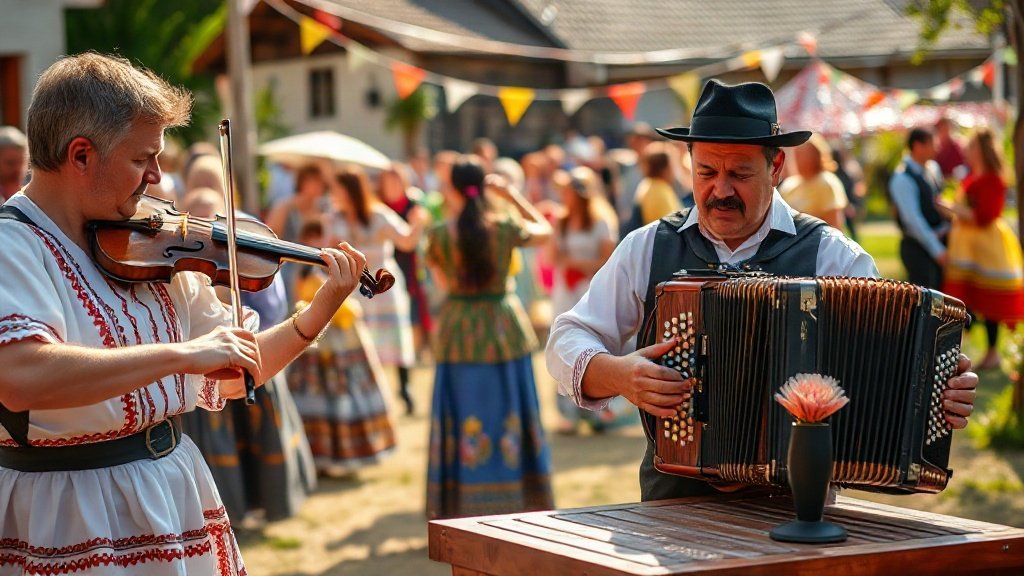
Illustration: AI-generated image
At any Romanian wedding, christening or village feast, the music that gets everyone on their feet is often provided by lăutari – professional folk musicians whose craft has been passed down through generations. Known for their virtuosity and deep knowledge of local tunes, lăutari are more than entertainers; they are keepers of a living tradition that continues to evolve.
The word lăutar comes from the Romanian lăută (lute), though today the lute is rarely played and the term applies broadly to musicians who perform folk and popular music at social events. Historically, many lăutari have belonged to Roma communities, and their contribution to Romanian music has been profound. While the profession is not exclusive to any one ethnic group, the hereditary transmission of skills within Roma families has been particularly strong, with children learning instruments from a young age.
What does a lăutar play?
A lăutar's toolkit is rich and varied. Depending on the region and the occasion, you may hear:
- Violin – the lead instrument in many ensembles, capable of both tender doinas and wild dance tunes.
- Accordion – popular in southern Romania for its bright, driving sound.
- Țambal (cimbalom) – a hammered dulcimer that adds a shimmering, percussive layer.
- Double bass – providing a deep, rhythmic foundation.
- Cobza – a short-necked lute, now less common but historically important.
- Nai (panpipes) – associated with the famous Gheorghe Zamfir, but also played by many lăutari.
The ensemble, or taraf, varies in size from a duo to a dozen musicians. The leader, often the violinist or accordionist, calls the tunes and reads the mood of the room, knowing exactly when to slow down for an emotional song or speed up for a hora.
The role in celebrations
Lăutari are indispensable at Romanian weddings, where music accompanies every stage, from the bride's preparation to the midnight dance. They perform a vast repertoire: doinas (lyrical, improvisatory songs), horas and sârbas (circle dances), and modern hits that keep younger guests happy. At baptisms, they play joyful tunes; at funeral wakes in some regions, they may perform laments, though this practice is fading.
Their skill lies in improvisation and in knowing the local musical dialect – a lăutar from Maramureș will play differently from one in Oltenia or Dobrogea. This regional variety is a source of pride and cultural identity.
Keeping the tradition alive
Today, lăutari face challenges from recorded music and changing tastes, but the tradition persists. Many young musicians still learn from older relatives, and folk music schools and festivals across Romania help to preserve the art. Some lăutari have gained international recognition, performing at world music festivals and collaborating with jazz or classical artists, bringing new audiences to this centuries-old craft.
For visitors to Romania, seeking out a live performance by lăutari – whether at a village celebration, a restaurant in Bucharest, or a folk festival – is a chance to hear music that has been at the heart of Romanian life for generations. It is a sound that is both deeply local and universally joyful.