Mărțișorul: Romania's Spring Charm of Red and White Thread
Discover the meaning behind the little red-and-white token Romanians exchange every March, its ancient roots, and how to make your own.
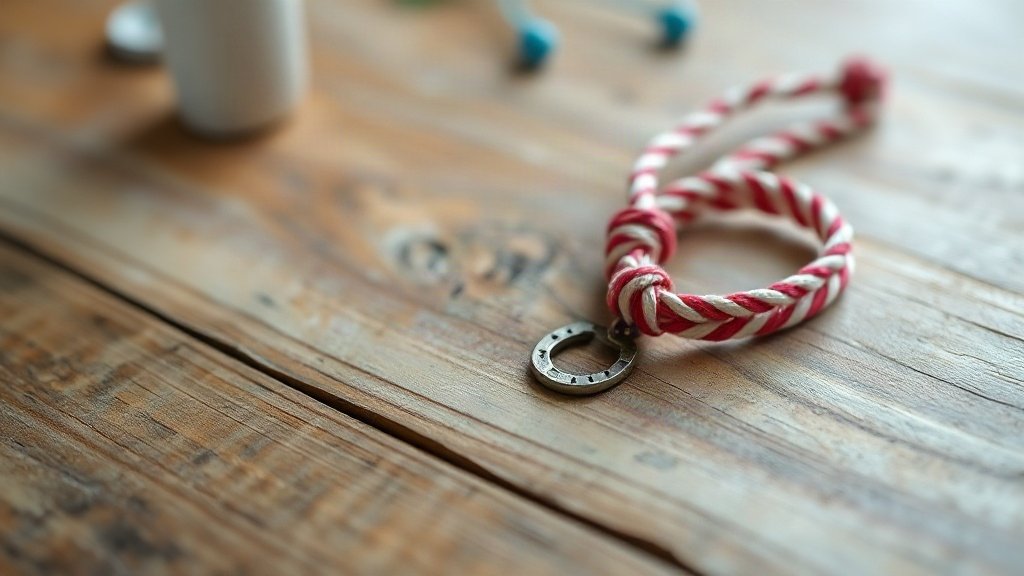
Illustration: AI-generated image
Every year on 1 March, Romanians exchange small tokens called mărțișoare – literally "little March" – to welcome the arrival of spring. These tiny charms, usually attached to twisted red-and-white threads, are given to women and girls as a symbol of good luck, health, and new beginnings.
What is a mărțișor?
The mărțișor is a small decorative object, traditionally a coin or a pebble with a hole, tied to a braided cord of red and white silk or cotton. Today the charm can be almost anything: a tiny metal shape like a four-leaf clover, a snowdrop, a horseshoe, or a ladybird; a piece of jewellery; a handmade figurine; or even a small sachet of sweets. The cord, however, remains constant – a twist of two colours that has come to define the tradition.
The meaning of red and white
The red thread is widely understood to symbolise life, vitality, and the warmth of the sun, while the white stands for purity, the snow of winter, and the clarity of new beginnings. Together they represent the meeting of winter and spring, the balance of opposites, and the hope for a fruitful year. The exact origins of the custom are lost to time, but many folklorists link it to ancient Roman and Dacian spring rituals, and it has been practised continuously for centuries across the territories of modern Romania and neighbouring regions.
How the tradition works today
On the first day of March, it is customary for men to offer mărțișoare to the women in their lives – mothers, sisters, daughters, colleagues, friends, and romantic partners. The charm is usually pinned to the left side of the chest, close to the heart, and worn for a number of days or even the whole month. In many parts of the country, when the wearer sees the first blossoming tree, she ties the red-and-white cord to a branch and makes a wish. This act symbolically passes the charm's power to nature and seals the bond between the person and the coming season. In some regions, such as parts of Moldavia and Maramureș, it is also common for women to give mărțișoare to men, or for children to exchange them among themselves.
The many faces of the charm
Traditional mărțișoare were often simple: a silver coin or a painted wooden disc. Over time, the charms became more elaborate, reflecting local craftsmanship and personal taste. In rural areas, handmade tokens might include tiny woven bags, carved animals, or spun-wool pom-poms. In urban settings, jewellers and artisans create miniature works of art from silver, glass, ceramic, or felt. Despite the endless variety, the essential element never changes: the red-and-white thread that binds the charm to its purpose.
Make your own mărțișor
Creating a mărțișor is a rewarding way to connect with the tradition, and it requires very little. You will need red and white thread or thin yarn, scissors, and a small charm – this could be a bead, a button, a tiny bell, or a simple knot made from the thread itself. Twist or braid the two colours together to form a cord about 20 to 30 centimetres long. Tie the charm securely to one end, and finish the other end with a loop so the mărțișor can be pinned or tied. The gesture matters more than the object; a handmade mărțișor carries the same wish for good fortune as any bought one.
A charm that never goes out of style
Mărțișorul is more than a seasonal ornament; it is a living expression of Romanian identity, a small but powerful symbol of hope and renewal. Whether you receive one, give one, or make your own, taking part in this tradition links you to a chain of goodwill that stretches back through the generations and forward into the bright promise of spring.