Horezu Pottery: Romania's UNESCO-Listed Ceramic Tradition
Discover the centuries-old craft of Horezu pottery, a vibrant and enduring symbol of Romanian folk art.
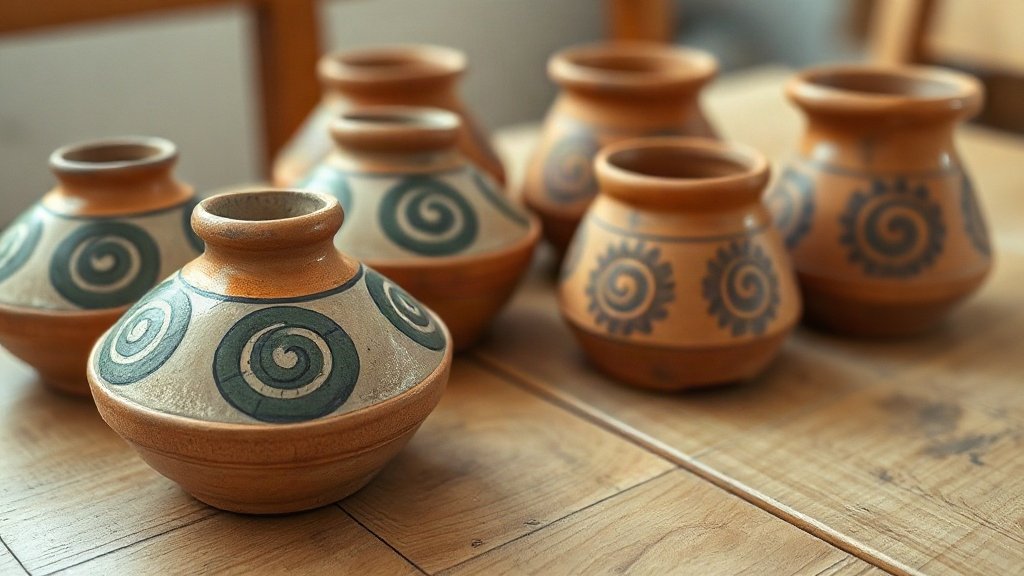
Illustration: AI-generated image
In the rolling sub-Carpathian hills of Vâlcea County, the small town of Horezu has for centuries been synonymous with one of Romania's most treasured crafts: pottery. So significant is this tradition that in 2012 UNESCO inscribed Horezu ceramics on the Representative List of the Intangible Cultural Heritage of Humanity, recognising not just the objects themselves but the living knowledge and skills passed down through generations.
Horezu pottery is instantly recognisable for its warm palette and distinctive decorative style. Potters use local clay, which fires to a rich terracotta red, and then apply slips and glazes in earthy tones of brown, green, yellow and cream. The motifs are drawn freehand with a cow-horn tool and a goose feather, a technique that demands steady hands and years of practice. Common designs include the spiral, the sun, the tree of life, the serpent and the rooster—each carrying symbolic meanings of protection, fertility and cosmic order.
A craft rooted in community
Historically, pottery making in Horezu was a family affair. Men traditionally dug the clay, prepared the wheel and fired the kilns, while women decorated the vessels. Today, many workshops still operate as family businesses, with skills handed from parent to child. The process is labour-intensive: the clay is kneaded, thrown on a foot-powered wheel, left to dry, then decorated and glazed before a single firing in a wood-burning kiln. The final result is both functional and beautiful—plates, bowls, jugs, pots and decorative pieces that feel at home in a rustic kitchen or a contemporary interior.
Beyond Horezu: other pottery centres
While Horezu is the most famous, Romania boasts several other notable pottery traditions. In Corund, in Harghita County, artisans favour a darker palette of browns and blacks with simple geometric patterns. Marginea, in Suceava County, is known for its black pottery, achieved through a special reduction firing technique. The village of Oboga in Olt County produces a distinctive blue-and-white ware, while Rădăuți is home to a unique style with green and yellow glazes. Each region's clay, local customs and aesthetic preferences give its pottery a distinct identity.
How to appreciate Horezu pottery
When examining a piece of Horezu pottery, look for the signature motifs and the subtle variations that reveal the hand of the maker. The spiral, for instance, represents the journey of life and the continuity of time; the sun is a symbol of light and vitality. Authentic pieces are often signed or marked by the potter, and the irregularity of hand-painted lines is a mark of authenticity rather than imperfection. For collectors and admirers, a visit to Horezu offers a chance to see potters at work and to understand why this craft remains a vibrant part of Romania's cultural heritage.
Whether used for serving food or displayed as decorative art, Horezu pottery carries with it a sense of place and a story of resilience. Its continued practice, upheld by dedicated artisans, ensures that this ancient craft will be enjoyed for generations to come.