Horezu Pottery: Romania's UNESCO-Listed Ceramic Craft
Discover the centuries-old pottery tradition of Horezu, where local clay is shaped, decorated and fired using techniques passed down through generations.
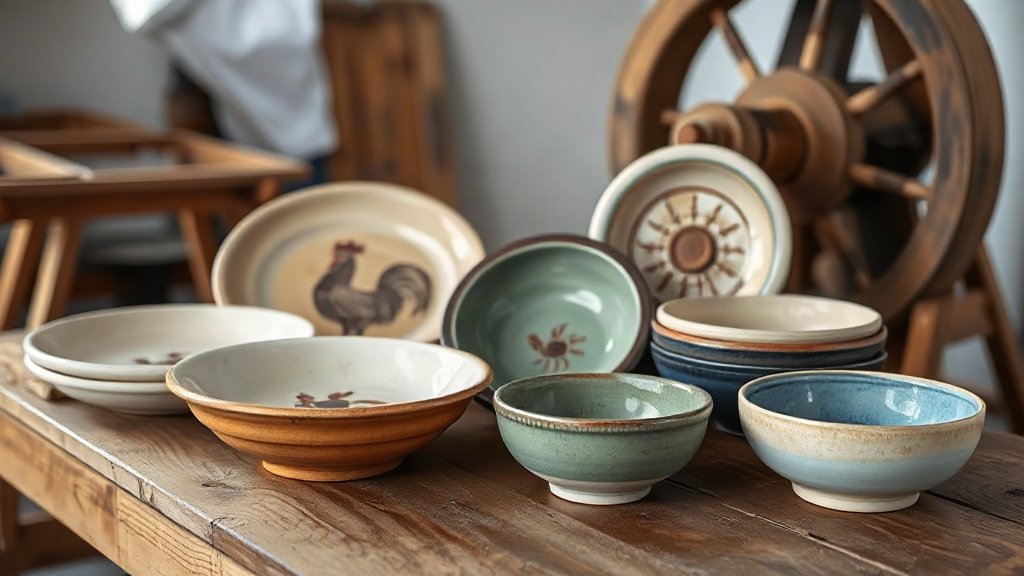
Illustration: AI-generated image
The rolling hills of northern Oltenia hold one of Romania’s most enduring living crafts. In the town of Horezu and its surrounding villages, potters still shape local clay into plates, jugs, bowls and decorative pieces using methods their families have refined for generations. In 2012, UNESCO added Horezu ceramics to its Representative List of the Intangible Cultural Heritage of Humanity, recognising both the craft itself and the tight-knit community that keeps it alive.
A Living Tradition
Pottery has been made in the Horezu area since at least the 17th century, a period when the nearby Horezu Monastery flourished as a centre of art, architecture and learning under the patronage of Prince Constantin Brâncoveanu. The monastery’s influence helped establish the region as a place where skilled craftspeople gathered, and that creative energy still shapes local life. Today the tradition is largely a family affair. Knowledge passes from parent to child, often with women responsible for decorating the vessels and men preparing the clay and managing the kilns. While some younger potters study ceramics formally, most learn by watching and doing, absorbing patterns and techniques from childhood. This informal apprenticeship ensures that each generation adds subtle variations while preserving the core skills.
How Horezu Pottery Is Made
The process begins with clay dug from local hills, which is cleaned, soaked and kneaded until it reaches the right consistency. Potters often mix different clays to balance workability and strength. Shaping happens on a kick wheel, a foot-powered device that allows fine control without electricity. Once the form is complete, it is left to dry slowly in a shaded area to prevent cracking. The next stage is decoration, the most distinctive part of Horezu work. Artisans apply a white or cream slip to the surface, then paint designs freehand using a cow-horn tool, a goose feather or a simple brush. The paints are made from natural mineral oxides mixed with water and a little clay. After painting, the piece receives a transparent glaze and is fired in a wood-burning kiln, often shared by several families. The firing can last for many hours and requires careful temperature management, a skill honed over years. This slow, low-tech process gives Horezu pottery its characteristic depth of colour and slightly irregular, handmade feel.
Signature Motifs and Colours
Horezu pottery is instantly recognisable by its earthy palette and symbolic patterns. Common motifs include the rooster, the sun, the tree of life, spirals, waves, and the occasional fish or snake. These are not random decorations; many carry meanings tied to rural life, fertility, protection and the natural world. The rooster, for example, is associated with dawn and vigilance, while the tree of life symbolises continuity and family. The spiral suggests eternity and the cycle of seasons. Colours tend toward deep brown, brick red, forest green, cobalt blue and pale yellow on a cream background. The combination creates a warm, rustic look that feels both ancient and surprisingly contemporary. Because every piece is painted by hand, no two are exactly alike, and subtle differences in line weight or colour intensity are part of the charm.
Where to Experience It Yourself
The best way to appreciate Horezu pottery is to visit the town and its workshops, many of which welcome curious travellers. You can watch potters at work, ask about their techniques and choose a piece to take home. Local fairs and craft markets, held at various times throughout the year, often feature a wide selection. Horezu is easily reached by car from Râmnicu Vâlcea, and the surrounding countryside offers a pleasant day trip through traditional villages. If you cannot travel, look for pieces marked with the Horezu name in Romanian craft shops or online galleries that work directly with artisans. Authentic pieces generally show the familiar cream background and hand-painted motifs, and many bear a small maker’s mark on the base. Each piece is unique, and buying directly supports the families who have kept this tradition alive for centuries.
For anyone interested in Romanian culture beyond the famous castles and churches, Horezu pottery offers a tangible connection to a rural craft that is still very much alive.